The Granada issue
How to Get Inside Granada's Walled Carmen Gardens
The Albaicín hides its orchards, cisterns and fountains behind blank white walls. Here is which carmen doors actually open, when, and what it costs to walk through them.

By Camille FontaineGranada beyond the Alhambra queue

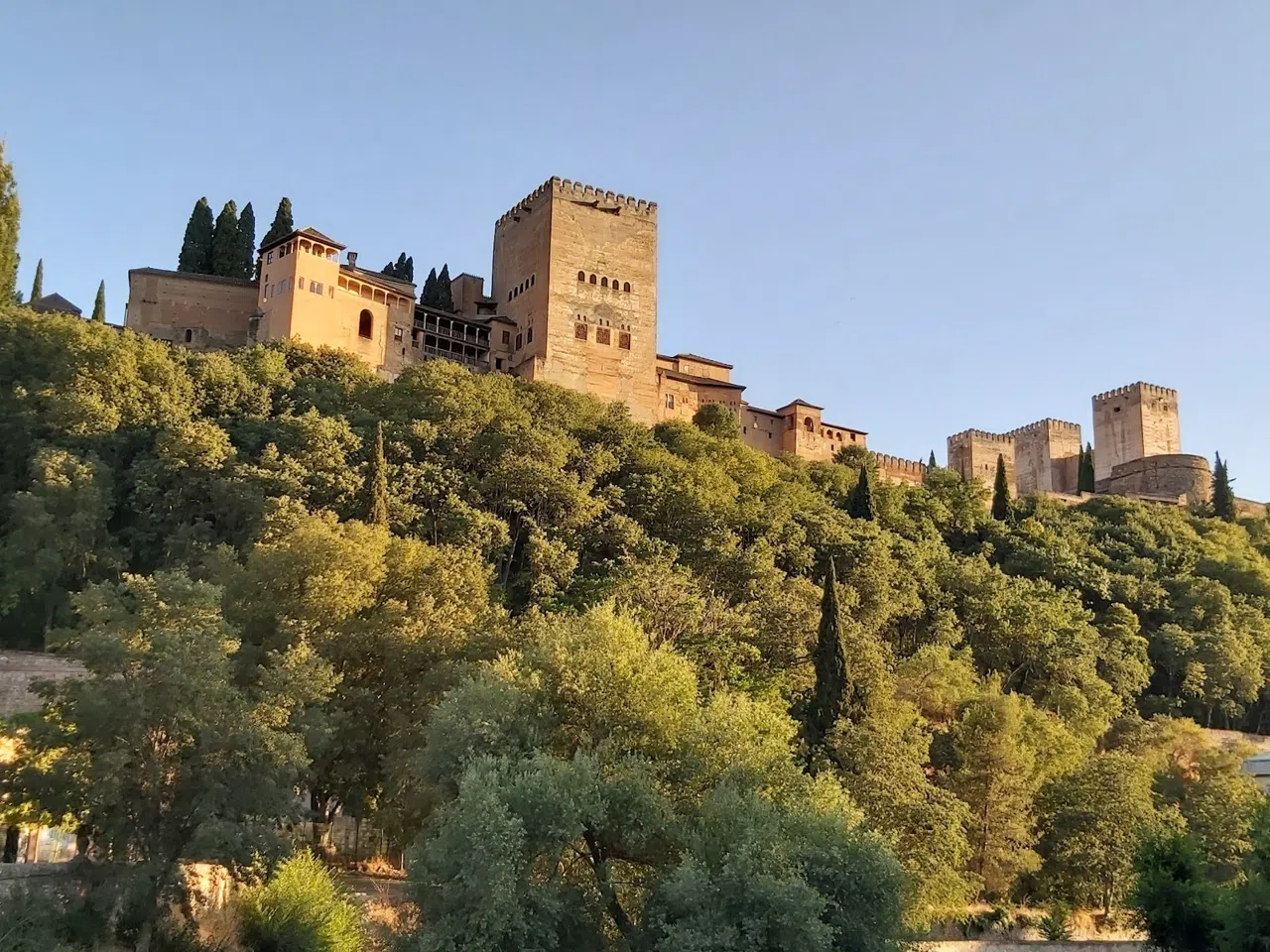
The Albaicín gives away nothing from the street. You climb a lane wide enough for two people and a scooter, whitewash on both sides, and the only evidence that anything is growing behind the walls is a fig branch reaching over the top or the sound of water falling on stone somewhere out of sight. Those walls hide the carmenes: house, orchard, cistern and view enclosed together as one thing. Far more of them open their doors than most visitors ever discover.
What a carmen actually is
A carmen is not a villa with a garden attached to it. It is a single enclosed unit: a few rooms, a terrace, a water tank, fruit trees, a wall high enough that none of it is anybody else's business. The form descends from Nasrid domestic architecture, and it outlasted the end of Muslim Granada in 1492 because it simply worked on this hillside. Terraces hold soil on a steep slope, and the medieval acequias that still thread the quarter deliver water to the top of each plot so it can fall through the garden by gravity.
That is the whole logic of the trail below. Every carmen you can enter is a variation on the same three elements: water arriving high, a terrace stepping down, and a wall keeping the street out. Once you have seen two or three, you start reading the closed ones from the outside, by the height of the cypresses, the angle of a roof, the sound behind a door.
Almost everything here is free or costs a few euros. The expensive part of the Albaicín is dinner, not admission.
Plan your Granada trip
Live prices from our booking partners.
Free cancellation on many rooms. We may earn a commission when you book.
Three houses that teach you to read the rest
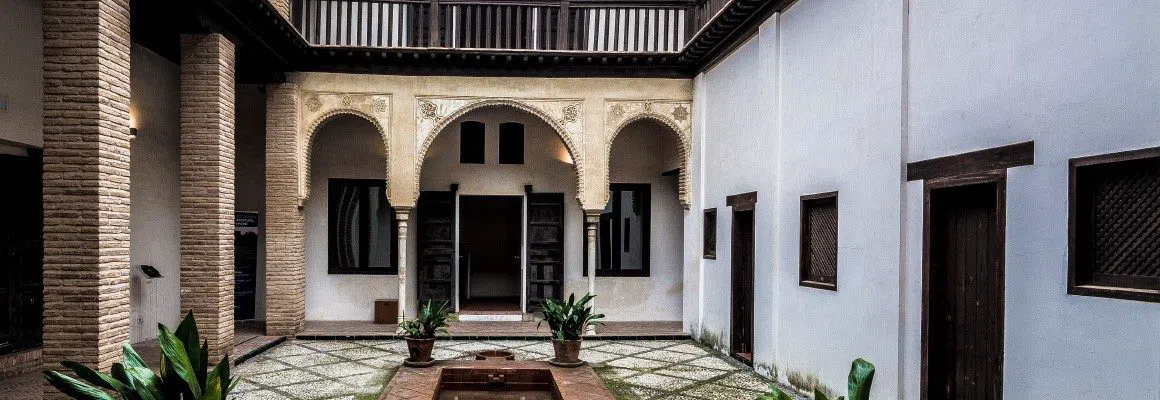
Start indoors, with the architecture, before you start walking gardens. Casa de Zafra (Albaicín, in the lanes just above the Carrera del Darro) is the interpretation centre for the quarter and the most efficient hour you will spend in Granada. It is a Nasrid house built around a rectangular pool with porticoes at each end, and the exhibition explains the plan clearly enough that every later courtyard makes sense. It opens Tuesday to Saturday 10:00–14:00 and 16:00–19:00 with Sundays 10:00–14:00 in winter, and shifts to 09:30–13:30 and 17:00–20:00 in summer; closed Mondays. Entry is €3, or €1 reduced, and free on Sundays. The rooms are small, so groups of more than about ten should book rather than arrive hopefully.

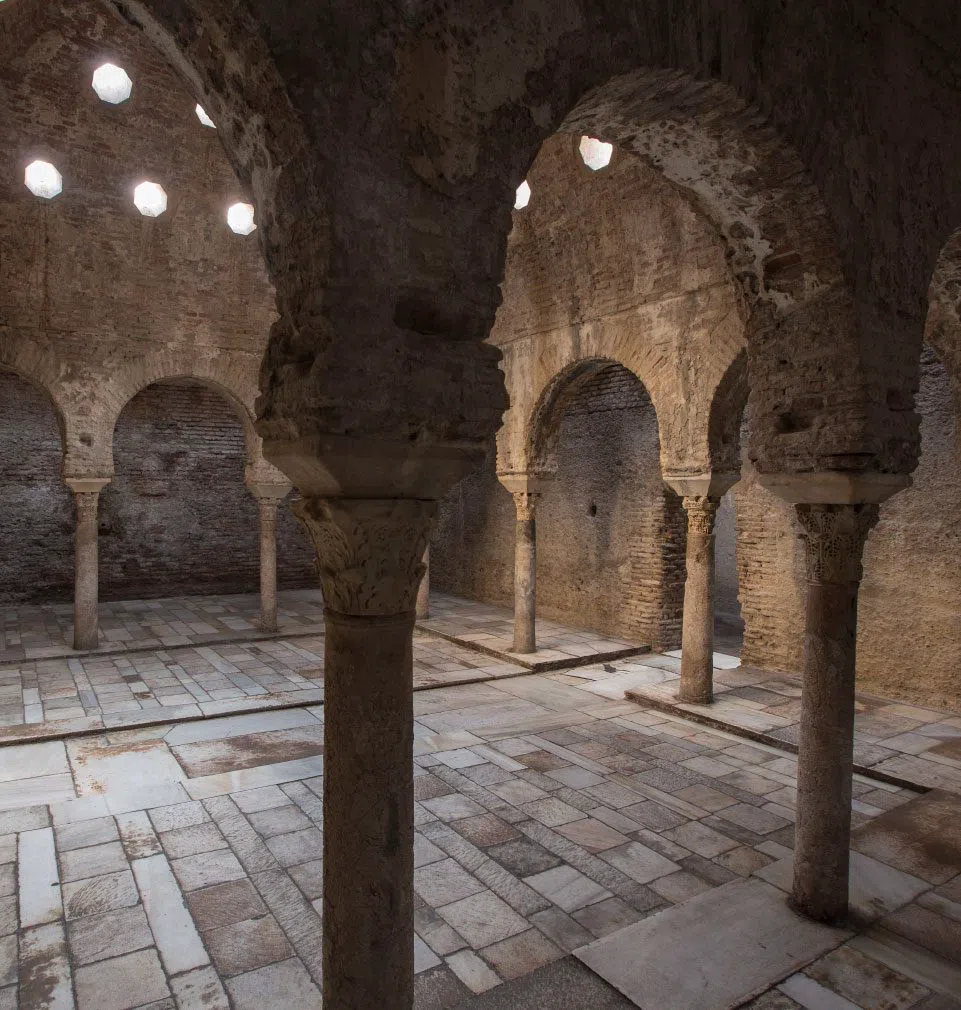
From there, climb to Palacio de Dar al-Horra (upper Albaicín, above the Placeta de San Miguel Bajo), the purest surviving Nasrid domestic courtyard in the quarter and, effectively, the ancestor of every carmen on this trail. It was the home of Aixa, mother of Boabdil, and the north gallery looks straight across the valley. Daily 10:00–18:00 in winter, 10:00–20:00 in summer. It is free every Saturday, a genuine saving but also the reason the small upper rooms jam; if you are travelling as a group, come midweek and accept the ticket, because staff split large parties and you will spend the free Saturday queueing on a staircase. Otherwise it is included in the Andalusí Monuments / Dobla de Oro ticket (€28.50 general).
The third is Casa Morisca Horno de Oro (Albaicín, five minutes uphill from the Darro), a late-15th-century house that catches the exact moment Islamic and Castilian building habits merged: a Moorish courtyard and pool under carpentry that is already thinking in Castilian terms. It opens daily 10:00–17:00 from 15 September to 30 April, and 09:30–14:30 plus 17:00–20:30 from 1 May to 14 September. It is free on Sundays with no booking needed, and also sits on the Dobla de Oro ticket. The house is tiny; groups go in shifts, which works fine if you plan for it and is miserable if you do not.
The free gardens most people walk past

Carmen de la Victoria (Albaicín, on the slope of the Cuesta del Chapiz) is the best free carmen garden in the quarter and the one visitors almost never find, because it does not look like a visitor attraction. It belongs to the university and functions as a guest residence. The terraced gardens are open to walk-ins daily, roughly 09:00–19:00, and you can wander down through clipped hedges, water channels and citrus to a view of the Alhambra that costs nothing at all. Because it is a working residence, events sometimes close it; check before you climb. Groups must book ahead through the residence, which is the standard route schools and tour operators use.
A few minutes higher, Casa del Chapiz (Albaicín, at the top of the Cuesta del Chapiz) is a pair of 16th-century Morisco houses that now hold the CSIC School of Arabic Studies. It is a research institute rather than a tourist site, which is precisely why its garden is empty at midday while the Alhambra opposite is not. Weekdays only, roughly 10:00–18:00 from September to June and 10:00–15:00 in July and August, closed at weekends. Entry is free, with a donation or an email booking expected; guided and group visits must be arranged with the school in advance. Do not build a Saturday around it.


Carmen del Aljibe del Rey (Albaicín, near the Placeta del Cristo de las Azucenas) answers the question the others raise. It is a carmen and a water interpretation centre run by the Fundación AguaGranada, sitting on one of the quarter's great cisterns, and its free guided tour at 12:00 on weekdays is the single best explanation of why any of these gardens have water at all. Individuals need no booking; turn up before noon. Groups are taken Monday to Friday 10:00–14:00 by arrangement, capped at around 30 people with two groups on site at once. It closes on public holidays and right through August, which catches out a lot of summer visitors.
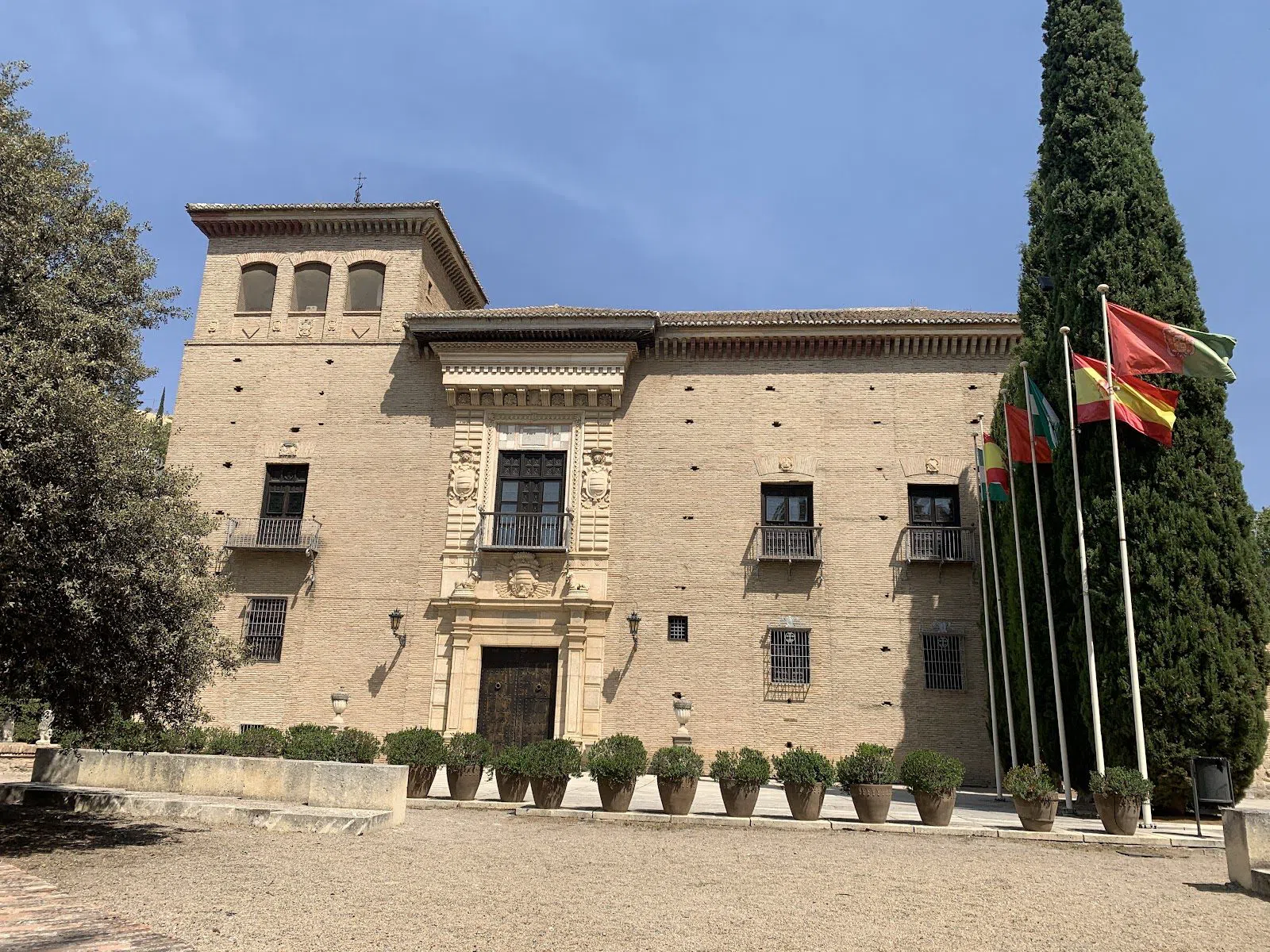
Finally, Palacio de los Córdova (lower Albaicín, just above the Paseo de los Tristes) is the outlier: a Renaissance palace that was dismantled and rebuilt stone by stone on this site in 1960, with the largest free green space in the quarter around it. Gardens are free, Monday to Friday 10:00–14:00 and 18:00–20:00 from April to 14 October, with weekends and holidays 10:00–20:00; from 15 October to March it runs 10:00–14:00 and 16:00–18:00 on weekdays. The interiors host civil weddings and civic events, so occasional closures happen. It is also the only place on the trail where a large group can stand around without blocking anything, which makes it the natural meeting point at the start or end of the walk.
A carmen left exactly as it was lived in
Carmen-Museo Max Moreau (Albaicín, on the climb towards the San Nicolás viewpoint), also known as the Carmen de los Geranios, is the one you walk through rather than peer at. The Belgian painter lived here until 1992 and the house was kept as he left it: studio, portraits, furniture, and a terraced garden with the view built into the plan rather than added to it. Tuesday to Saturday 10:30–13:30 and 16:30–18:00, moving to 17:00–19:00 in summer; closed Sundays, Mondays and holidays. Free. The rooms take about ten to twelve people at a time, so larger parties split at the gate.

One warning worth repeating: it shuts for the whole of August. So does the Aljibe del Rey. If you are visiting Granada in high summer, the trail loses two of its best doors and you should lean on Carmen de la Victoria, Palacio de los Córdova and the restaurant carmenes instead.
The one you cannot knock at
Carmen de los Cipreses (Albaicín) is listed as a national monument and is the textbook example of carmen layout, the plan that architecture students are shown. It is also somebody's home, and there are no walk-ins, ever. The owners open the gardens only to booked cultural visits run by local operators such as Secretos de Granada or Granada Secreta y Subterránea, in small groups, usually costing somewhere around €15–30 per person, and those slots go weeks ahead. Book early and build the day around the time you are given. If you cannot get in, the lane outside is free and the cypresses tell you most of what you need to know.

Eating inside the walls
The reliable way to spend an evening inside a carmen is to book a table in one. These are real gardens with real kitchens, not themed dining rooms, and the terrace is what you are paying for, so a rainy booking is a wasted one at all of them.
Mirador de Morayma (Albaicín, on the terraces above the Darro) is the most convincing of them: a warren of small rooms and a garden said to have sheltered Boabdil's wife Morayma, cooking Alpujarra mountain produce and pouring the house's own organic wine. Tuesday to Saturday, lunch from 13:30 and dinner into the evening, closed Sunday and Monday plus an annual holiday break. Around €35–50 per head à la carte. The layout takes groups well; book, and ask for a garden table by name or you will get a room.

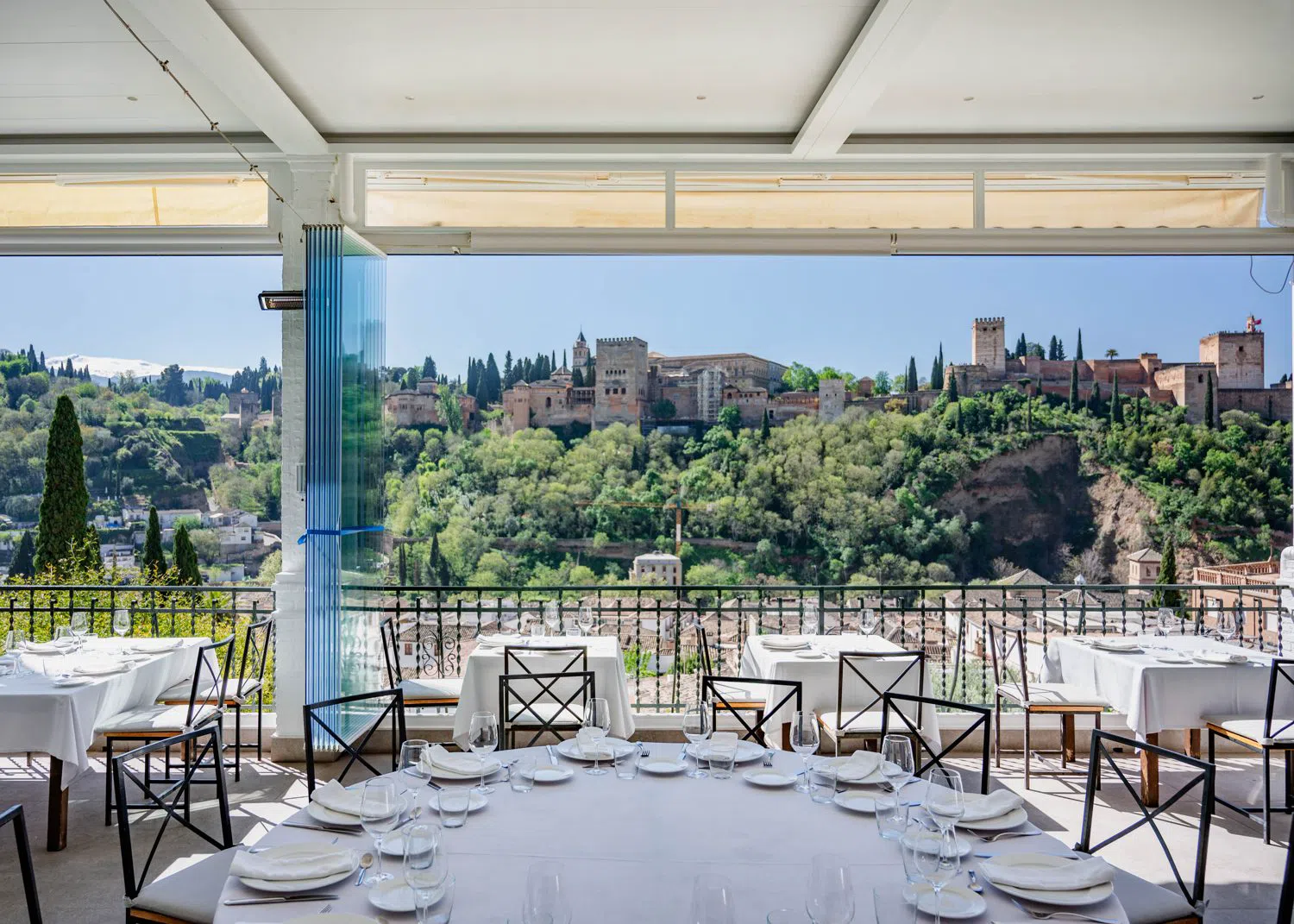
Restaurante Las Tomasas (Albaicín, on the Carril de San Agustín) has been open as a carmen restaurant since 1989 and is purpose-built for numbers: the garden works as a private event space for up to about a hundred. Tuesday evenings, Wednesday to Saturday lunch and dinner, Sunday lunch, closed Mondays. Roughly €40–55 per head. If you are organising a group dinner with the view, this is the default answer.
Carmen Mirador de Aixa (Albaicín, near Las Tomasas) does the most polished cooking of the mirador carmenes, with tasting menus alongside the carte, at roughly €45–60 per head. Winter service runs about 13:30–15:30 and 20:00–23:00. Terrace tables need booking well ahead, and you must ask for the terrace explicitly, or you can end up in an interior room paying terrace prices for no view. Groups and private events go through [email protected].


Carmen de Aben Humeya (Albaicín, inside the UNESCO-listed perimeter) has the widest panorama on the trail and a kitchen that updates Granadino recipes rather than coasting on the outlook. Open daily with long continuous service from midday, mains around €24–31 and roughly €45–60 per head. Group bookings and events are taken; terrace tables are by reservation only.
El Huerto de Juan Ranas (Albaicín, thirty seconds from the San Nicolás viewpoint) is the surprise: a Mozarabic-leaning menu of aubergine with cane honey and vegetable couscous, in a garden the viewpoint crowd never reaches. Daily, roughly 13:00–15:30 and 20:30–23:30, about €35–55 per head. There is a separate cocktail terrace alongside, the cheaper way in if you only want a drink at sunset; for a meal, book the restaurant terrace rather than trusting the walk-in bar.

Couples do best at Morayma or Aixa. Groups of more than eight should go straight to Las Tomasas or Aben Humeya and stop shopping around.
Sleeping behind a carmen door
Hotel Boutique Casa Morisca (Albaicín, at the foot of the quarter near the Darro) is the way to sleep inside the trail instead of touring it: a 15th-century courtyard house with a pool, galleries and timber ceilings that read as a miniature Alhambra courtyard, at roughly €150–250 a night. It has fourteen rooms, and the patio is for guests rather than public visits, so it suits a couple or a small party taking most of the house and is completely wrong for anything above about a dozen people. If it is full, or you need more space, compare rates and locations through Granada hotel search, and read the wider Granada guide for how the Albaicín sits against the rest of the city.

Walking the trail in a day
Midweek is the right choice, because the two institutional gardens, Casa del Chapiz and the Aljibe del Rey, only open Monday to Friday.
Start low at Casa de Zafra when it opens at 10:00, then walk up to Casa Morisca Horno de Oro before the middle of the day. Climb to Carmen de la Victoria and Casa del Chapiz, then cut west across the quarter to reach Carmen del Aljibe del Rey for the free 12:00 tour. Dar al-Horra is a short walk on from there. Eat late, Spanish-style, at one of the carmen restaurants from 13:30, then take the afternoon slowly: Max Moreau reopens at 16:30, and Palacio de los Córdova stays open into the evening in summer for a last, flat, shaded stop.
On a weekend the shape changes. Saturday gives you free entry at Dar al-Horra and open hours at Casa de Zafra and Max Moreau, but Casa del Chapiz and the Aljibe del Rey are shut. Sunday gives you Casa de Zafra and Horno de Oro free, and closes Max Moreau. No weekend day covers the whole trail, so pick two visits rather than fighting it.
Practical notes
Getting up there is the first problem. The Albaicín is steep, cobbled and largely closed to cars; taxis can enter parts of it, but the small municipal minibuses from Plaza Nueva are the local answer and run all day. Walking up from the Paseo de los Tristes takes about twenty minutes at a normal pace and rather more in July. Wear shoes with grip, because the polished river cobbles are slippery when wet.
Restaurants and the hotel take cards without question. Carry €20–30 in small notes anyway for the €3 entry at Casa de Zafra, for donations at Casa del Chapiz, and for tips. Card acceptance at the smallest sites is not something to rely on.
The long midday closure is real: most doors shut between roughly 14:00 and 16:30 and reopen for the evening. August removes Max Moreau and the Aljibe del Rey entirely and shortens Casa del Chapiz. Public holidays close the Aljibe del Rey. Carmen de la Victoria and Palacio de los Córdova can close at short notice for events and weddings, so check on the day.
As for money, a full midweek trail of gardens and houses costs €3, or nothing at all on the right day. The Dobla de Oro ticket at €28.50 covers Dar al-Horra and Horno de Oro among the Andalusí monuments and only pays for itself if you are visiting several and cannot time the free days. A booked cultural visit to Carmen de los Cipreses adds roughly €15–30. Dinner in a carmen is the real expense at €35–60 per head, so budget around €60 with wine, and book the terrace by name.
Before you go
Can you visit Granada's carmen gardens for free?
Most of them, yes. Carmen de la Victoria, Casa del Chapiz, Carmen del Aljibe del Rey, Palacio de los Córdova and the Carmen-Museo Max Moreau are all free. Palacio de Dar al-Horra is free every Saturday, and Casa Morisca Horno de Oro is free on Sundays with no booking. Only Casa de Zafra charges on a normal day, at €3 general or €1 reduced, and it is free on Sundays too.
Which carmen gardens stay open in August?
Carmen de la Victoria, Palacio de los Córdova, Casa de Zafra, Dar al-Horra, Casa Morisca Horno de Oro and the carmen restaurants. Carmen-Museo Max Moreau closes for the whole of August, Carmen del Aljibe del Rey closes through August and on holidays, and Casa del Chapiz drops to 10:00 to 15:00 on weekdays only.
Do I need to book to get into a carmen?
Individuals do not need to book at Carmen de la Victoria, Palacio de los Córdova, Max Moreau, Dar al-Horra or the noon guided tour at Carmen del Aljibe del Rey. Casa del Chapiz prefers an email in advance. Carmen de los Cipreses is a private home with no walk-ins at all. The only way in is a booked cultural tour with a local operator, arranged weeks ahead. Restaurant terraces always need reserving.
Can a large group do the carmen trail?
Yes, with planning. Carmen de la Victoria takes groups booked through the residence, Casa del Chapiz and Carmen del Aljibe del Rey take arranged weekday groups (the Aljibe caps at about 30), and Palacio de los Córdova is the easiest place to gather. The small houses (Casa de Zafra, Horno de Oro, Dar al-Horra and Max Moreau) split parties into shifts, with Max Moreau taking only about ten to twelve at a time. For a group dinner, Las Tomasas handles up to around 100 in its garden.
Is the Dobla de Oro ticket worth buying for this trail?
Only if your dates do not line up with the free days. At €28.50 general it covers Dar al-Horra and Casa Morisca Horno de Oro among the Andalusí monuments, but Dar al-Horra is free on Saturdays and Horno de Oro is free on Sundays. If you can visit on those days, skip the ticket and put the money towards a carmen dinner.