
September in Granada arrives with the heat still stored in the stone and the first serious clouds of the year piling up over the Sierra Nevada. Inside the Nasrid Palaces almost none of that reaches you. The rooms are roofed, the light comes filtered through plaster screens cut like frost, and the only weather that really counts is the half-hour printed on your ticket. Everything else about the day can be moved. That cannot.
What you actually walk through
The Nasrid Palaces (Palacios Nazaríes), at the centre of the Alhambra on the hill above the Darro, are not one building but three royal houses built up against one another across roughly a century and then handed over, largely intact, when the city changed hands in 1492. You come in through the Mexuar, the working end of the court, where business was done and petitions heard, and where the plaster starts its long argument with your eyes. Then the Comares Palace opens out: a long still pool between myrtle hedges, the tower reflected end to end, and behind it the Hall of the Ambassadors with a cedar ceiling assembled from thousands of small pieces into a diagram of the heavens. It is the one room in the complex where most people stop talking.
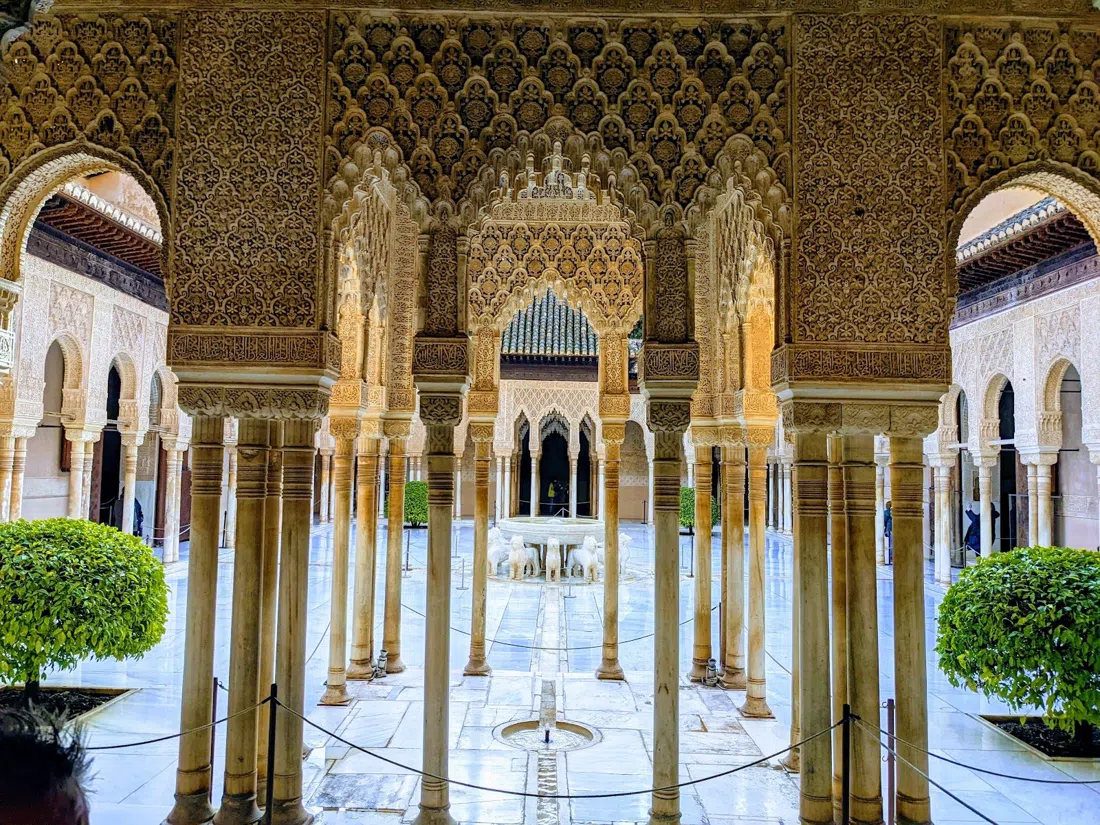
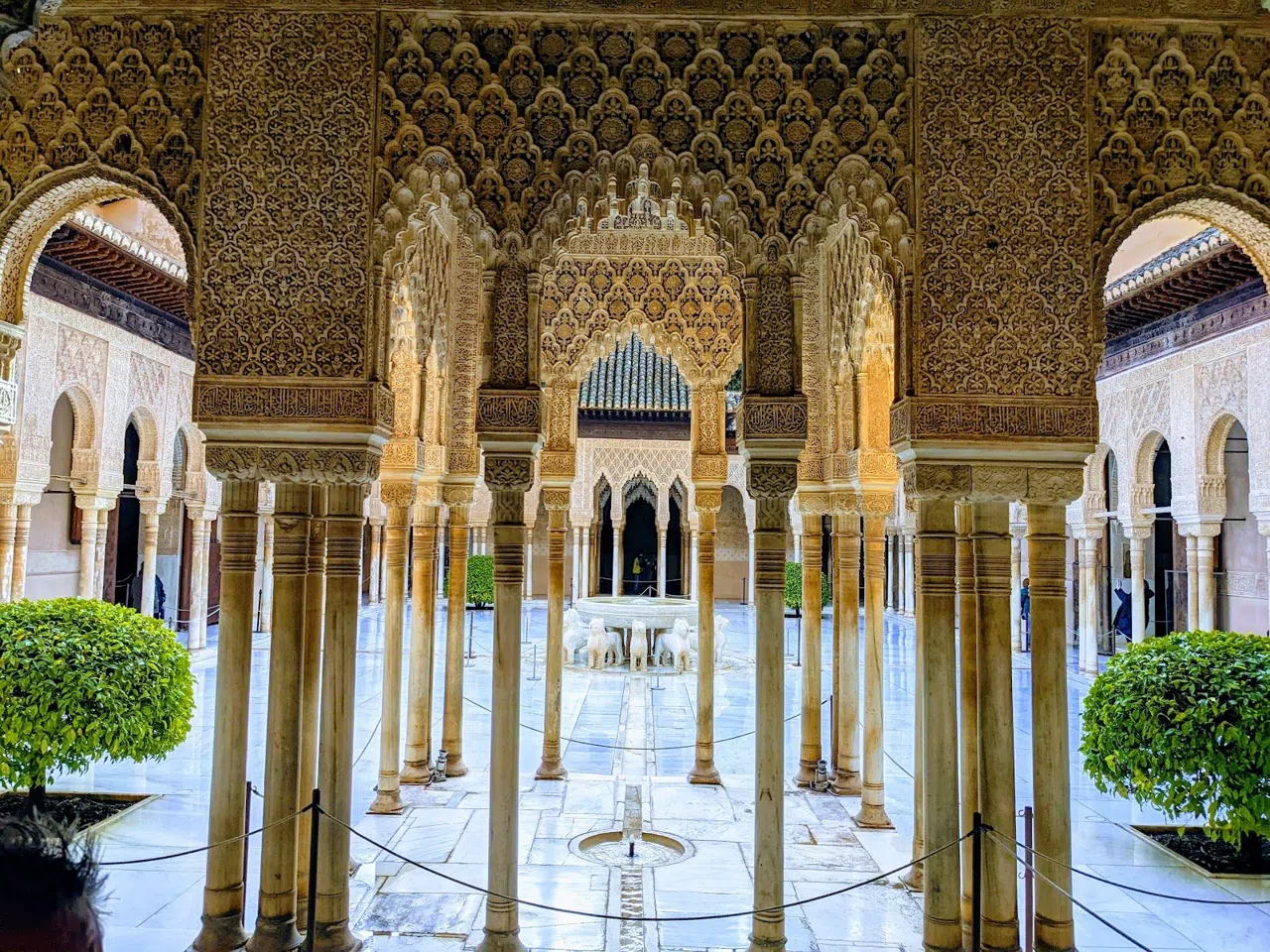
From there you pass into the Palace of the Lions: the fountain on its twelve stone lions, the forest of slender columns, the Sala de los Abencerrajes with a star-shaped honeycomb vault overhead that looks less carved than grown. The walls repeat one phrase in looping script until it becomes wallpaper, there is no victor but God. You leave through the Partal, where a portico and a second reflecting pool sit at the edge of the hill, and the modern city reappears below with an almost rude suddenness.
The palaces themselves take most people 45 minutes to an hour at a fair walking pace, longer if you are the sort who reads ceilings. The whole walled complex (palaces, fortress, gardens) is a three-hour visit minimum and an easy half day. Guided options generally run about three hours and cover the same ground with the history attached.
The thirty minutes that rule the whole day
The Nasrid Palaces are the only section of the Alhambra with a hard timed entry, and the slot on your ticket is a 30-minute window to get through the door. Miss it and there is no refund and no second chance that day. The ticket does not roll forward to the next slot, and the staff at the door are not empowered to be kind about it. Every visitor needs their own named, timed ticket, so carry the document you booked under and do not assume one person can shepherd a group through on a single booking.
Build the day backwards from that half-hour. If your slot is at 11:30, be on the hill by 10:15 at the latest; the walk from the main entrance to the Nasrid door is longer than the map suggests and the queue at the checkpoint moves in fits. Spare time is easy to spend inside the walls. The Alcazaba (the fortress at the western tip of the Alhambra) is the obvious place. The ramparts give the best free-standing panorama inside the monument, and the climb up the Torre de la Vela is worth it, though the stair is single file and a large group will bottleneck on it. It is also entirely open to the sky, which matters in September.
What you should not do is leave the Generalife (the summer palace and gardens at the far eastern end) until your slot is close. It is a 15 to 20 minute walk from the Nasrid entrance, and that walk has ended more than one visit badly. Do the gardens after the palaces, not before.
Tickets at the door against booking ahead
The general day ticket is €22.27 and covers the Nasrid Palaces, the Alcazaba and the Generalife. For the amount of ground it opens, that is one of the better-value monument tickets in Europe. A gardens-only day ticket is €12.73 if you want the Generalife and the wider grounds without the palace slot, and there are night visits: €12.73 for the Nasrid Palaces after dark, €8.48 for the gardens at night.
Walking up and buying on the day is a bad plan in September. The constraint is not the monument's overall capacity but the number of people each Nasrid slot can absorb, and the convenient mid-morning windows are the first to go. Booking ahead does not change the price. It changes whether you get a slot at a civilised hour or a slot at 18:00 with your dinner already booked.
A guided option exists and is attached to this page as a separate card rather than buried in this text. Two honest reasons to take one: the guide has already solved the slot problem, and the commentary carries inside on whisper headsets, which is the difference between hearing about the Comares ceiling and standing under it wondering what you are looking at. Those guided walks run seven days a week and start from 69 USD per person, a real premium over the €22.27 door price. You are paying for the interpretation and the logistics, not the stones. Across the bookable options here there are 7,562 traveller reviews, and the most-booked one carries 4.7 out of 5 from 3,323 of them, so the format clearly works for most people who try it. It is still a premium. If you read well and plan well, the unguided ticket is not a lesser visit.
Where to go when the sky opens
September in Granada is not a wet month by northern standards, but it is the month when the pattern breaks: hot, bright mornings followed by a late-afternoon storm that arrives over the mountains and empties itself in twenty minutes. The palaces are the weather-proof part. The interiors are roofed and a downpour barely touches them. The Generalife is the genuinely exposed section and the one to cut short; the Alcazaba is the first thing to sacrifice outright.
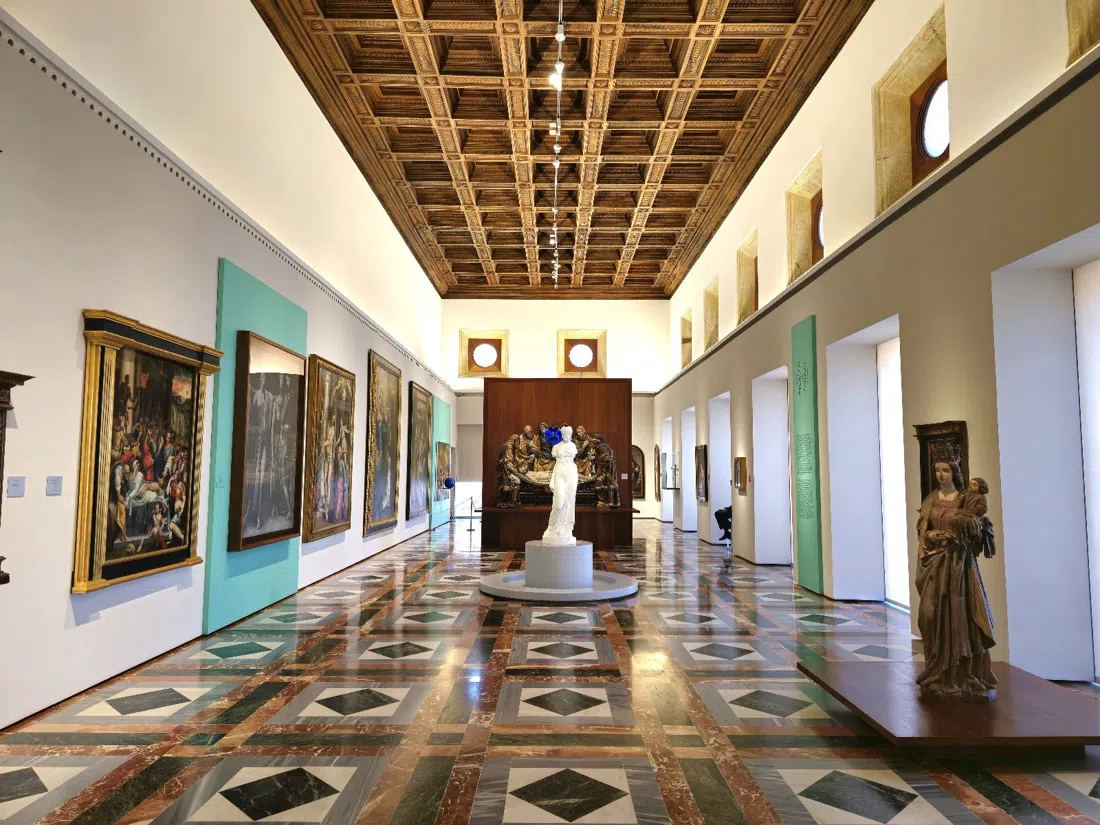
Inside the walls, the Museo de la Alhambra (ground floor of the Palace of Charles V, three minutes from the Nasrid entrance) is the best answer to rain and a slot still an hour away. It is free, it takes walk-ins and groups, and it holds the original carved panels and tilework stripped out of the palaces, so you will understand what you are about to see far better for having stood in front of them. It closes on Mondays. Upstairs in the same Renaissance shell, the Museo de Bellas Artes de Granada is a separate museum with separate hours, €1.50 and free for EU citizens, students and over-65s, worth it for the Granada-school religious sculpture and reliably almost empty. Small galleries, so large groups should split. Also closed Mondays.
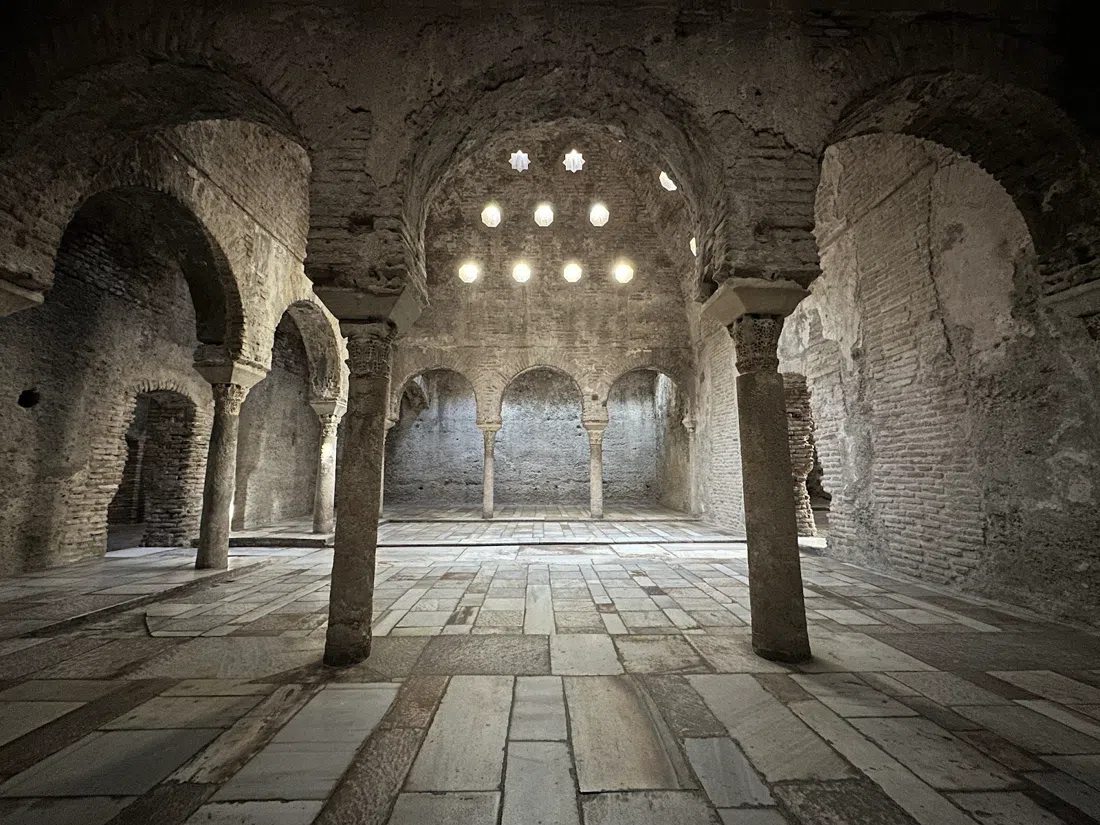
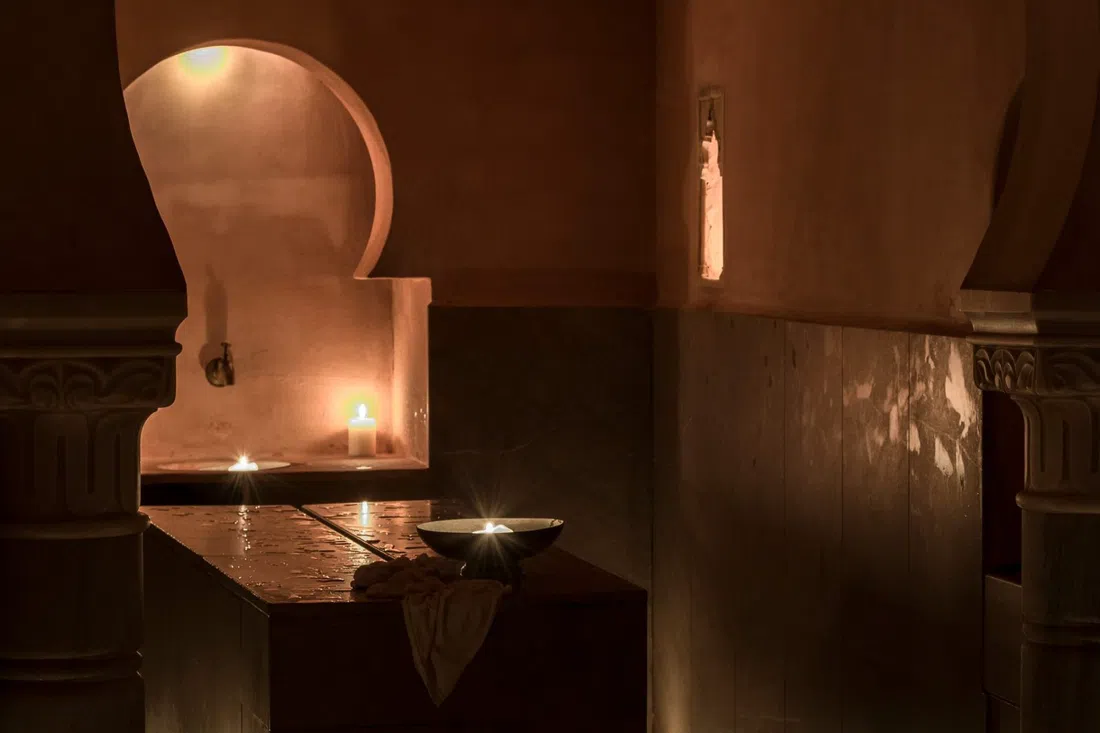
Down at the foot of the hill, the Hammam Al Ándalus Granada (just off the Carrera del Darro) is the strongest wet-weather move in the city and a direct echo of what the palaces' own baths did. From about €52 for the 75-minute bath, €59 with a 15-minute massage, €73 with 30. Sessions are timed and pre-booked; weekend slots go days ahead and large groups have to split across them. A few minutes further along the same street, El Bañuelo (Baños Árabes del Nogal) is one of the best-preserved 11th-century bath houses in Spain, €8.48 on the Andalusi Monuments combined ticket and free on Sundays. It is small, entirely indoors, capacity-limited, and the cheapest way to understand what the Nasrids built on top of.
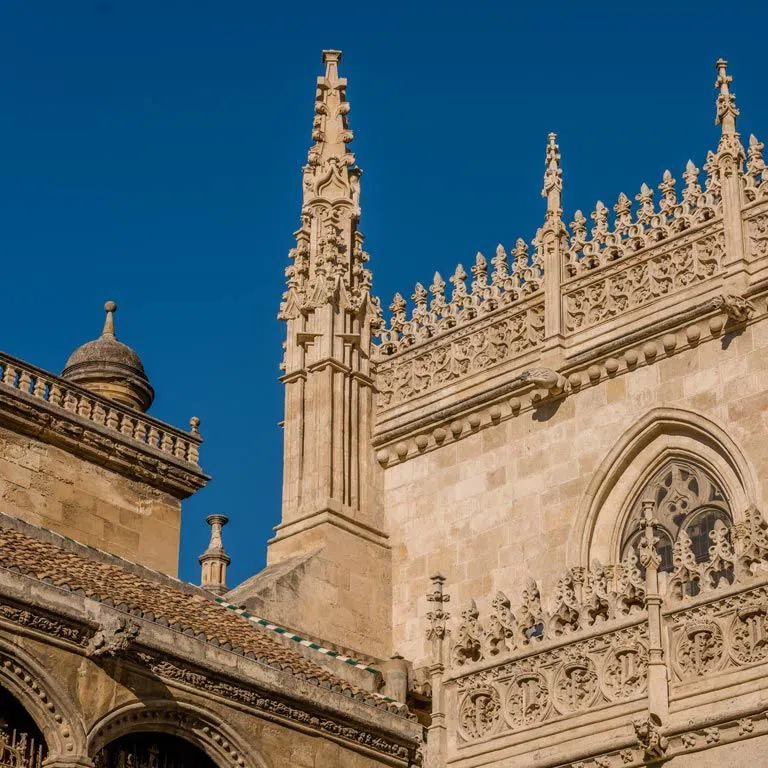
For a full afternoon written off by weather, go downtown to the Capilla Real de Granada (city centre, ten minutes from the Alhambra bus stop). €7, free slots on Wednesday afternoons, closed to visitors during services and no photography inside. It is the other half of the 1492 story and completely weather-proof; book ahead for a group.
Eating without leaving the hill
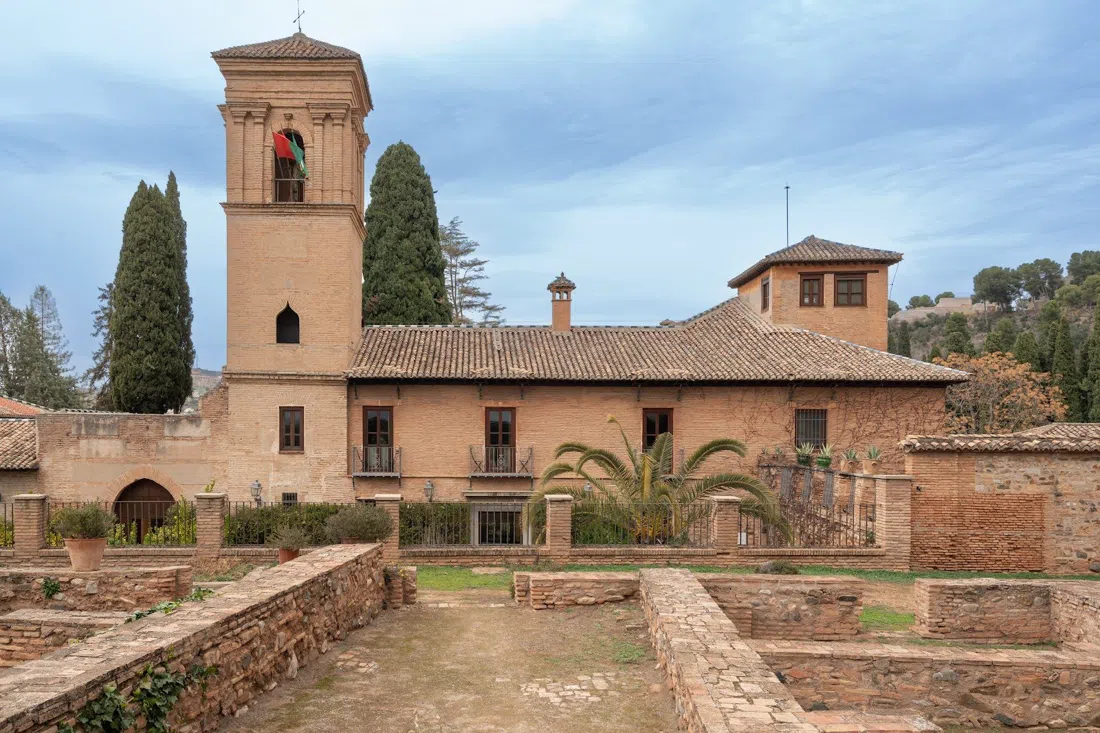
Parador de Granada (Parador de San Francisco), inside the monument walls, is the only place to sit down to a proper meal without going back out through the gates. Mains run roughly €20-30, the restaurant and terrace take bookings including groups, and the covered cloister works when the terrace does not. Reserve well ahead, since it fills with hotel guests and tour parties.
Just outside the ticket gates, Restaurante La Mimbre has been running in some form since 1881 and serves the closest honest Granadino cooking to the entrance: habas con jamón, remojón, piononos, €15-30 a head with set menus around €20. It takes groups, does set group menus, and crucially has a roofed dining room for a wet September afternoon.

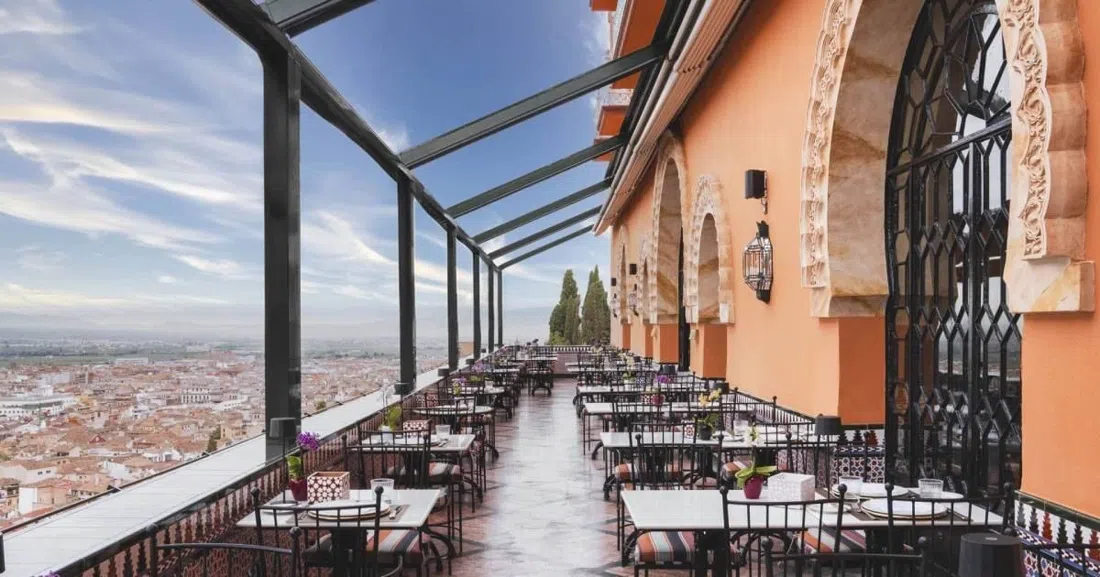
Five minutes downhill, the Terraza Príncipe at the Hotel Alhambra Palace (on the Realejo side of the hill) is the easiest sundowner in the city: open to non-residents, no booking needed for drinks, cocktails and gin and tonics around €10-14, groups fine on the terrace. When weather shuts the terrace, the indoor bar and Moorish salons carry the evening perfectly well.
Seeing the palaces from the outside
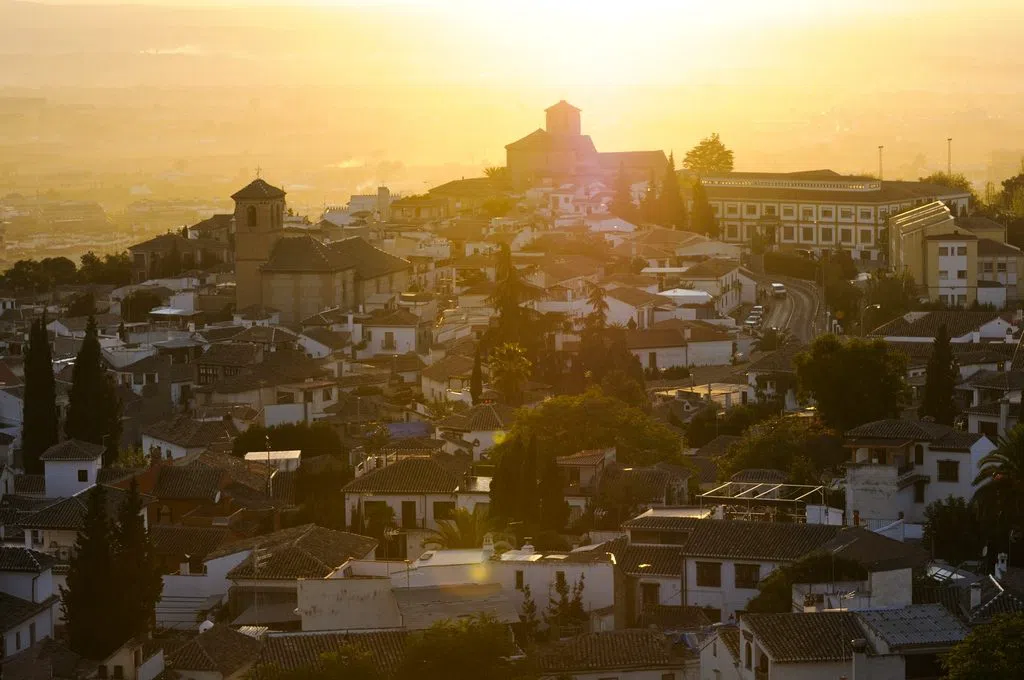
Going in is only half of it. The Mirador de San Nicolás (Albaicín) gives the postcard view back across the valley: free, open 24 hours, no capacity control, and shoulder-to-shoulder at sunset. Early morning is the better call, with the light on the red walls and perhaps six other people. For the same panorama sitting down, El Huerto de Juan Ranas (Albaicín, a minute from the mirador) takes groups by reservation and terrace tables need booking days ahead, €30-50 a head on the terrace, cheaper for tapas, with an indoor dining room below for when the terrace is rained off.
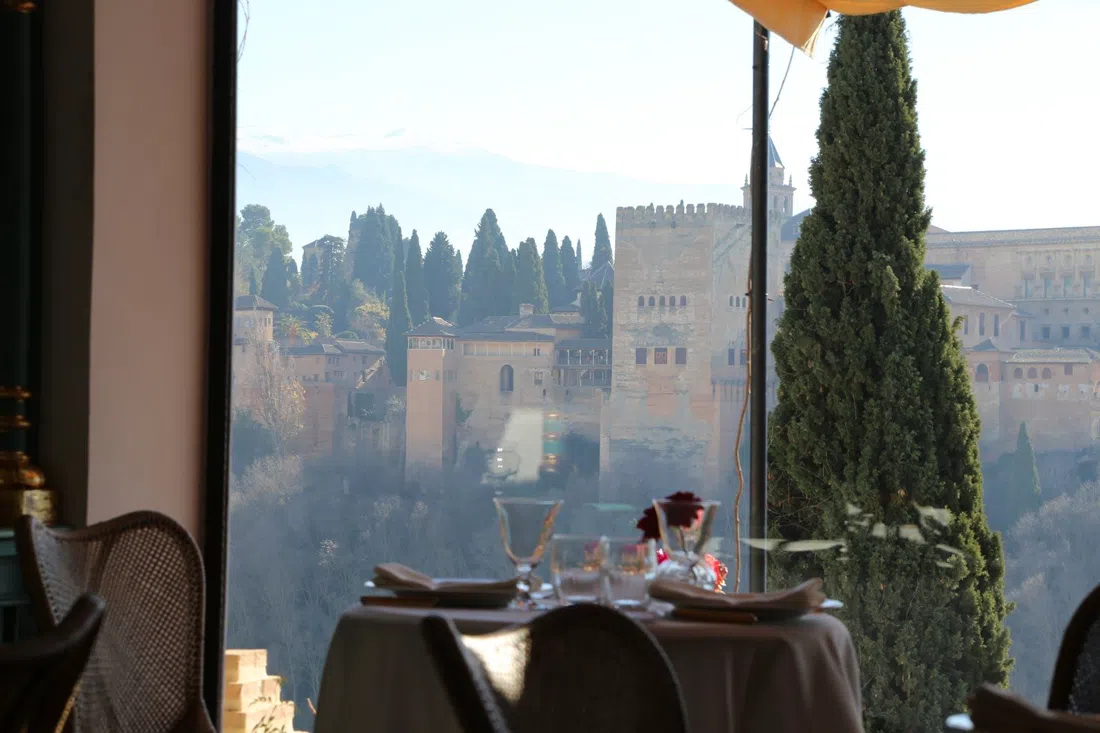
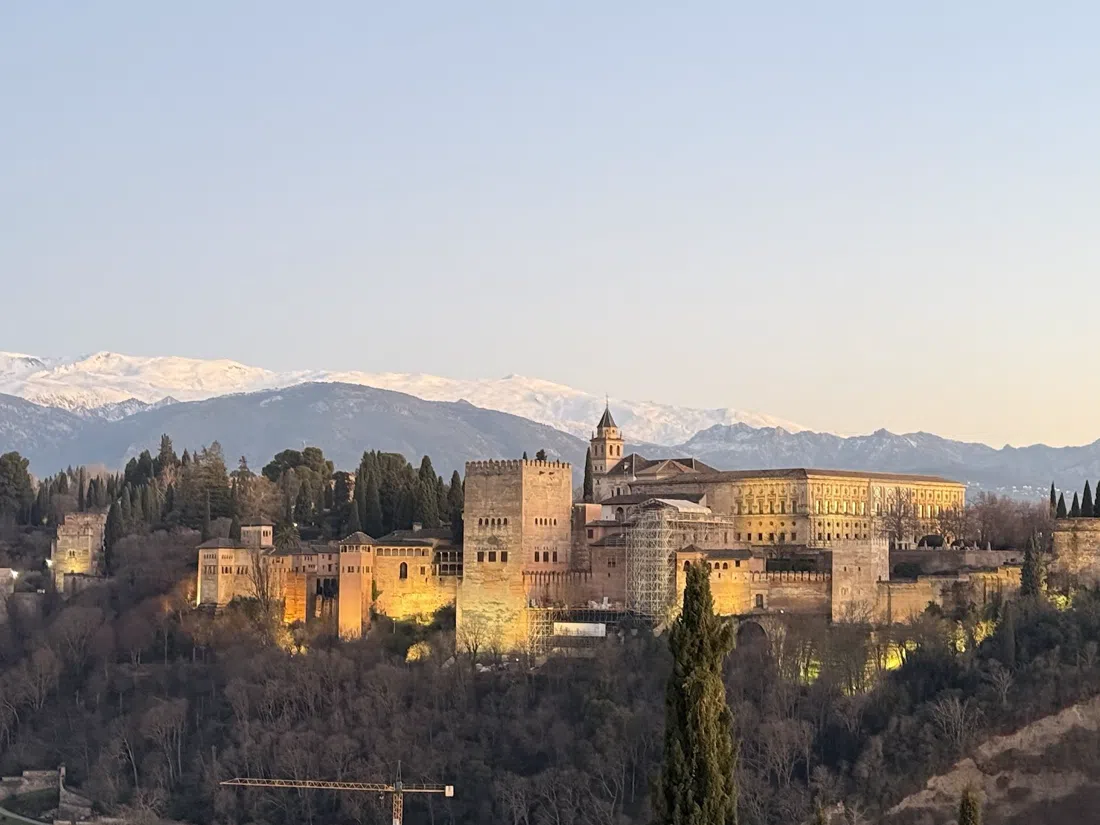
Up on the ridge beyond, the Museo Cuevas del Sacromonte (Sacromonte) is eleven original cave dwellings with free English audio guides, around €5 for adults and free for under-10s, plus the best side-on view of the Alhambra anywhere. The cave interiors are covered; the paths between them are open, steep hillside. Back at the monument's foot, Carmen de los Mártires (two minutes from the Puerta de la Justicia) is a free historic garden estate almost nobody visits. It is the obvious place to park an hour before a slot, with two caveats: it closes 14:00 to 18:00 on weekdays, and it offers no shelter at all.

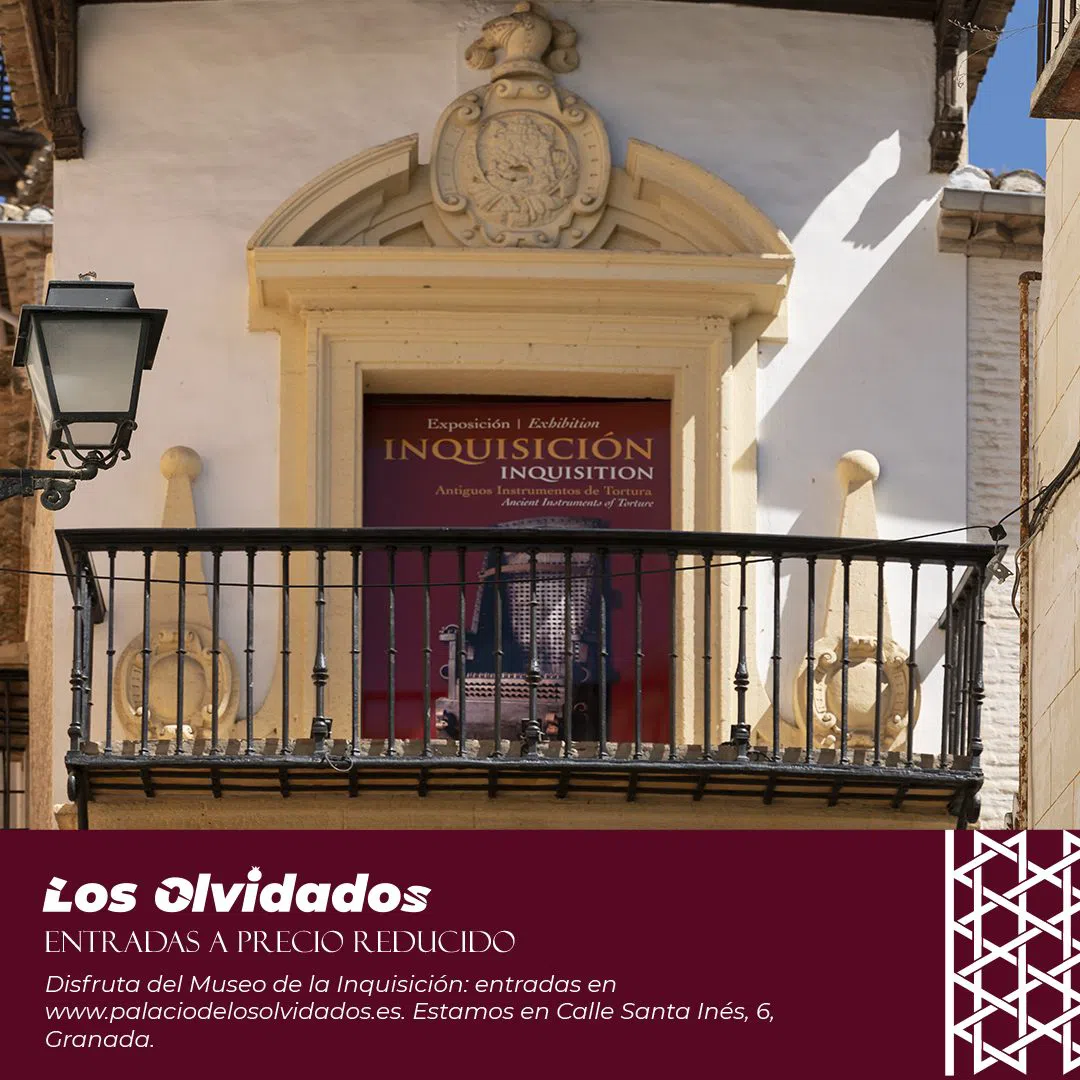
For the evening, Flamenco en Palacio (in the building long known as the Palacio de los Olvidados, on the Albaicín slope) runs a nightly indoor show with a real Alhambra-facing terrace, around €25-30, book the same day in high season. The Inquisition exhibition upstairs is genuinely grim, worth warning squeamish members of the party.
Access, bags and who it suits
Backpacks larger than 40x40cm go in the cloakroom, not around the complex. Guided groups enter in the slot printed on their ticket like everyone else and use whisper headsets inside, which keeps the palace rooms bearable. Couples and pairs have the easiest time of it: you move fast, you can take a late-released slot, and you can eat anywhere without a reservation. Groups need to plan harder, with named tickets for every person, the Torre de la Vela stair taken in ones, the small museums split, the Hammam sessions divided, and a restaurant booked rather than hoped for.
The terrain is the real access question. The hill is steep, the surfaces are old, and the route between sections involves a lot of walking on cobbles and gravel. Anyone with limited mobility should plan on taxiing to the gate and treating the Generalife as optional.
Is it worth it
Yes, without hedging. The Nasrid Palaces are one of a very small number of places that survive their own reputation: the photographs prepare you for the patterns and not at all for the scale, the coolness, the way water is used as a building material. The €22.27 ticket is good value. The frustrations are all logistical, the slot, the walking distances, the crowd in the Court of the Lions. None of them touch the rooms themselves.
It suits almost everyone, but it suits unhurried people most. If your plan is to tick the palaces at 09:00 and be at the coast by lunch, you will get the queue and not the building.
Best time to go in September 2026
Early September still runs genuinely hot in the middle of the day; by the last week the mornings have edged towards cool and the evening light gets long and gold. Take the first slots of the morning if you can. The palaces are calmer, the temperature is kind, and you still have the whole afternoon for the Generalife and the Alcazaba. Failing that, the late-afternoon slots work well in September because the sun drops earlier than in August and the courtyards stop being furnaces.
Avoid the middle of the day for anything outdoors, and keep Monday in mind, when both museums in the Palace of Charles V are shut, which removes your two best indoor fallbacks. Weekends are busier at the mirador and at the Hammam. The night visit at €12.73 is a genuinely different experience rather than a cheaper one: fewer rooms, artificial light, and an unusual quiet. Do it as a second visit, not your only one.
Practical notes
Getting up the hill: the small buses from the centre climb to the Alhambra every few minutes and cost a couple of euros, taxis are quick and cheap, and the walk up the Cuesta de Gomérez takes 20 to 30 uphill minutes through woodland, pleasant in the morning and punishing at 15:00 in early September. Driving is not worth the parking.
Money: cards work nearly everywhere, but carry €20-30 in small notes for the cave museum, El Bañuelo, bus fares and tapas bars. Timing: allow four hours inside the walls, six if you are eating on the hill. Budget: €22.27 for the general ticket, €15-30 for lunch at La Mimbre, €1.50 for the fine arts museum, around €52 upwards for the Hammam, and roughly €12 for drinks with a view. A full, unhurried day comes in near €70 a head without the guided option.
For where to base yourself, the Granada hotel search covers the Albaicín, the Realejo and the streets immediately below the monument; the Granada guide has the rest of the city, which deserves more than the day either side of your slot.