The Granada issue
The Last Free Tapa: Inside Granada's Unwritten Bar-Hopping Ritual
In Granada the tapa still comes free with your drink — here's how to work the crawl like a local, bar by bar, without ever paying for the plate.

By Álvaro ContrerasEating Granada, one free tapa at a time
There is a moment, on your first night in Granada, when the waiter sets down a caña you did not expect to be a bargain and, without a word, slides a small plate beside it — maybe boquerones fritos, silver and hot; maybe a fist of croquetas; maybe a wedge of tortilla still trembling in the middle. You reach for your wallet. You are waved off. That plate is not a gift and it is not a mistake: it is the last true free tapa left in Spain, and in this city it is still a law of nature, not a marketing gimmick. Learn to read it and you can eat and drink your way across the old town for the price of a few glasses.
The one rule that changes everything
Everywhere else in Spain the tapa is something you order and pay for. In Granada it arrives because you ordered a drink — one drink, one tapa, and the plate gets more generous, and more serious, with each round. The unwritten etiquette is simple once you see it. You rarely choose the tapa; the kitchen decides, and the surprise is half the pleasure. You keep the food coming by keeping the drinks coming, so pace yourself — a caña (small draught beer) or a glass of vermút is the local unit precisely because it lets you last four or five bars. And you move on before you're full: the whole art is the tapeo, the slow drift from counter to counter, three or four bites at each, the night assembling itself out of small plates.
A warning, stated plainly because it's the whole soul of this piece: any bar in Granada that lists tapas as paid extras and charges tourists for what should come free with the glass has broken the pact. I don't send you to those. Every place below still honours it. Prices here sit in a narrow, honest band — roughly €2.50 to €3.50 for a drink with the tapa included — and where a bar also does bigger sit-down plates (raciones), I've said so.
Book a base within walking distance of Calle Navas and Calle Elvira and you'll barely need to move all night; start with a Granada hotel search around the centre before you fix anything else.
Plan your Granada trip
Live prices from our booking partners.
Free cancellation on many rooms. We may earn a commission when you book.
Calle Navas: the beating heart, and where to begin
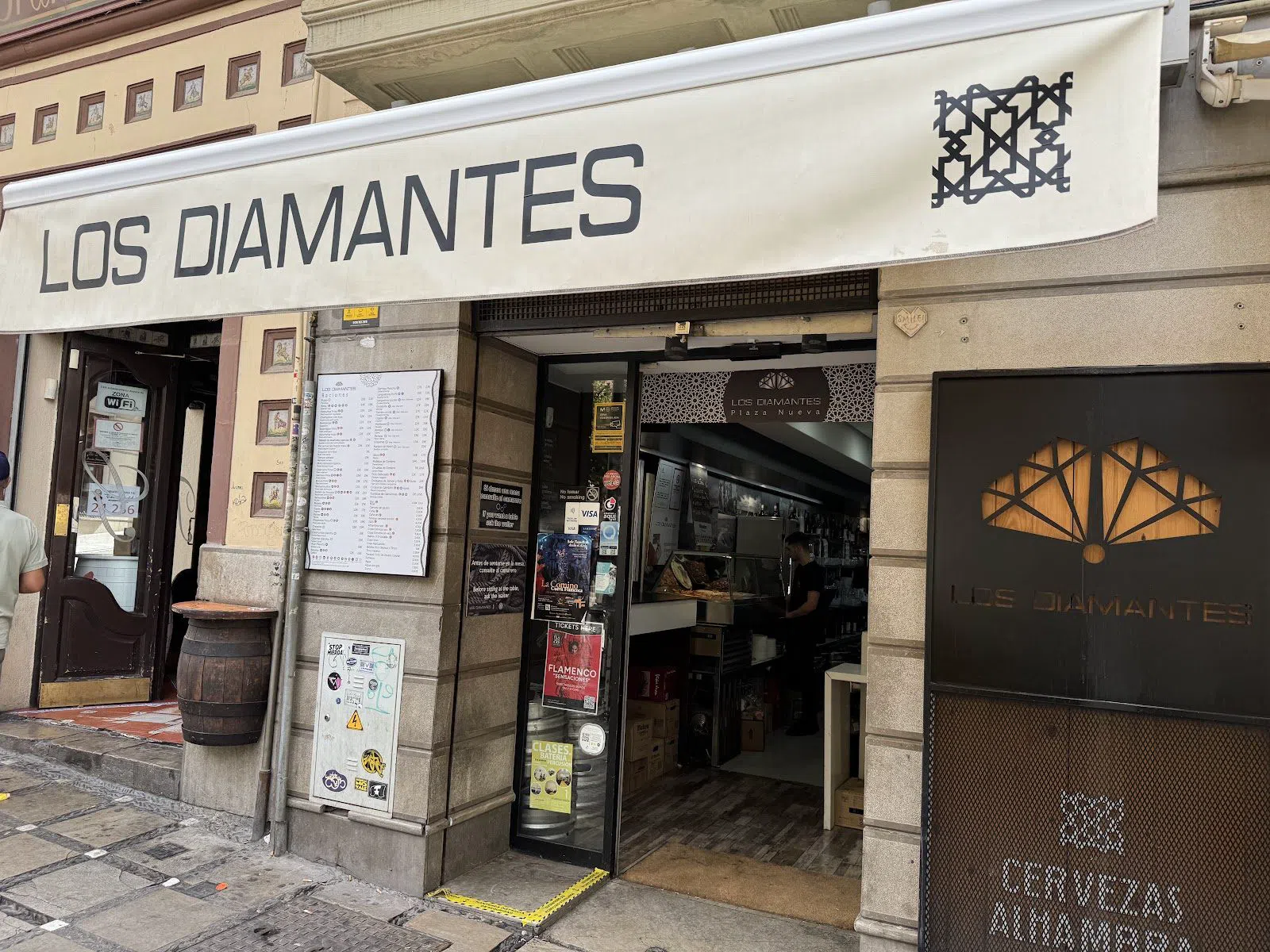
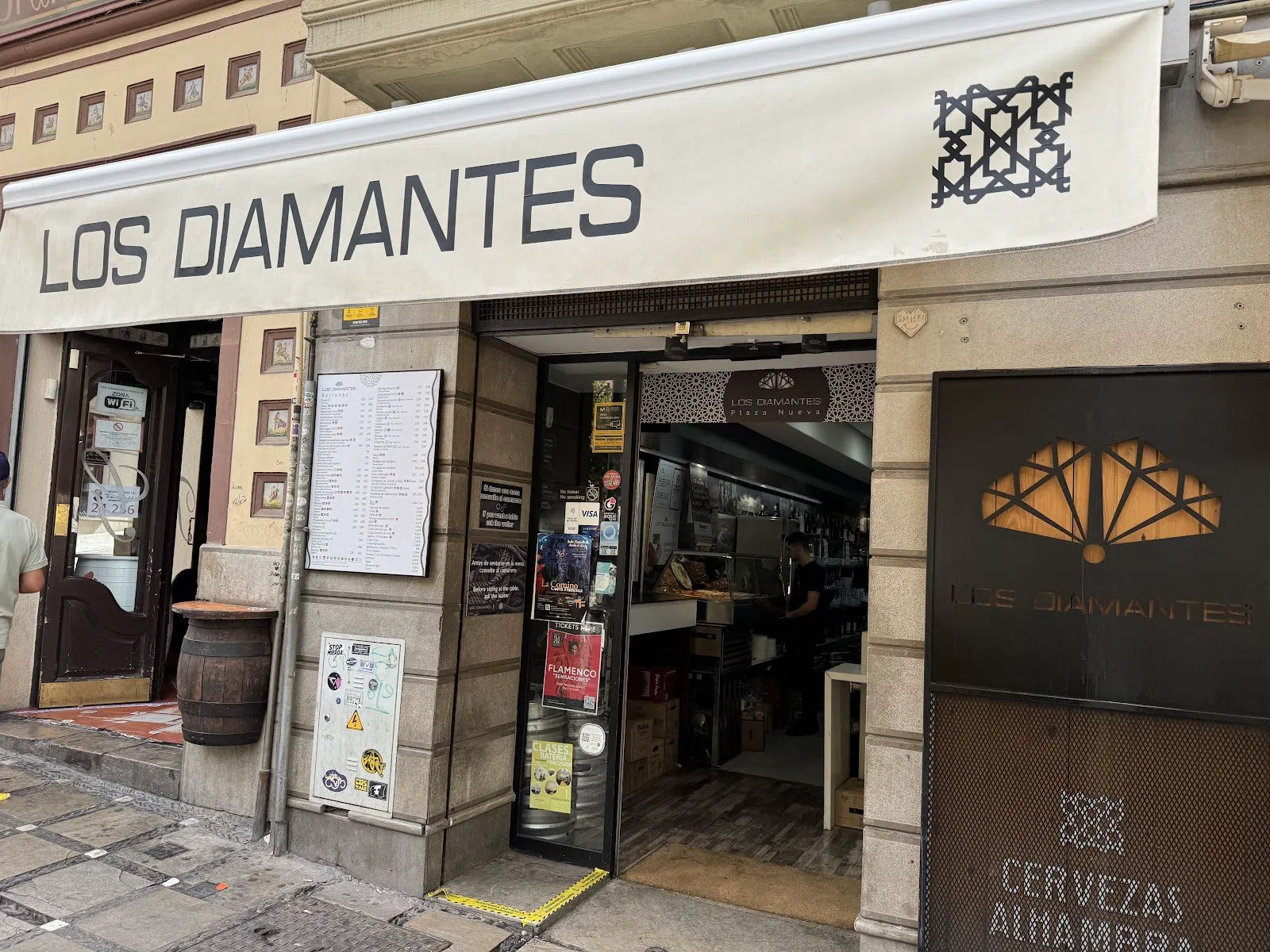
If a granadino names one bar first, it is almost always Los Diamantes (Calle Navas, dead centre). Treat it as a single institution with five branches rather than five bars: one operator, one kitchen philosophy, pescaíto frito — fried fish — done properly and generously. The original hole-in-the-wall on Navas is standing-only and gets absolutely rammed, elbows and shouting and steam off the fryer; it is electric, and it is best as a two or a small group who don't mind being pressed to the bar. Order a drink, wait for the fritura — a little heap of fried fish, maybe puntillitas (baby squid) — and understand that this is the platonic Granada bar. If you're a crowd, don't fight the Navas doorway: the same operator's larger branches over on Plaza Nueva and Reyes Católicos actually sit you down. Drinks run €2.50–3.50 with the tapa free; the raciones land at €8–14 if you want to make a meal of it.
Navas is a street built for the crawl — dozens of bars shoulder to shoulder — so plant yourself here early, around eight, before the queues thicken.
Around Elvira: the old bodegas
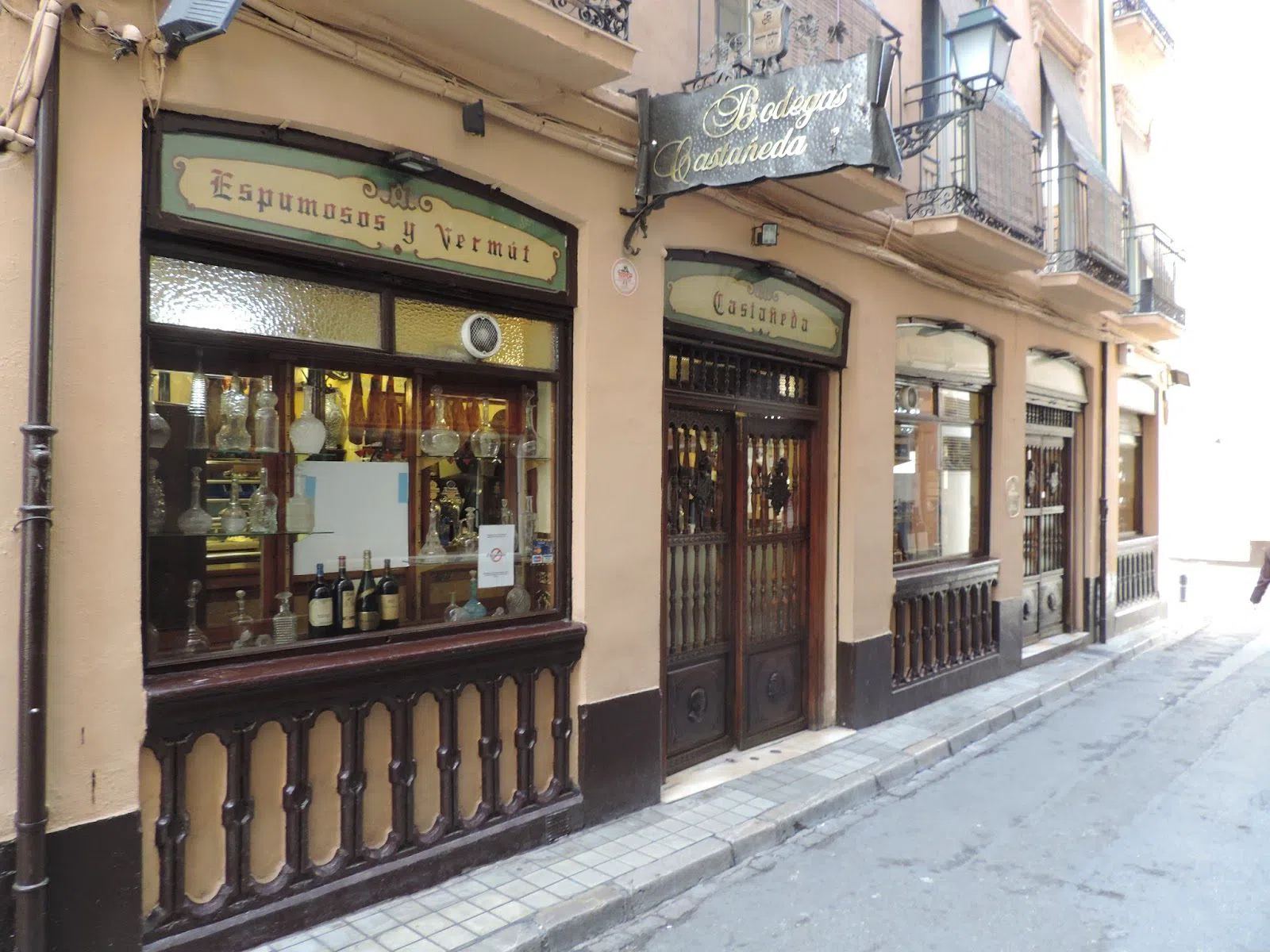
A few minutes north, near Calle Elvira, is the Granada that looks the way you hoped it would. Bodegas Castañeda (near Elvira) is the archetype: a long communal bar, barrels, hams overhead, and a house vermút de grifo — vermouth straight off the tap — that you should order without thinking. Ask, too, for the calicasas, the bar's famous piled spread; it's the kind of thing regulars order by name and newcomers point at. There are no bookings and none are needed — you simply pile in, and the long bar and back tables swallow groups better than most old bars manage, though at peak it's genuinely shoulder-to-shoulder. Drinks are €2.50–3 with the free tapa.
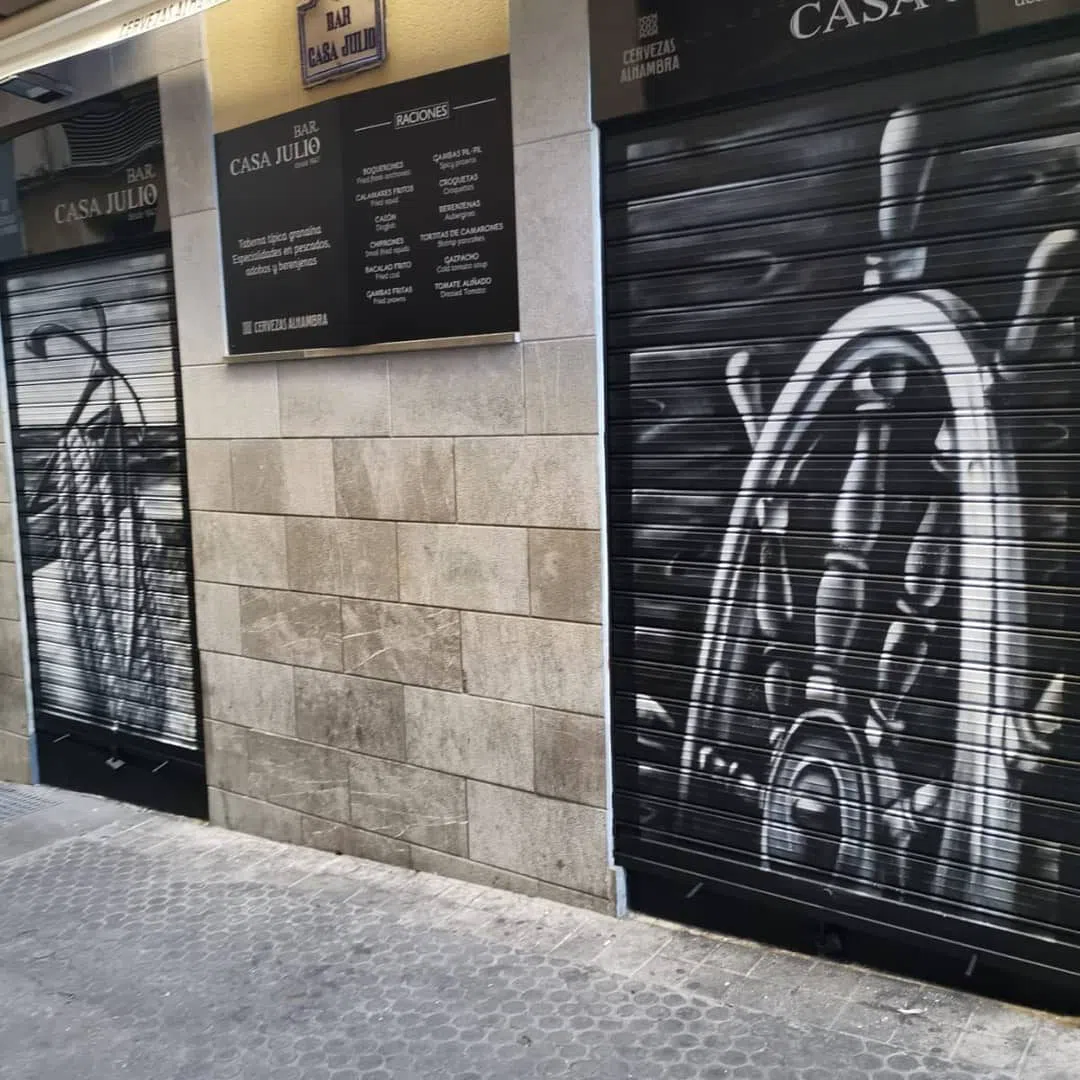
Around the corner, blink and you'll miss Casa Julio (just off Elvira), and that's the point. It barely holds a dozen people standing, so it is perfect for two and hopeless for a real group; you grab a spot in the alley, order a beer or wine at about €2.50, and get a free seafood tapa that locals will tell you is among the best fried fish in the city. It is as old-school as Granada gets — no concessions, no menu theatre, just the counter and the fryer.
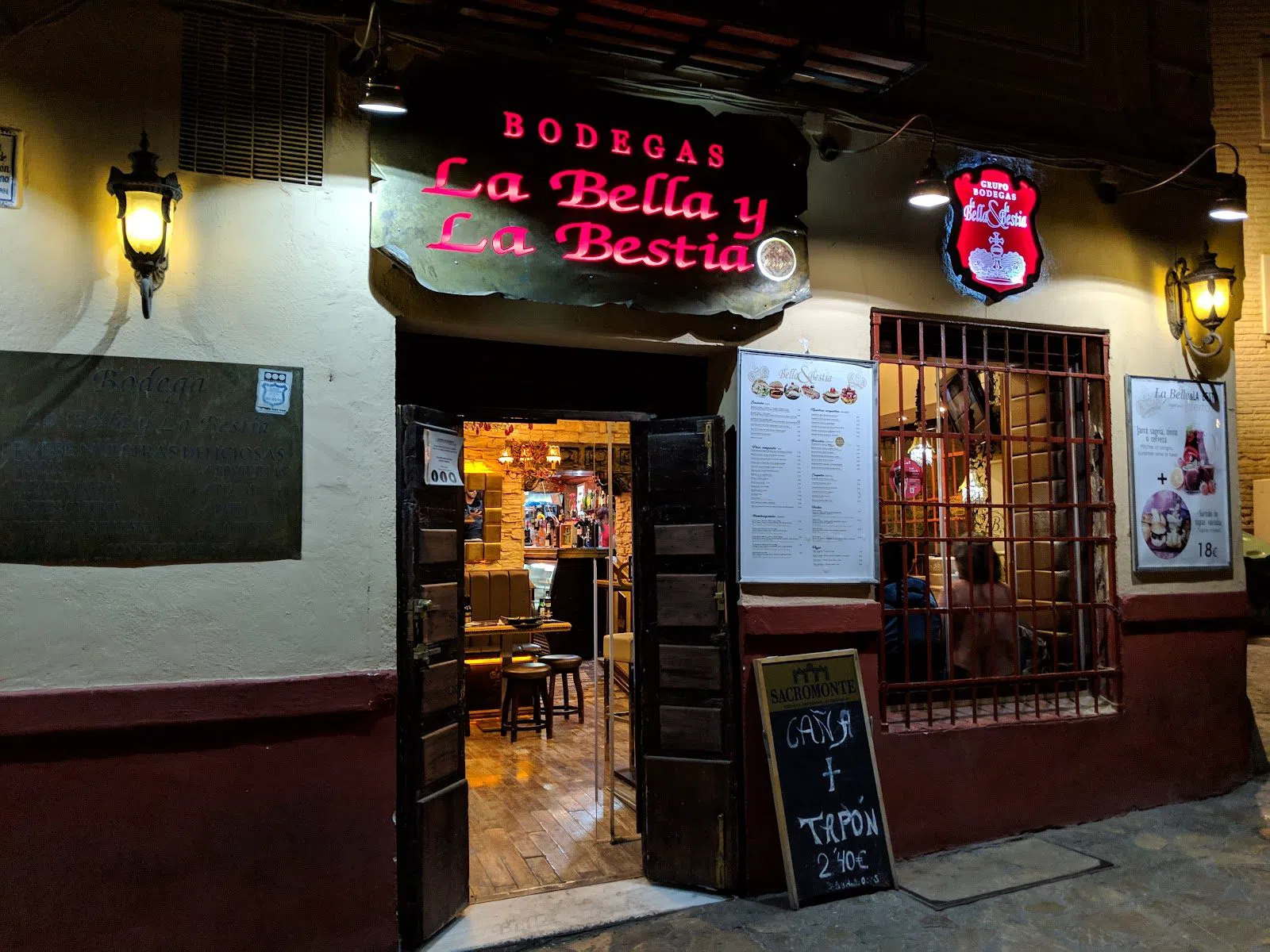
Near the cathedral, La Bella y La Bestia (old town, by the cathedral) trades on generosity: inventive, oversized tapas at low prices, a drink plus its free plate around €2.50–3. Reviewers are honest that it doesn't suit very large groups — think two to four — but it's one operator with a couple of central branches, so if one's mobbed you can spill to a sibling nearby. Count it once, and go for the sheer value.
For the wine drinkers
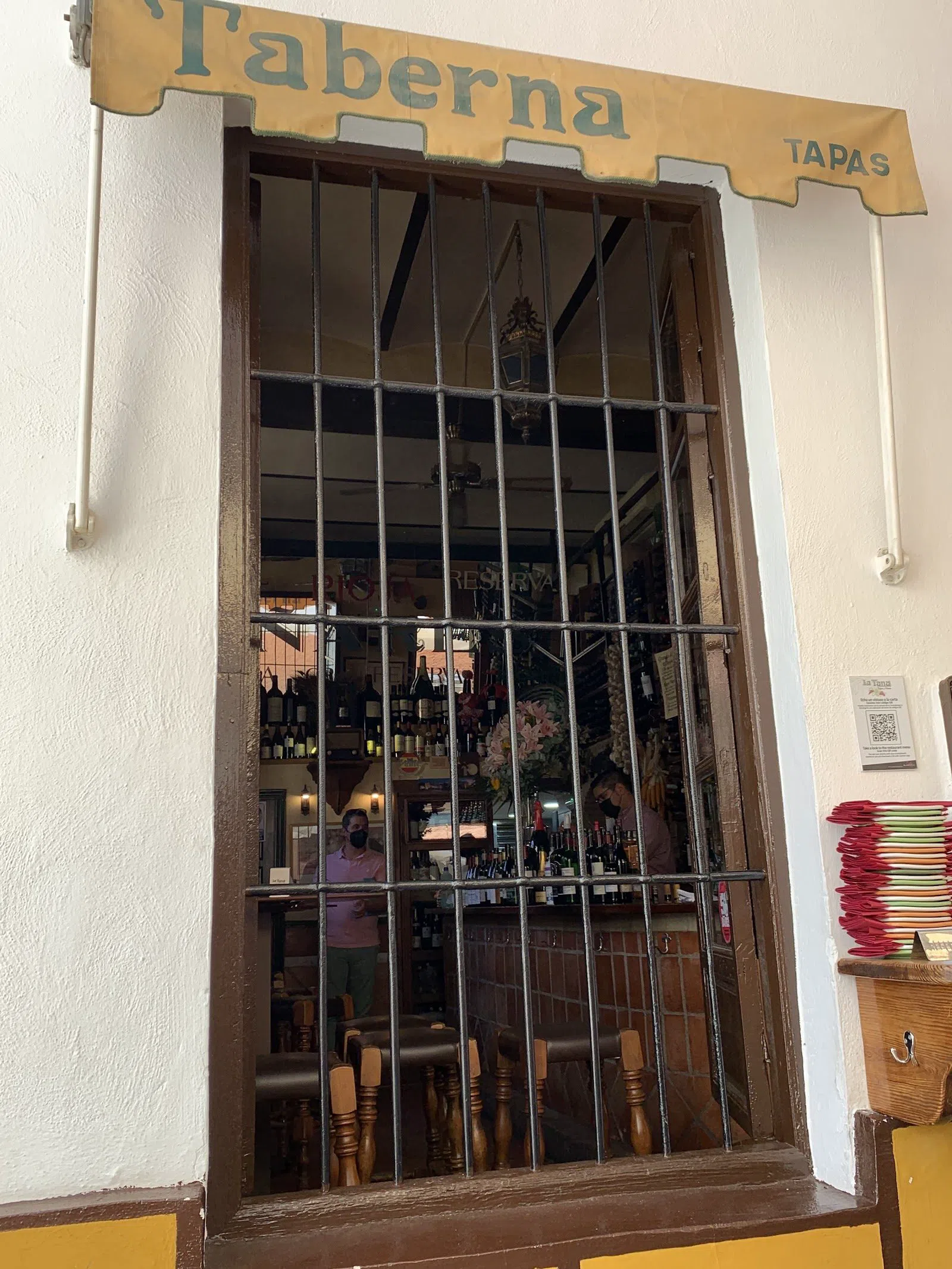
Not every night has to smell of the fryer. Taberna La Tana (near Calle Navas / Realejo edge) is a tiny, family-run bodega going since 1993, and in 2026 it topped Spain's Star Wine List — a serious credential for a room this small. It genuinely fits a couple or a four and no more; come for the wine, not a party. The move here is to tell the owner what you're drinking and let them match a Spanish red to whatever tapa lands — glasses run €2.50–4, each with its free plate. It is intimate in the real sense, not the marketing one.
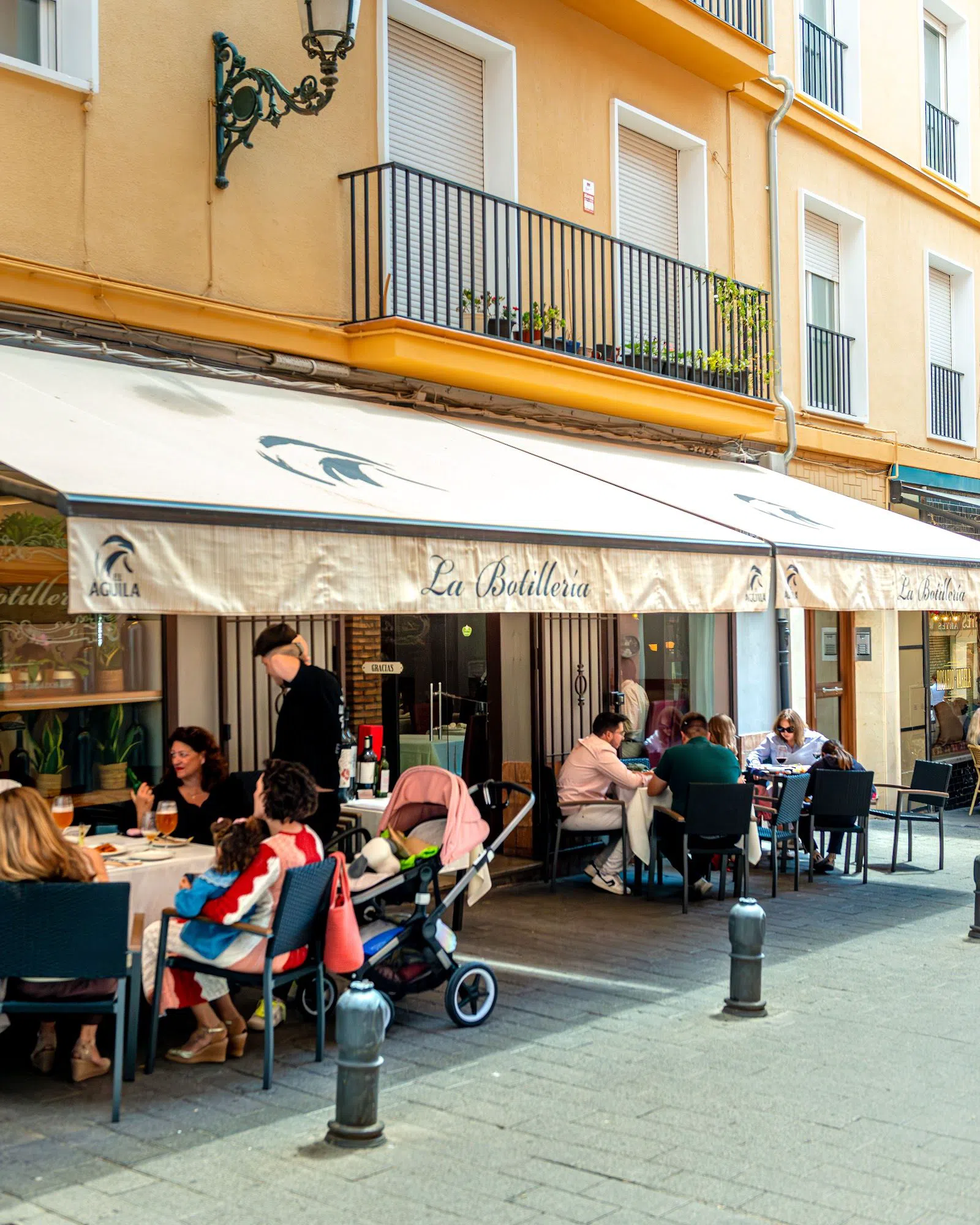
When the ancient holes-in-the-wall are full and you want room to breathe, La Botillería (central, near Navas) is the modern end of the scene: roomier, more polished, comfortable for small-to-medium groups with proper sit-down tables. The free tapas are big and meaty, the Andalusian wine list is well chosen, drinks are about €3, and if you want to sit and eat, mains run €10–16. It's the reliable pick when the classics have a queue out the door.
Beyond fried fish: the world on a plate
Granada's tapa is traditionally Andalusian — fried, porky, wonderful — but a full night of it can defeat you, and it doesn't suit every table. This is where the city quietly shines.
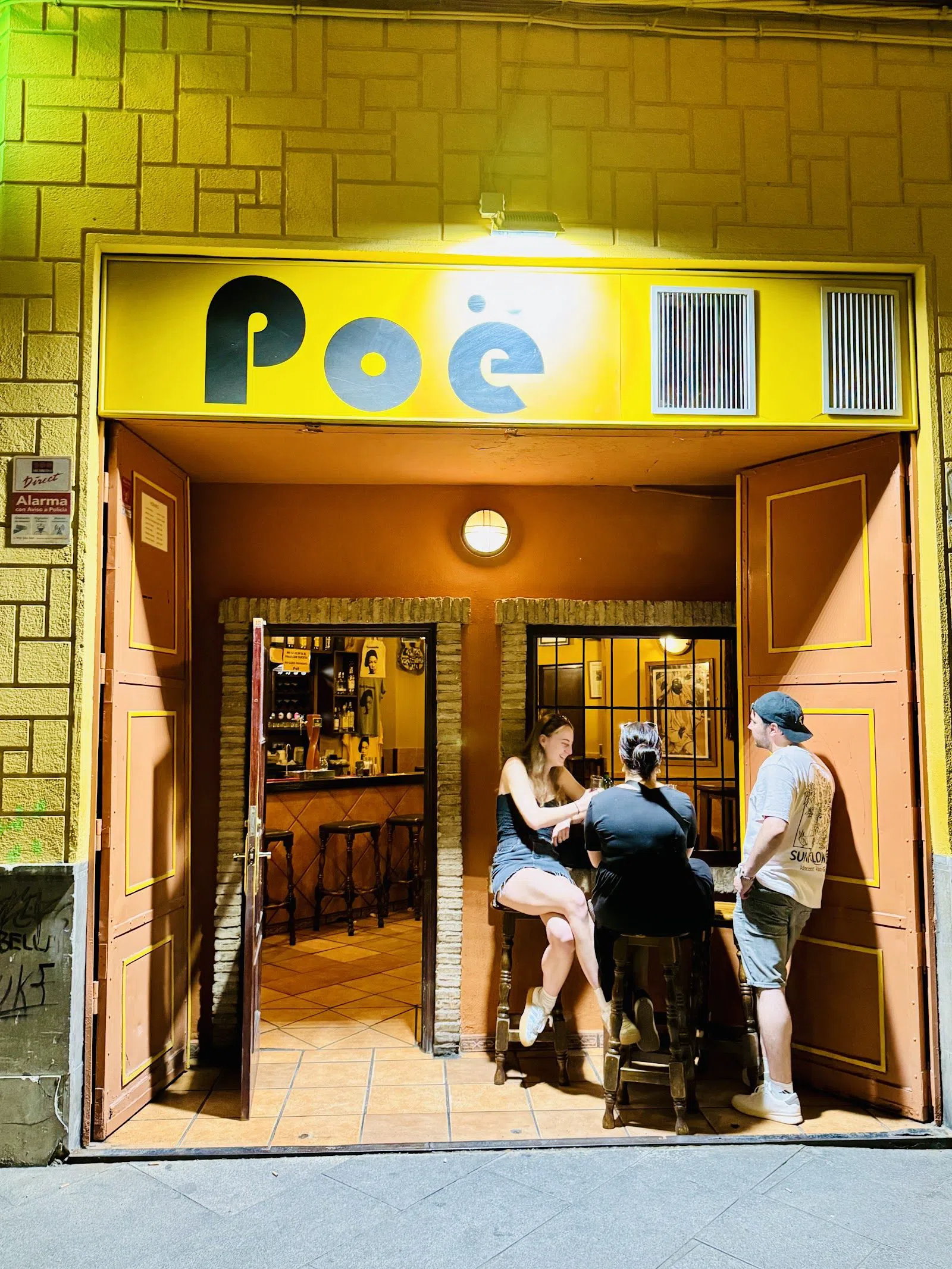
Bar Poë (Calle Verónica de la Magdalena, off the centre) is evenings-only, opening at eight and closed Mondays, and its international, small-plates menu is a genuine relief from the fritura. Vermouth is around €3, beer and wine about €2.50, and every round brings its free tapa. It's snug and hugely popular, so it works beautifully for four to six who arrive right at opening and becomes a scrum for anyone larger or later. The room is famous for being friendly — you end up talking to strangers.
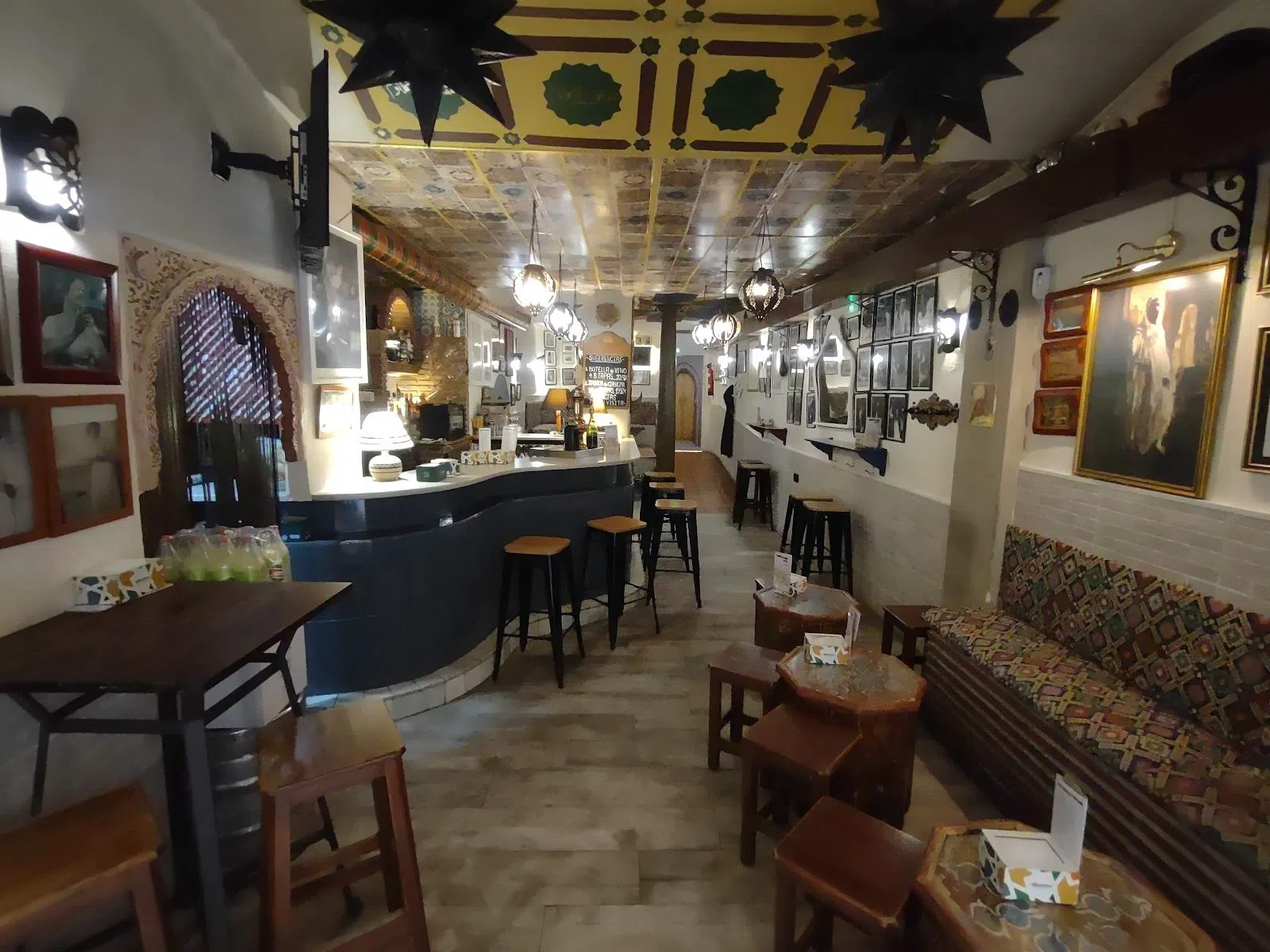
Om Kalsum (central) brings family-run Moroccan and Middle Eastern spice, and it's the most vegetable-forward, veggie- and vegan-friendly stop on this list. A drink with its free tapa is about €3, but the group move is the roughly €18 deal: a one-litre beer with eight tapas, built for sharing. It's small and mobbed, so the rule is arrive before the eight o'clock opening to beat the queue — turn up at nine and you'll wait.
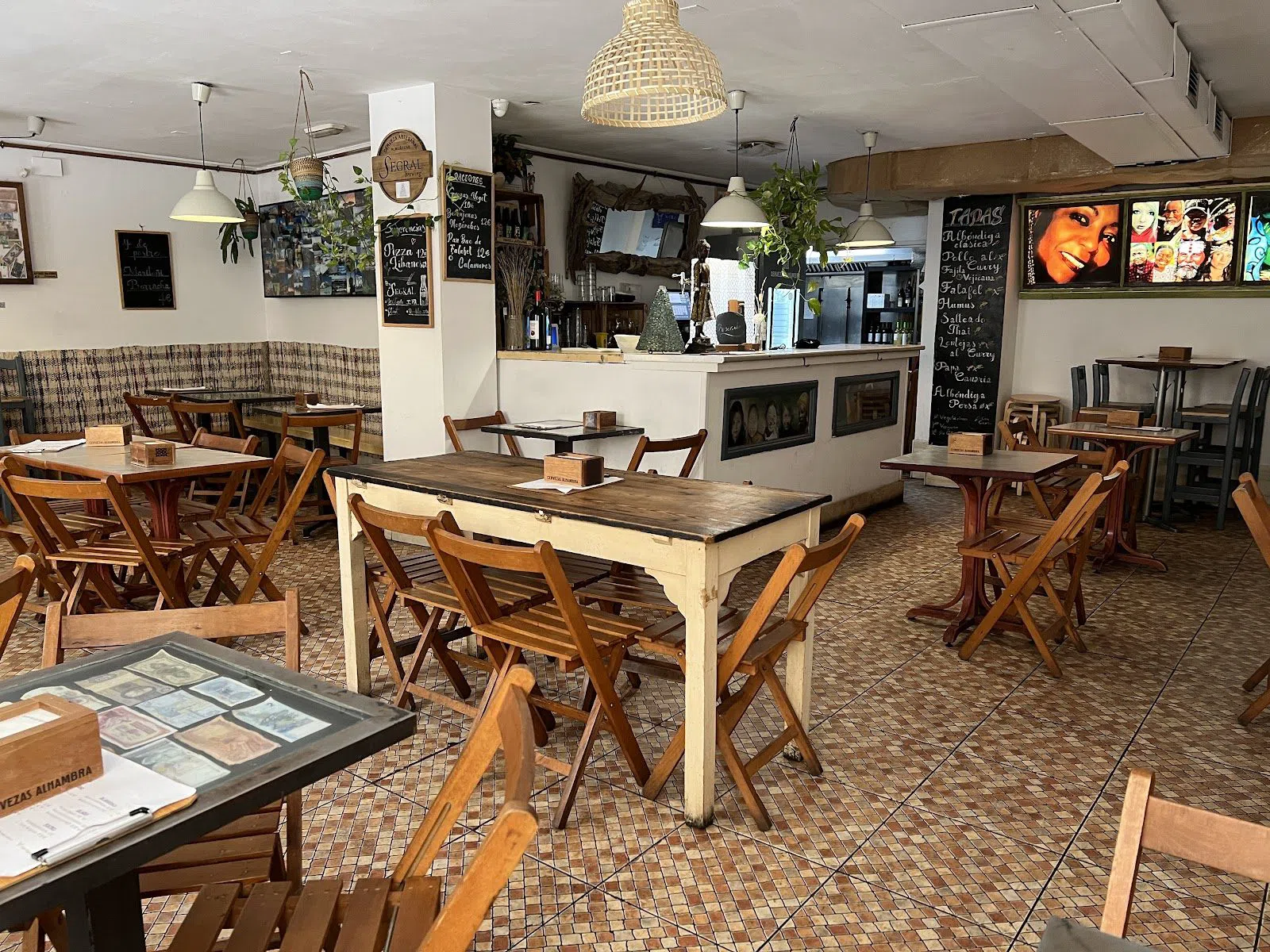
For a mixed crowd with different diets, Babel World Fusion (central, open late) is the inclusive pick. You choose a different world-fusion 'gourmet' tapa with each drink — around €3 a round — and there are plenty of vegan options. It's lively, central, and open to 2am, which makes it a natural late stop on a crawl rather than a first one.
Where the queue is the whole story
Some nights the line outside is the recommendation. La Sitarilla (local neighbourhood, off the tourist track) is a cult spot that queues round the block, and it earns it: the free tapas run to paella, croquetas and a proper guiso de cerdo (pork stew), the drinks are €2.50–3, and the decor is gloriously mad. It's small inside, so a big group means waiting; show up fifteen to thirty minutes before the eight o'clock opening and you'll walk in with the first wave. This is the bar to prove that Granada's free-tapa pact isn't a tourist relic — it's genuinely how locals eat.
Terraces, tiles and the big-group problem
Bar-hopping in tiny standing bars is glorious for two and a logistical nightmare for eight. Granada has answers.
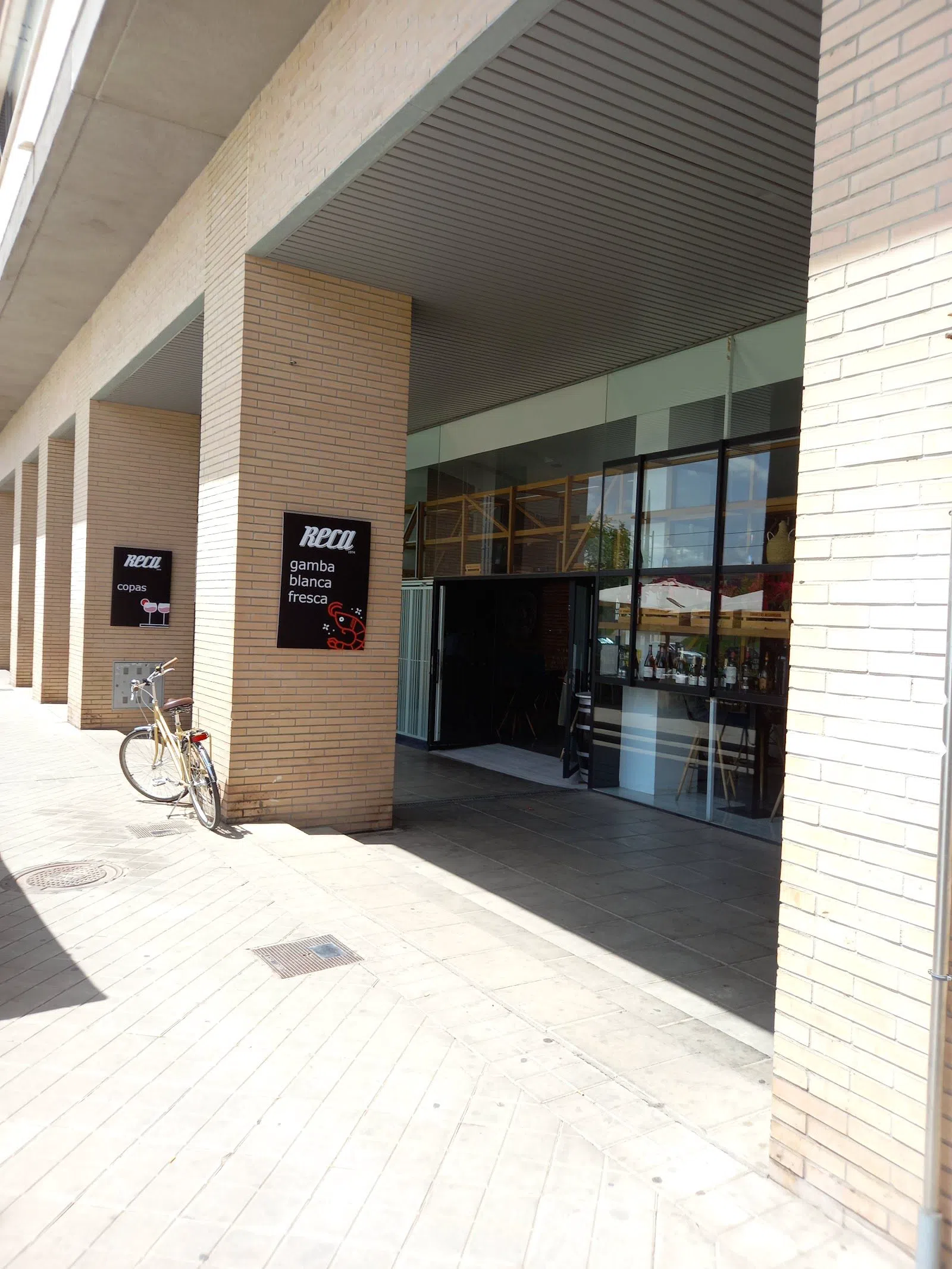
Bar Reca (Plaza de la Trinidad) is one of the easiest places in town to seat a group outdoors: a sprawling square-side terrace under the trees, open 365 days a year. Order a caña at about €2.50, take the free tapa, and settle into the leafy plaza — the terrace, not the cooking, is the reason to come, and that's exactly the right expectation.
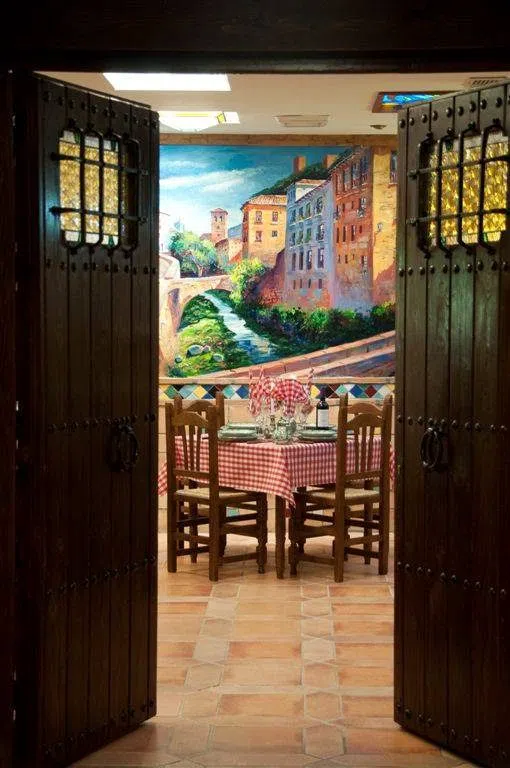
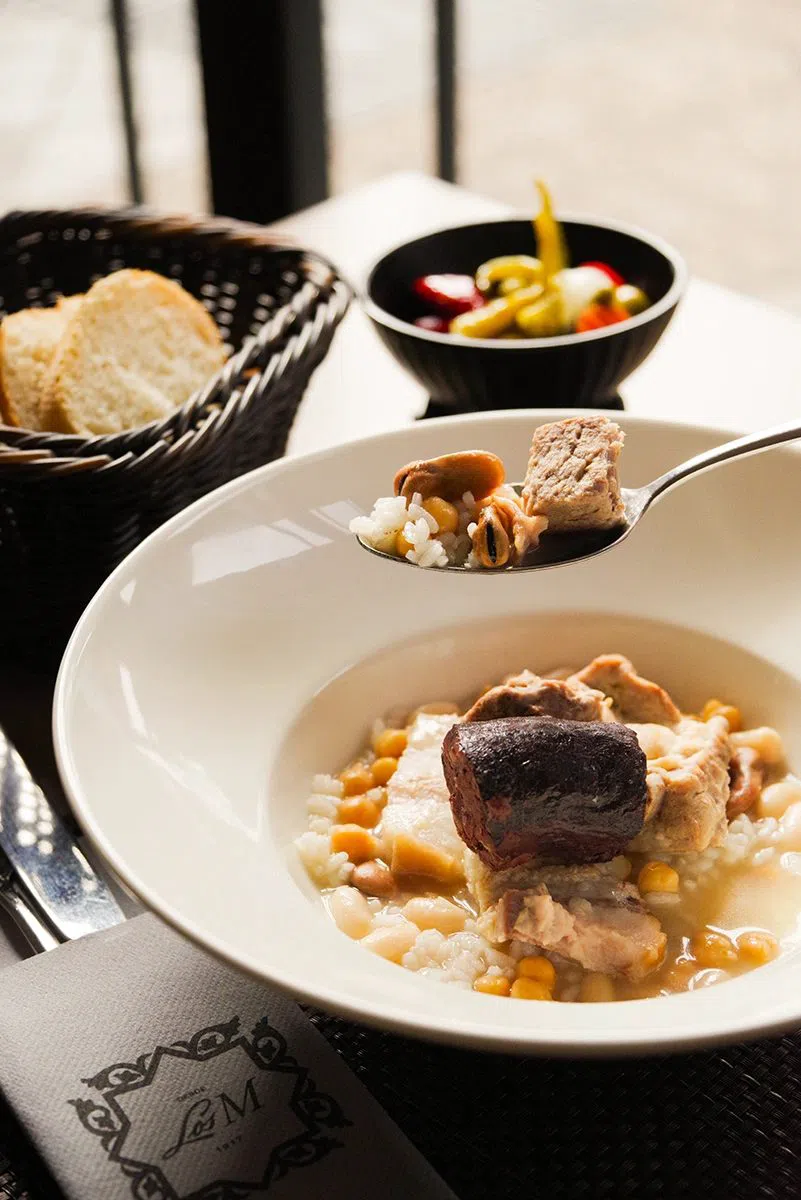
When you're a proper crowd and need to actually sit down and eat, Los Manueles (central, near Reyes Católicos) is the safe pick. Open since 1917, it's polished for visitors — sharing menus, private rooms, larger dining spaces that can take big parties — and the tiled rooms are a genuine stunner. Drinks come with a tapa at around €3, and the sit-down raciones run €10–18. It's less wild than the Navas fryer, but it solves the group problem without breaking the pact.
If you want to understand how these bars fit into the wider city — the Albaicín, the Alhambra, where to eat between crawls — the full Granada guide maps it out.
How to actually do it: a first-timer's route
Start at eight on Calle Navas with Los Diamantes for the fried-fish baptism, drift to Elvira for Bodegas Castañeda and its tap vermouth, squeeze into Casa Julio for two if you're travelling light. Break the fry-up with Om Kalsum or Bar Poë — arrive at opening — then let the night loosen at La Botillería or run it late at Babel World Fusion. Couples should build the evening around Taberna La Tana and La Bella y La Bestia; groups should anchor on Bar Reca's terrace or a table at Los Manueles and send scouts to the standing bars. And at least once, queue for La Sitarilla — the wait is part of the ritual.
The practical bit
Money. Carry cash. Many of these bars are small, old-school, and either cash-only or cash-preferred, and rounds are cheap enough that card minimums are a nuisance. Budget realistically: at €2.50–3.50 a drink with the tapa free, a genuinely full four- or five-bar night comes in around €15–25 a head, more only if you add paid raciones.
Timing. The evening tapeo gets going from eight and the best small bars (Bar Poë, Om Kalsum, La Sitarilla) open at eight sharp with queues forming just before. Arrive at opening, not at nine. Lunchtime tapas exist too and are quieter if crowds aren't your thing. Note that Bar Poë closes Mondays.
Getting around. This is a walking crawl — Navas, Elvira, the cathedral and Plaza de la Trinidad all sit within a ten-minute stroll of each other, so stay central and you'll never need a taxi between bars. The streets are cobbled and the old town is hilly toward the Albaicín; wear shoes you can stand in for hours.
Groups vs couples. Be honest with yourself before you set out. Standing bars — Los Diamantes on Navas, Casa Julio, Taberna La Tana — are for two to four. For anything bigger, book around Los Manueles, Bar Reca or La Botillería, and treat the tiny classics as quick two-person detours rather than the main event.
The one rule, again. Order a drink, wait for the plate, don't pay for it, move on. If a bar ever tries to charge you for the tapa that should have come free, you're in the wrong bar — and in Granada, there's a better one thirty seconds down the street.
Before you go
Are tapas really free in Granada in 2026?
Yes. Granada is the last major Spanish city where a free tapa still comes automatically with every drink you order — one drink, one plate, and the tapas get more generous with each round. Drinks run about €2.50–3.50 with the food included. If a bar charges tourists separately for the tapa, it has broken the local pact; the bars in this guide all still honour it.
Which Granada tapas bars are best for a big group?
For larger parties, anchor on Los Manueles (sharing menus, private rooms, seats since 1917), Bar Reca's sprawling year-round terrace on Plaza de la Trinidad, or the roomier modern La Botillería. The tiny standing bars like the original Los Diamantes on Calle Navas, Casa Julio and Taberna La Tana are best kept to two-to-four-person detours.
What time should I start a tapas crawl in Granada?
Start around 8pm — that's when the evening tapeo begins and when the best small bars open. Places like Bar Poë, Om Kalsum and La Sitarilla open at 8 sharp with queues forming just before, so arrive at opening rather than at 9. Babel World Fusion runs late (to 2am), making it a natural last stop. Note Bar Poë closes on Mondays.
Do I need cash for tapas bars in Granada?
Carry cash. Many of the best bars are small and old-school, cash-only or cash-preferred, and the cheap rounds make card minimums a nuisance. Casa Julio and Bodegas Castañeda are classic examples. A full four- or five-bar night typically costs around €15–25 a head unless you add paid raciones.
Where can I find vegetarian or vegan tapas in Granada?
Granada's tradition leans fried and porky, but there are strong plant-forward options. Om Kalsum serves family-run Moroccan and Middle Eastern tapas and is the most veggie- and vegan-friendly stop, with a roughly €18 litre-beer-and-eight-tapas sharing deal. Babel World Fusion also offers plenty of vegan world-fusion picks and stays open late.