Granada-nummeret
Walking Magdalena, Granada's barrio of palaces and tapas
The quarter south-west of Granada's Cathedral has free palace courtyards, a convent fountain, four streets of tapas bars and gigs every night.
Av Camille FontaineGranada beyond the Alhambra queue
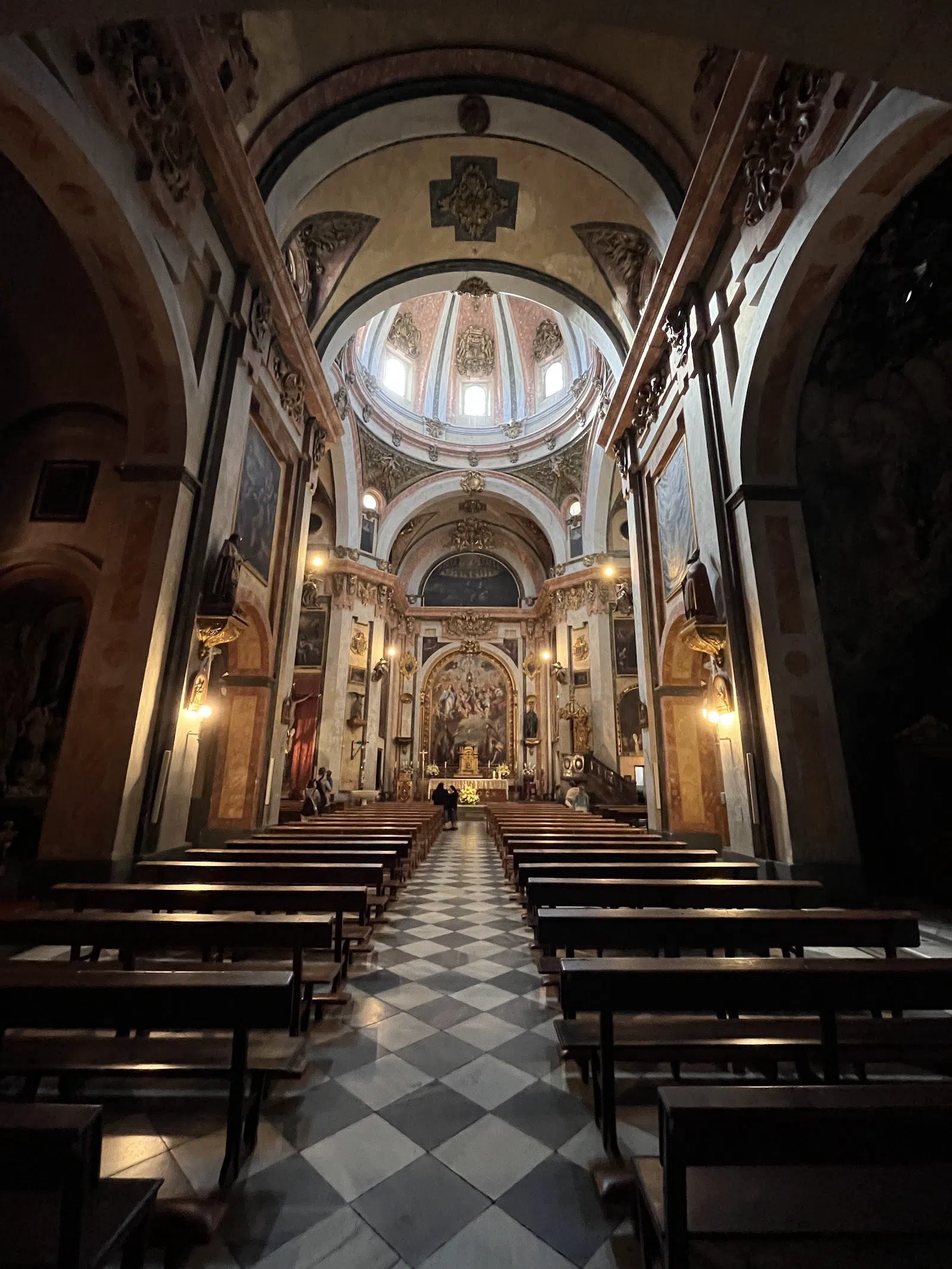
The church that gave Magdalena its name went up between 1677 and 1694 for Recollect Augustinian nuns, and only took on the parish after the 1840s disentailment. The parish's original church of 1508, on Calle Mesones, was pulled down at that point. Granada's Cathedral is 8 minutes' walk north-east.
The church on Calle Gracia
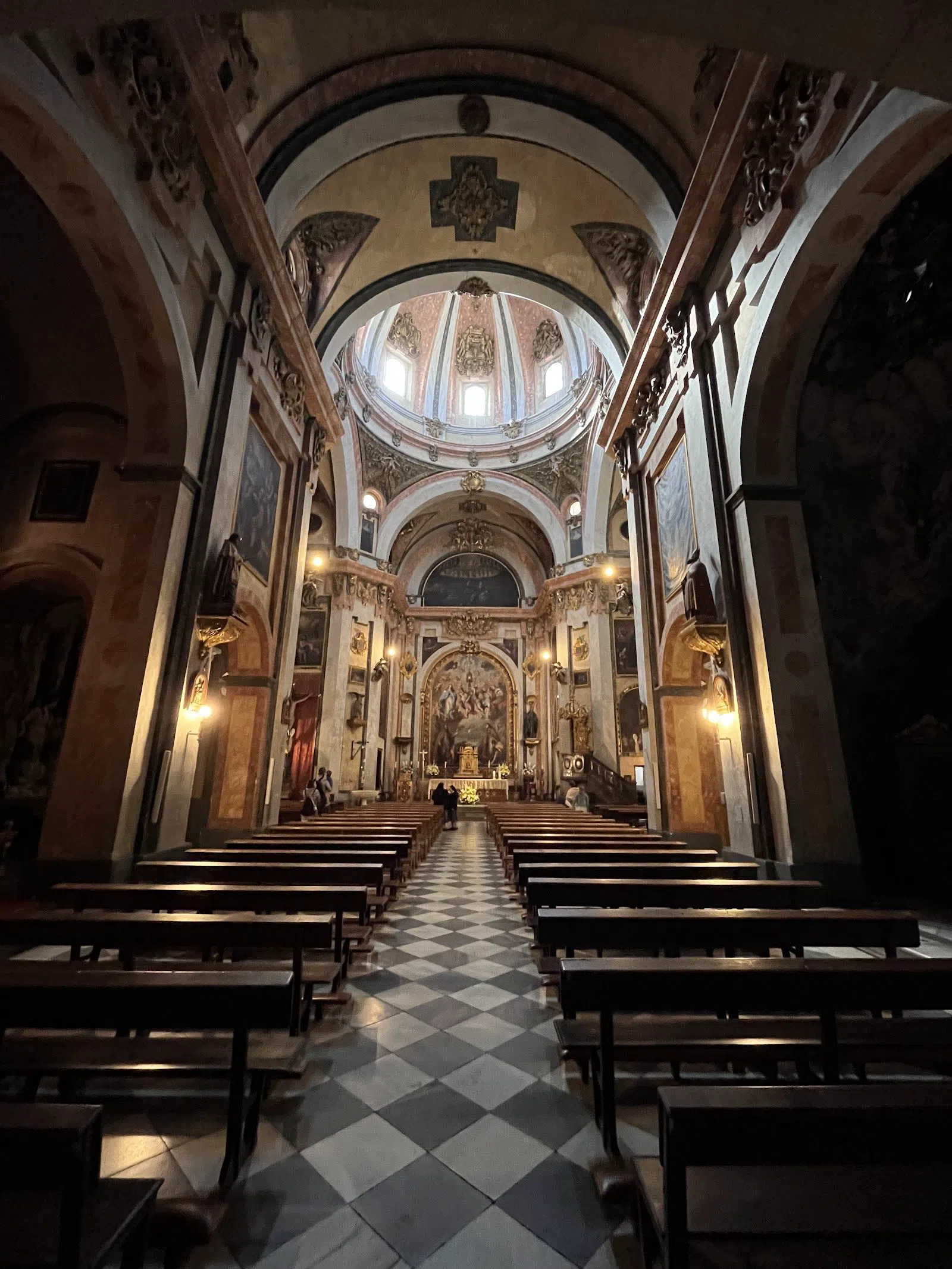
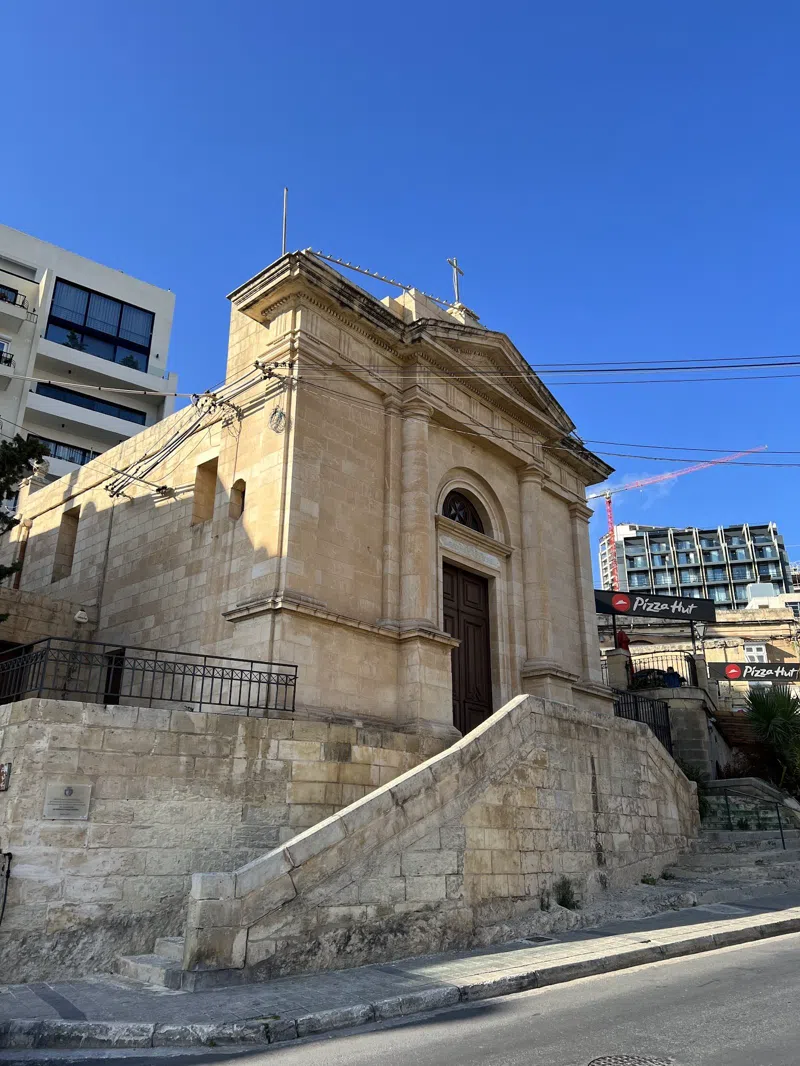
Iglesia de Santa María Magdalena (Calle Gracia) is a working parish with a second door on Puentezuelas, and it costs nothing to walk in outside Mass. The front is bare brick and coloured glazed tile, the main facade alone in pale ashlar stone, with a single square tower to the left. Three arches stand between heavy pilasters, under a niche of angels holding a monstrance.
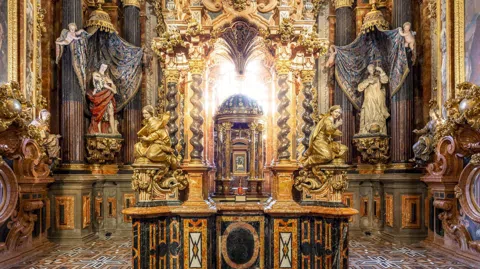
Inside, a Latin-cross nave carries six side chapels and an eight-ribbed dome with a lantern. One chapel is built as a fake rock grotto for Lourdes; look for it once your eyes have adjusted. Small groups walk straight in, and large guided parties are not taken.
Use the Puentezuelas door on the way out. It puts you on the street where most of the rest of this walk happens.
Planlegg reisen til Granada
Oppdaterte priser fra våre bookingpartnere.
Gratis avbestilling på mange rom. Vi kan motta provisjon når du bestiller.
Palaces on Puentezuelas and Calle Paz
Noble families began building here in the 18th century, when Magdalena was still market gardens outside the walls. Palacio de los Condes de la Jarosa (between Calle Buensuceso and Calle Paz) is the grandest of those houses, three storeys with a plain rendered front on a narrow shaded street. Two interior courtyards sit one behind the other, with a walled garden at the back.
The building has held university offices since 2019, among them the Instituto Confucio, the Centro de Culturas Eslavas and the CASA programme, and their signage now sits beside the old doorway. Entry is free but has to be arranged in advance, and only for small groups. The doorway and the courtyards repay the detour even if the hall is as far as you get.
Palacio de las Columnas (Puentezuelas 55) is the building the barrio is known by, and home to the University of Granada's Faculty of Translation and Interpreting, a faculty here since 1945. The VII Count of Luque bought the land in 1803. Four monumental Doric columns run across the ground floor and frame the main door; above them a balcony sits between attached Ionic columns, under a triangular pediment and a large carved coat of arms.

The courtyard and halls are free, and reliably unlocked only in term time, so come on a weekday during the teaching year. The floors are tessera mosaic. The flat roof terrace looks over the Cathedral to the Alhambra and the Sierra Nevada, the best free view in the quarter. Getting up there means the university's heritage programme, El Edificio del Mes, or a guide; organised groups need the same.
Plaza de la Trinidad and Plaza de Gracia
Plaza de la Trinidad is Magdalena's northern doorway. The Trinitarios Calzados convent stood here from 1517 until it was demolished outright in 1889. Only the cloister fountain survived, baroque stone and marble, re-set at the dead centre of the square where it had always stood.
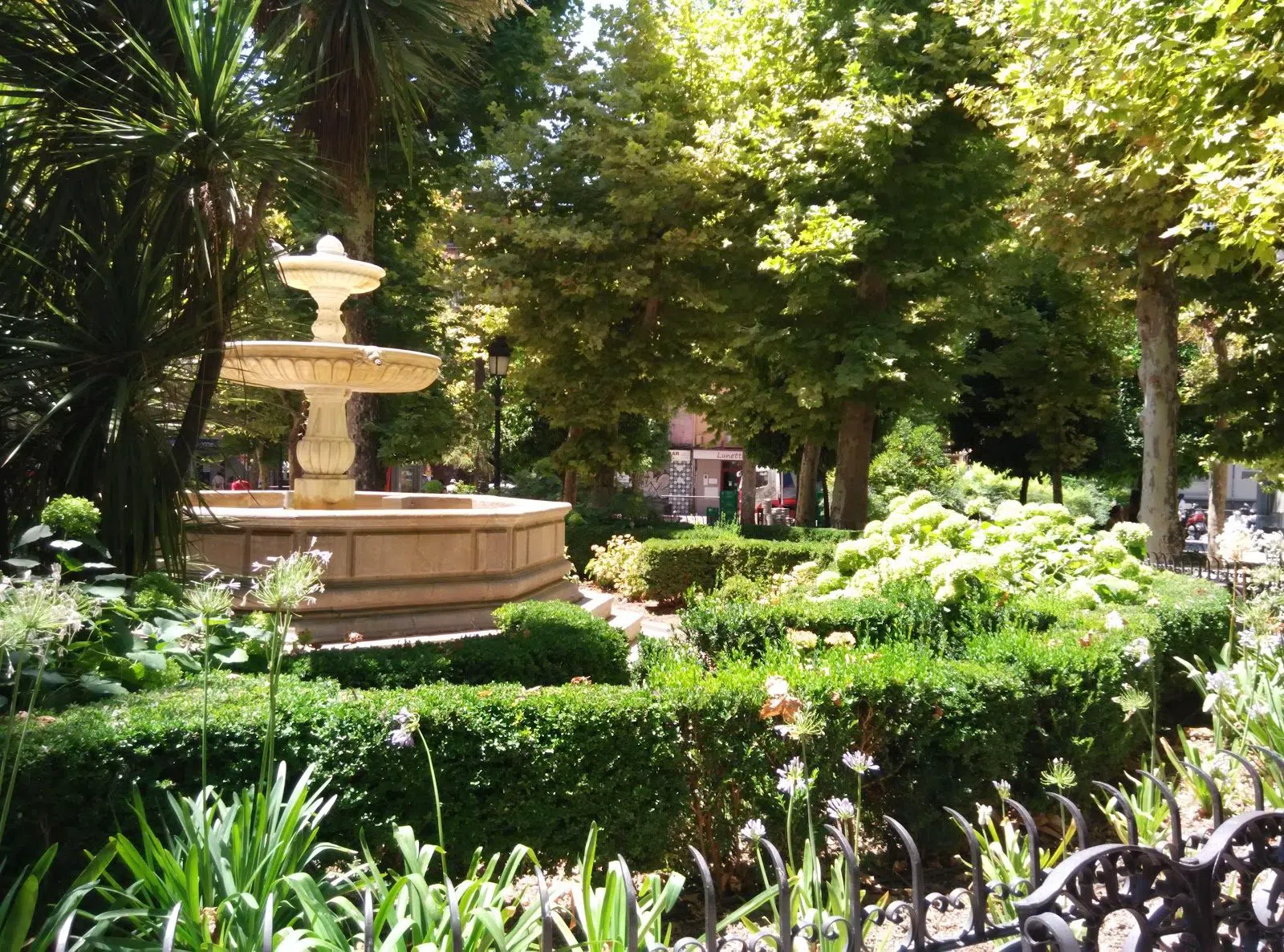
Gravel paths radiate under very large leafy plane trees, past benches and kiosks, and bar terraces and shopfronts run all the way round. The paths and benches are Gallego Burín's 1947 redesign. The square takes any number of people, and the terraces run year-round and absorb a big party better than the bars inside the barrio.
Plaza de Gracia marks the old south-western edge of the city, where for centuries Granada stopped and the vega's orchards began. The Discalced Trinitarians arrived in 1610 and had their church finished by 1635; it was heavily rebuilt in the 19th century, and the plain front of Nuestra Señora de Gracia closes one side of the square. A low fountain sits in the open, and Calle San Antón, Calle Gracia and Calle Recogidas peel off the edges.
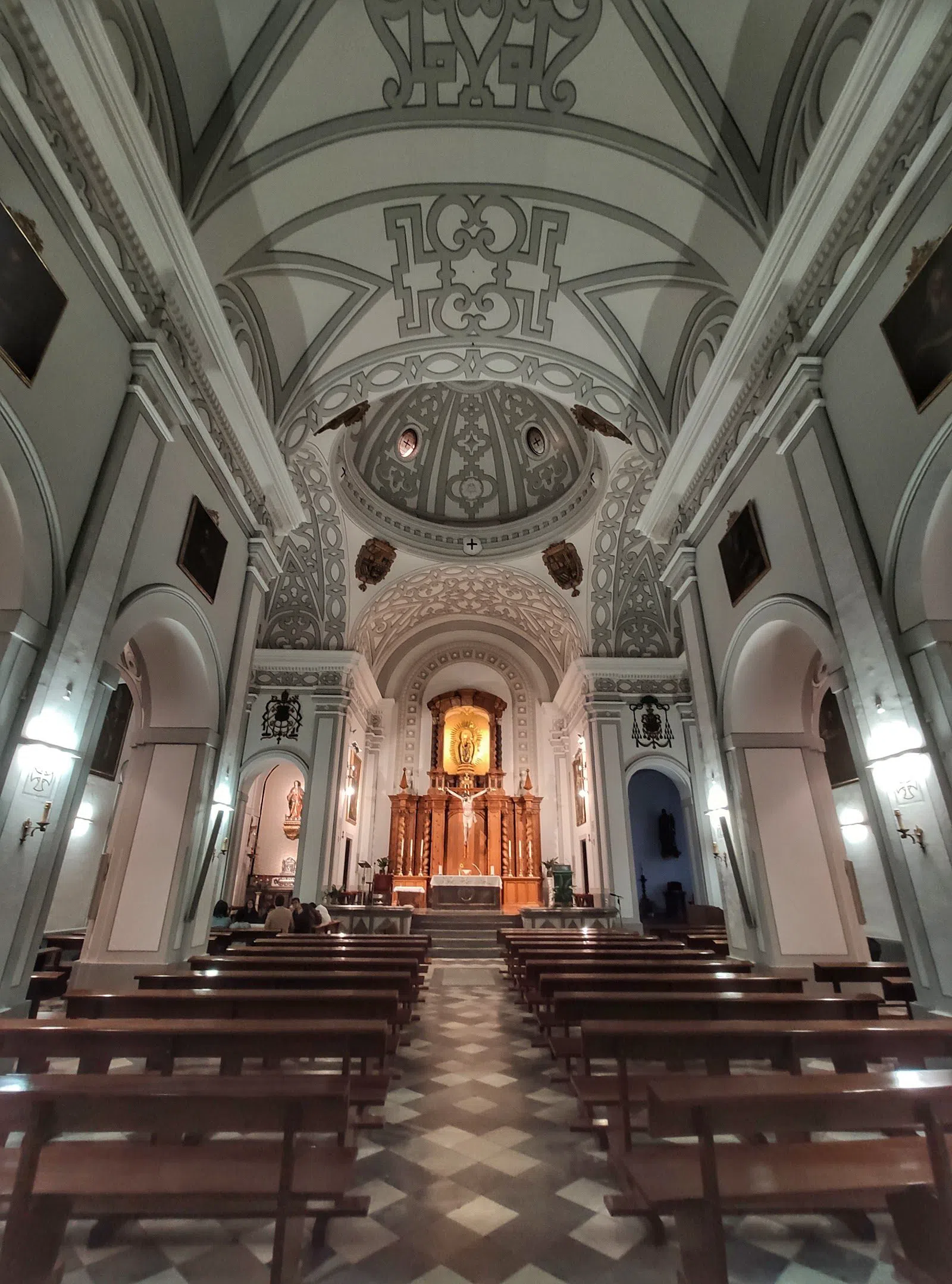
The square is still the barrio's hinge between the monuments and the shopping on Mesones, Alhóndiga and Puentezuelas. Meet here before you walk in for tapas.
Tapas on Verónica de la Magdalena and Calle Jardines
Bar Las Rejas (Verónica de la Magdalena 42) is the barrio's best-loved cheap tapas bar, a short marble counter with bottles stacked behind it and iron-barred windows, the rejas, giving on to the street. Dishes are called out, never written up, and what comes is croquetas, meat in sauce and cazón. Drinkers stand out in the narrow pedestrian lane. Prices are €.
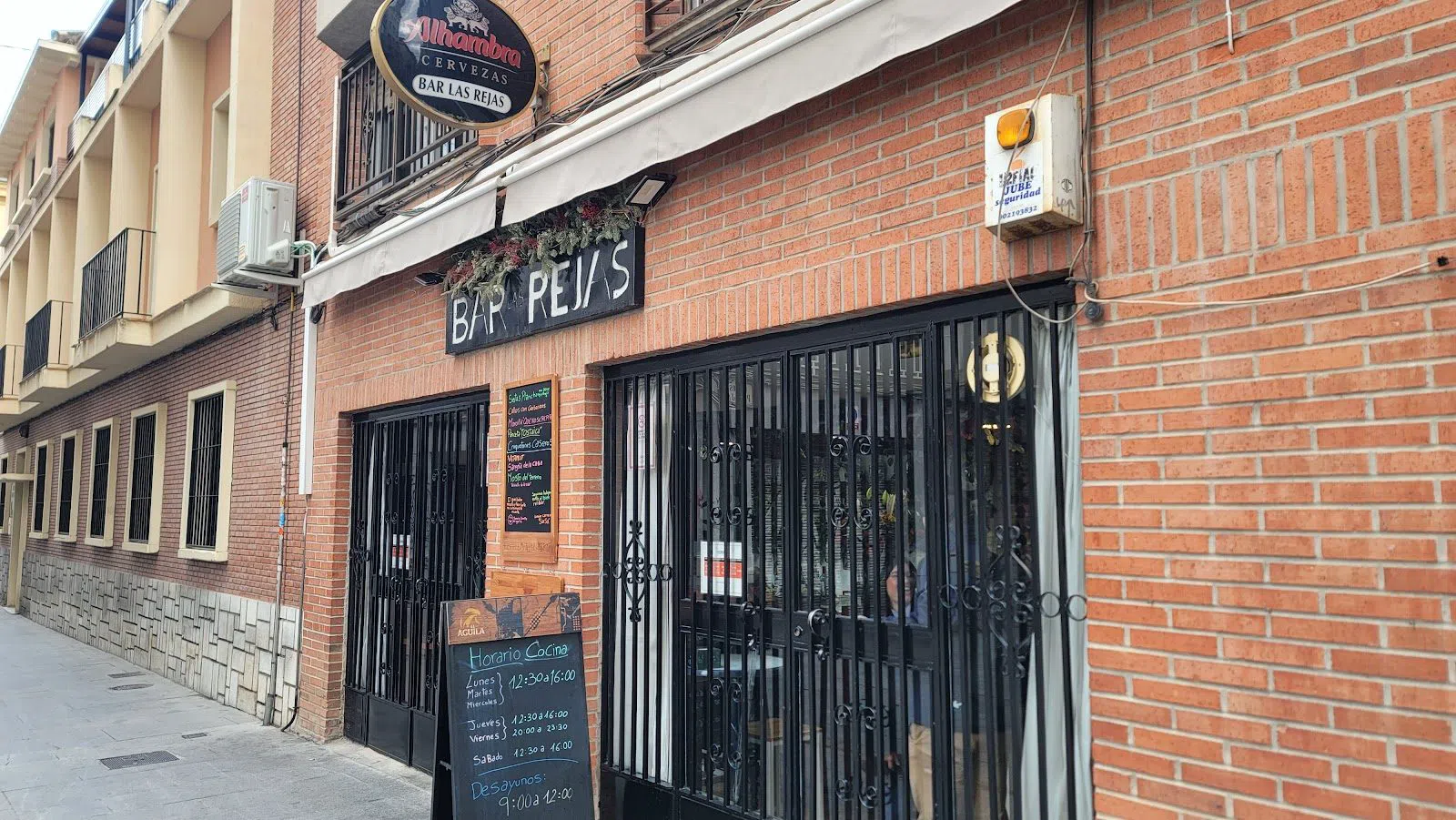
This is where the barrio drinks, and the room is the size of a front parlour. Four or five people fill it, and a party of eight should split across this and the neighbouring bars.
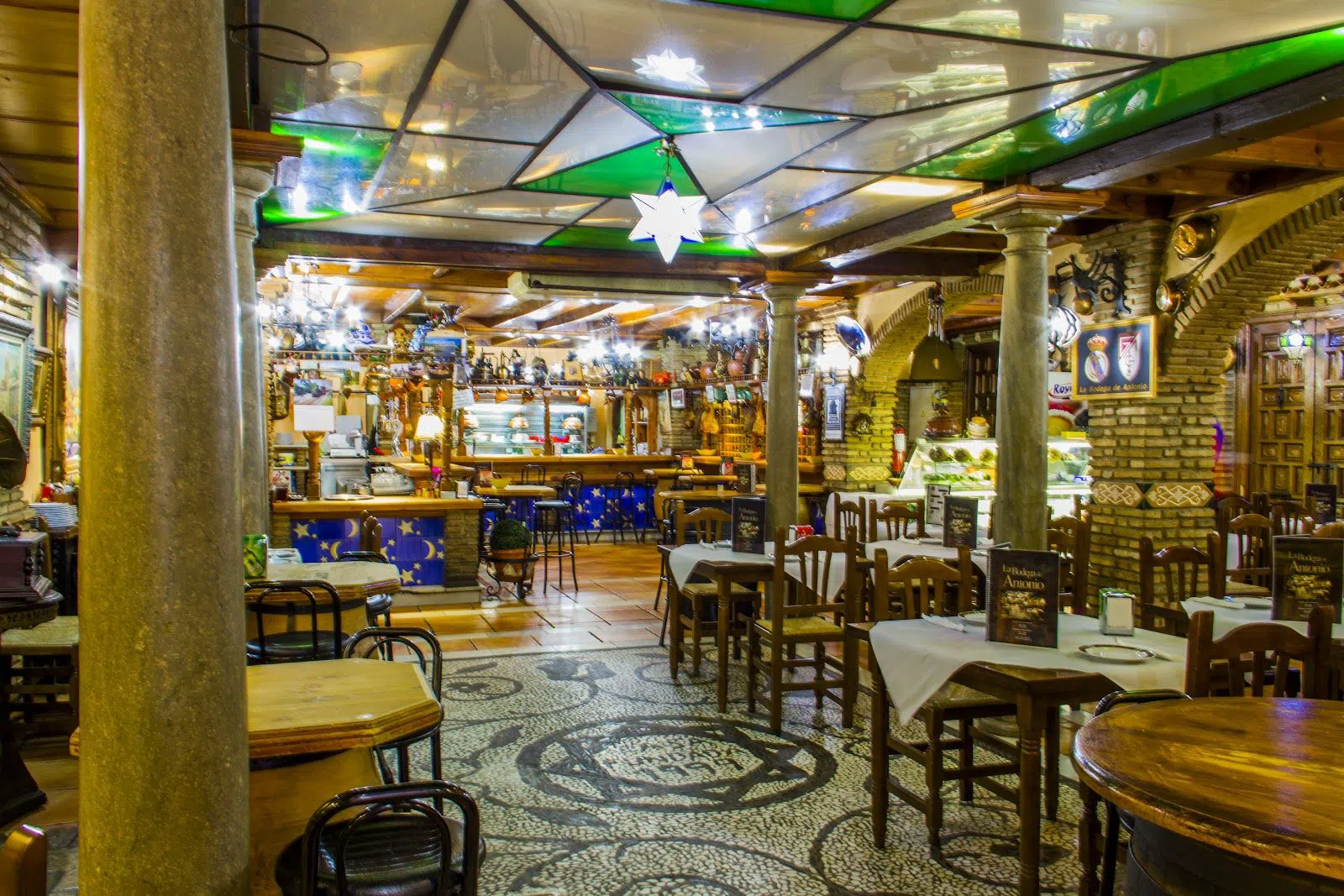
La Bodega de Antonio (Calle Jardines 4) keeps its original covered patio: stone pillars holding up a glazed roof, wine racked along the walls, a dark wooden barrel-front bar. Regulars order the house bacalao with prawns and clams. This is a sit-down dinner inside the quarter and the one room here that seats a long table comfortably, and prices are €€. Book ahead for six or more.
Om-Kalsum (Calle Jardines 17) serves Granada's Moorish kitchen as free tapas, with trays of falafel, kefta and shawarma going out over a packed bar. The room is dim and low-ceilinged, with pierced lanterns, tiled table tops and cushioned benches. Vegetarian coverage is unusually good. Prices are €.
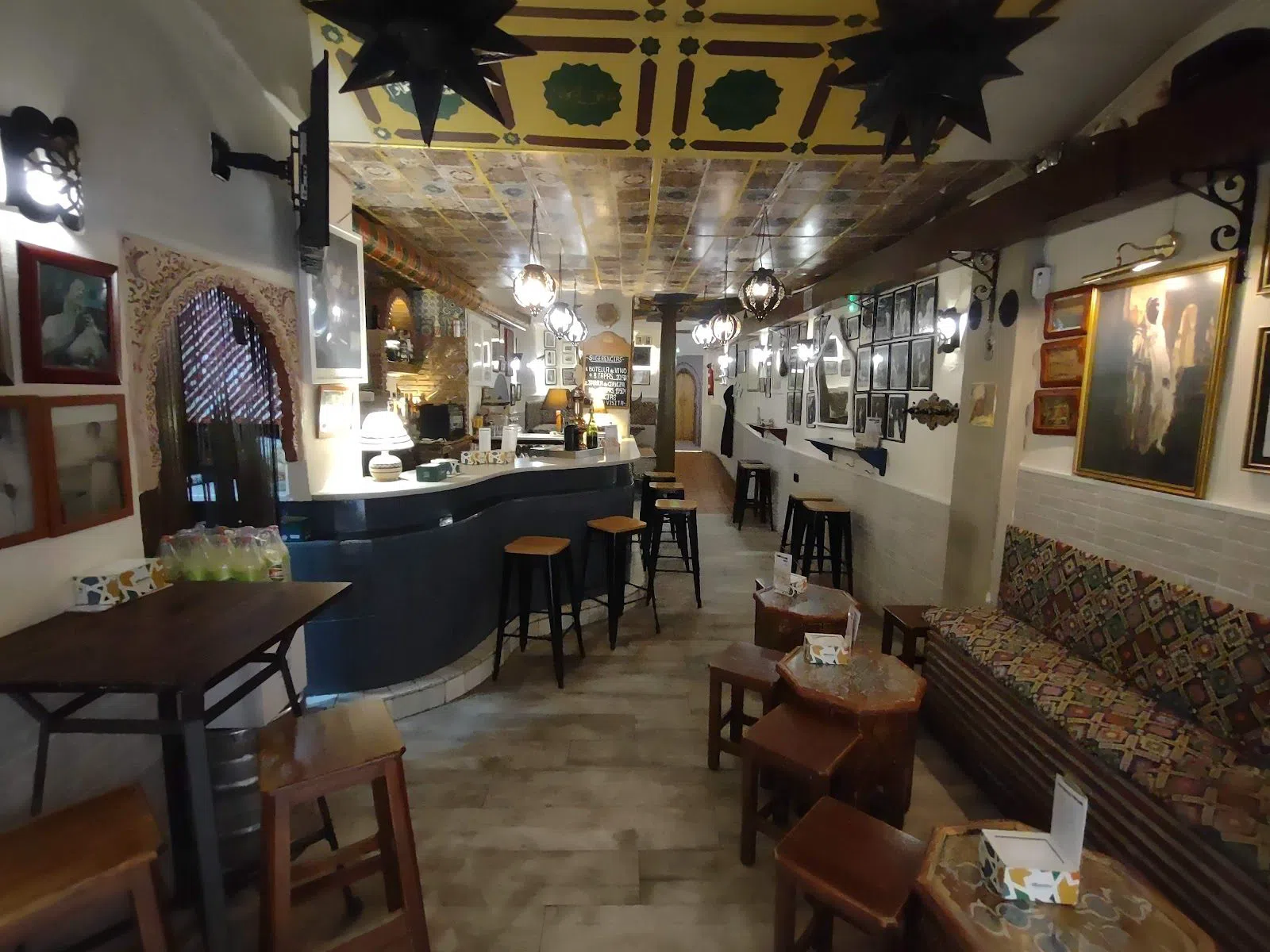
It opens at 20:00, and locals still fill it in 2026. Arrive at opening if you want to sit; more than four people have no real way to book.
Modern cooking on Puentezuelas
Reverso Gastrobar & Cocktails (Puentezuelas 42) is a compact contemporary room with dark walls, an open kitchen pass and shakers and bottles lined on a backlit shelf. Plates are small and carefully arranged, Mediterranean crossed with Asian and Mexican. This is the strongest newer cooking in the quarter, and the clearest sign that the Mesones, Alhóndiga and Puentezuelas revival is real. Prices are €€.
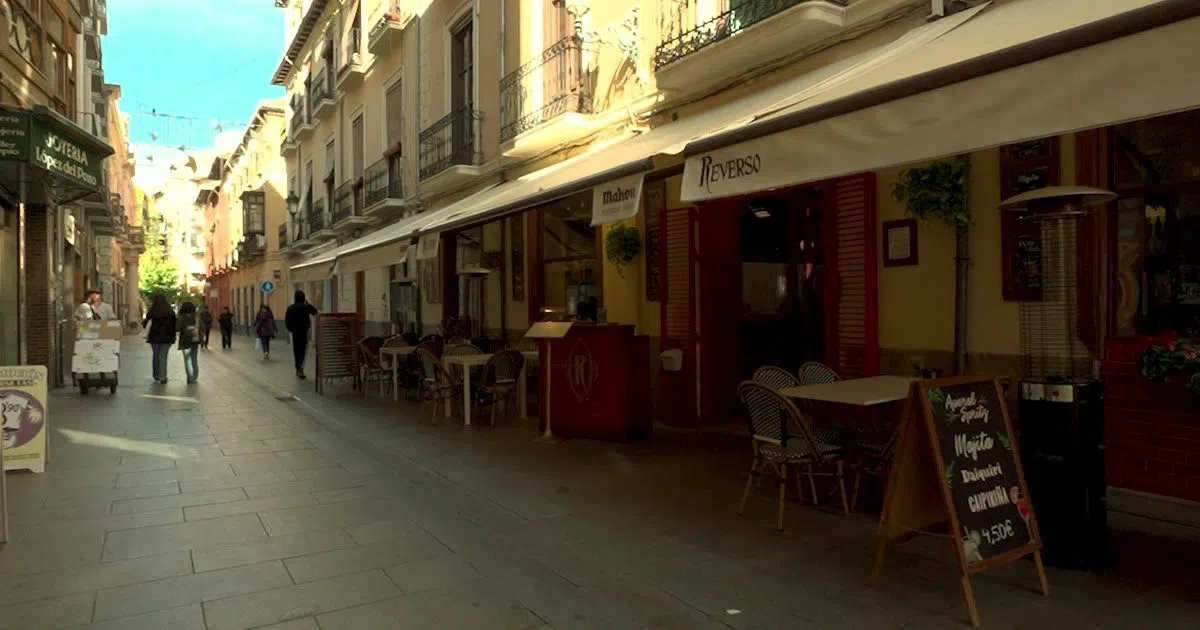
It closes Sundays. Six people need a booking in a room this size.
Books and coffee on Calle Tejeiro
La Qarmita (Calle Tejeiro 21) has been open since 2012 and moved here from Calle Águila, a few minutes' walk off Plaza de Gracia, so check the address before you set out. Café tables are wedged between floor-to-ceiling bookshelves, arepas and cachapas come out of the Venezuelan kitchen, and hand-made posters for readings, workshops and acoustic gigs are taped to the window.
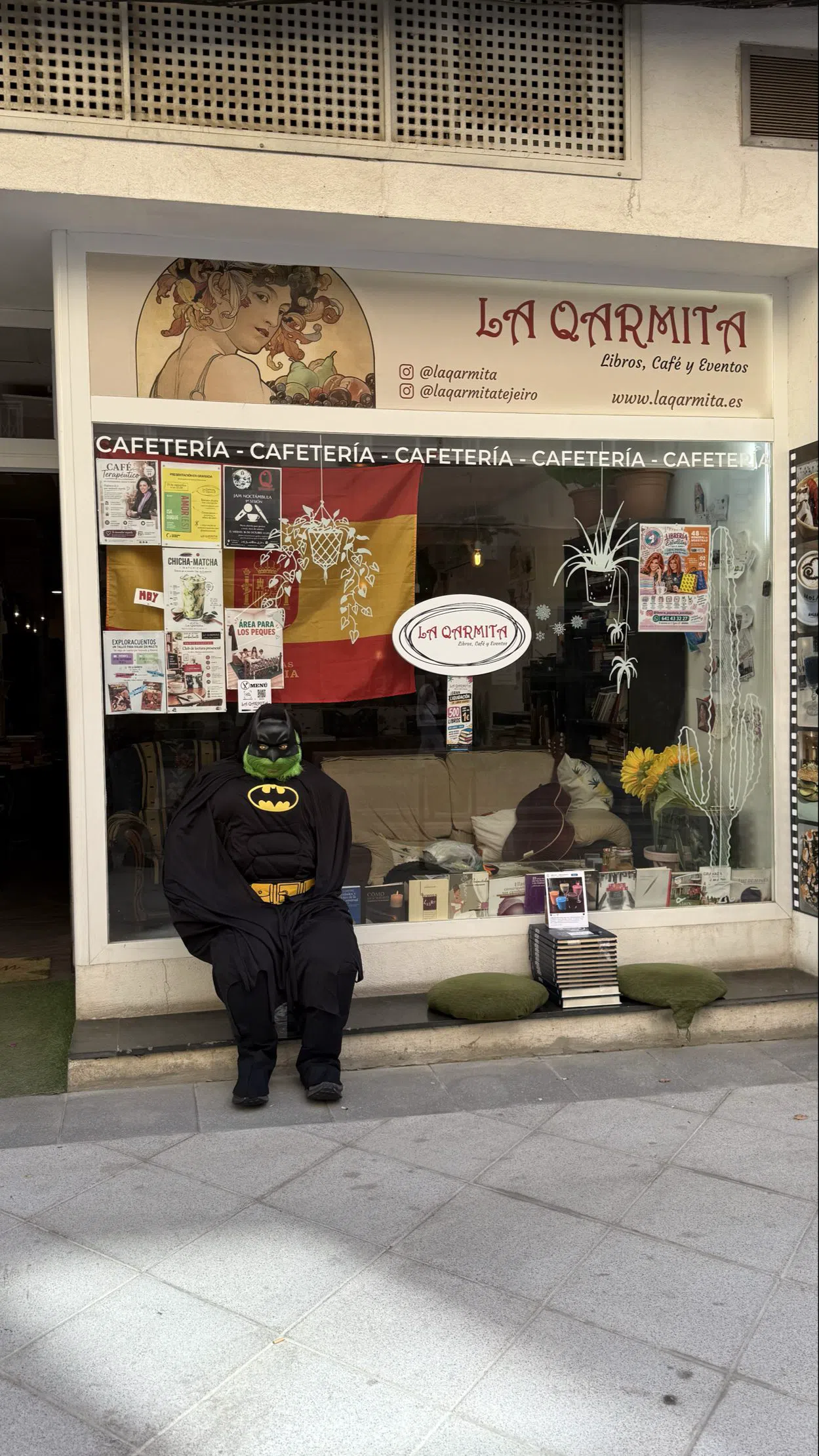
It opens daily from mid-morning to 23:00, which very little else in the barrio does. The coffee is strong, the staff are used to running events, and groups are welcome. Prices are €. Start the day here and let the palaces wait until the faculty doors are open.
Live music on Calle Montalbán and Plaza de los Lobos
Lemon Rock (Calle Montalbán 6) fills a rehabilitated 17th-century manor house. A lemon-yellow sign hangs over the stone doorway, the inner terrace is strung with lights, and gig posters and band photographs climb the stairwell to the hostel beds above.
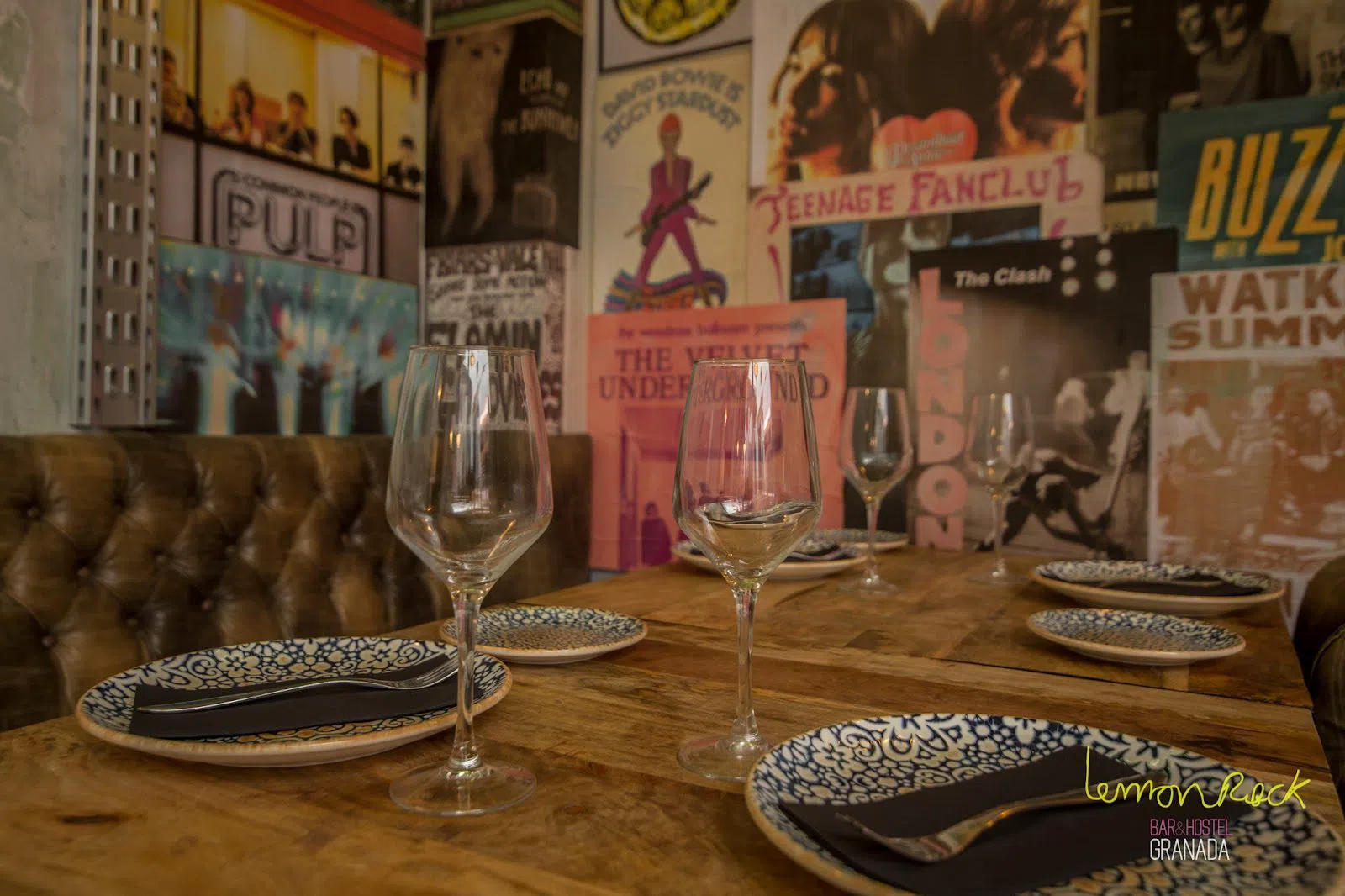
Bar, restaurant, concert room and terrace share that one house, and a large booking is easier here than anywhere else in Magdalena. Gigs run essentially every night through 2026, with Rosalie Cunningham and Belako among the names on the bill. Eat tapas and drink cocktails on the terrace before the set. Prices are €€.
Bohemia Jazz Café (Plaza de los Lobos 11) is next to the Oratorio de Nuestra Señora de la Misericordia, and the room is styled on the 1940s. An upright piano, gramophones, valve radios, stacked records, antique furniture and framed photographs of actors and musicians crowd every wall under warm low light.
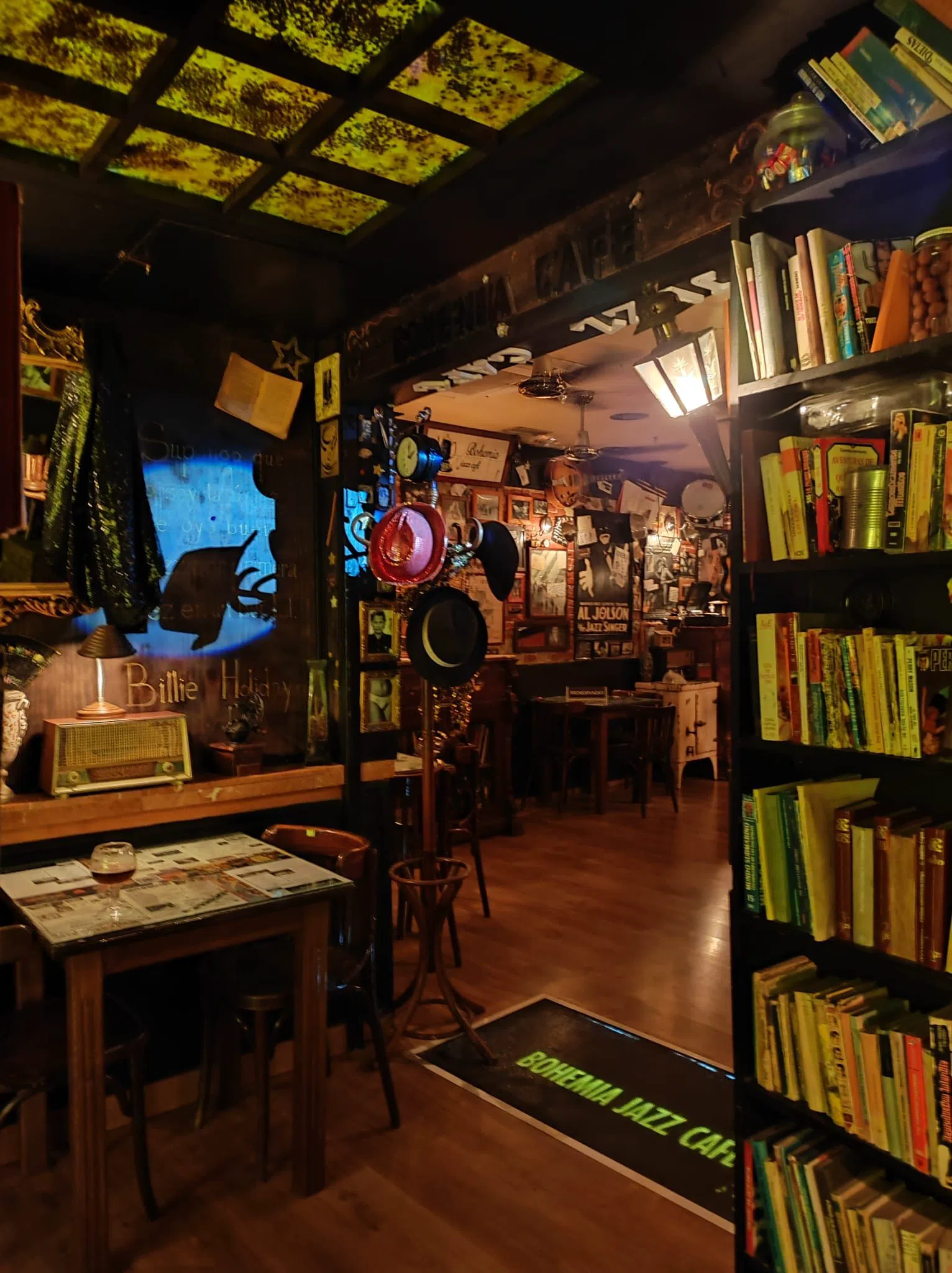
It opens at 15:00 and runs to 02:00, and to 03:00 at weekends, with jazz, Latin and blues at the end of the night. The sets start at 23:00 on Thursday, Friday and Saturday, so take your seats before then: the room is small and holds four to six of you at most. It is the grown-up option two streets from the student bars. Prices are €€.
Where to stay in Magdalena
Hospes Palacio de los Patos (Solarillo de Gracia 1) is a white 19th-century palace with a grand external stone staircase and a Moorish courtyard, joined behind to a stark modern wing of glass and grey stone. An Arabian garden runs water channels through the grounds, and contemporary art hangs through the reception, library and staircase.
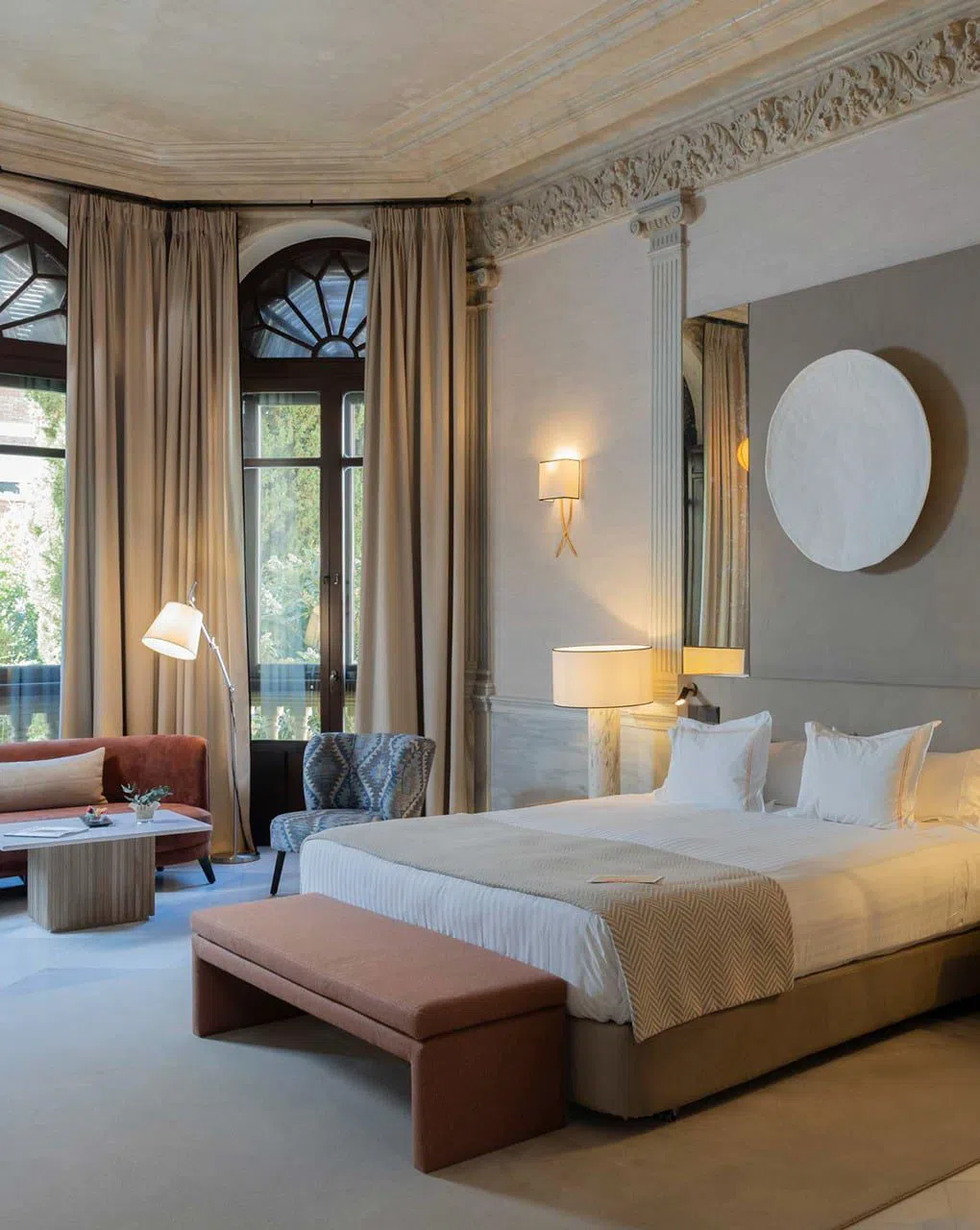
The building is UNESCO-protected, finished a full renovation at the end of 2025 and was reclassified 5-Star Grand Luxury. It has 42 rooms and suites, a terrace, a lounge-bar, the Bodyna spa and a meeting room for 40, and it takes groups and private events. This is the most comfortable bed inside the quarter, and a landmark in its own right. Prices are €€€€.
Hotel Villa Oniria (Calle San Antón 28) is 5 minutes' walk from Plaza de Gracia on the barrio's smartest street, a cream stone facade with wrought-iron balconies and heavy wooden doors above the cobbles. The 19th-century mansion was converted in 2007 and has 31 rooms, La Fábula restaurant, the Los Toreros wine-and-coffee bar, a rooftop terrace, and a spa with a heated pool, sauna and hot tub.
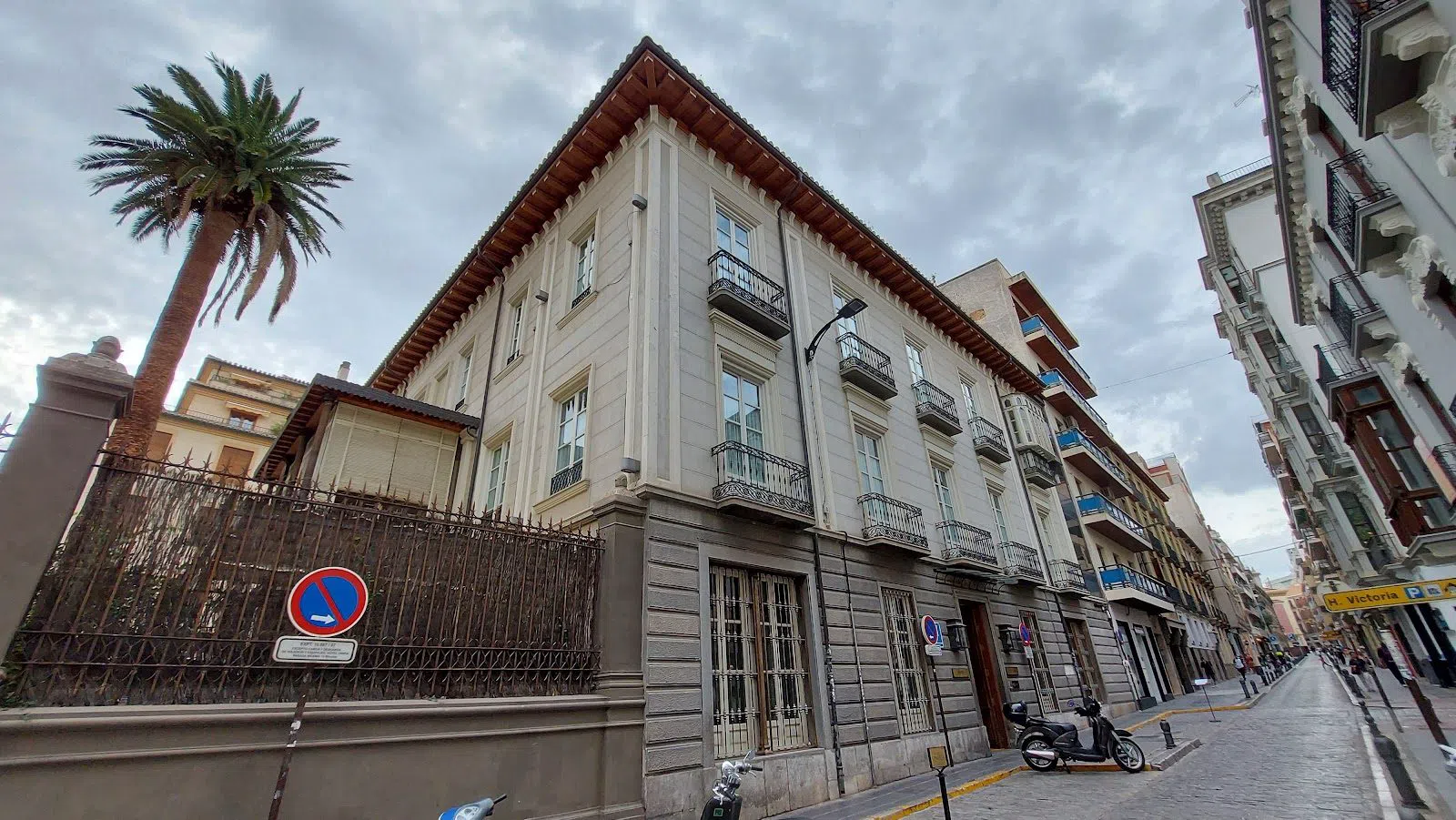
Inside, stone colonnades run over blue patterned tile around a courtyard fountain, with a lawned garden of more fountains beyond and a marble-floored lounge with a fireplace. The courtyard and garden are used for private functions. It suits a traveller who wants the spa and the colonnades without the Hospes price. Prices are €€€.
Hotel Reina Cristina (Calle Tablas 4) is the house where Federico García Lorca spent his last days before his arrest in 1936, and a plaque marks it as the Rosales family house. The Andalusian townhouse has a glassed-over central patio of tiled walls, potted plants and a small marble fountain, with 56 rooms, a restaurant, a bar and a gym.
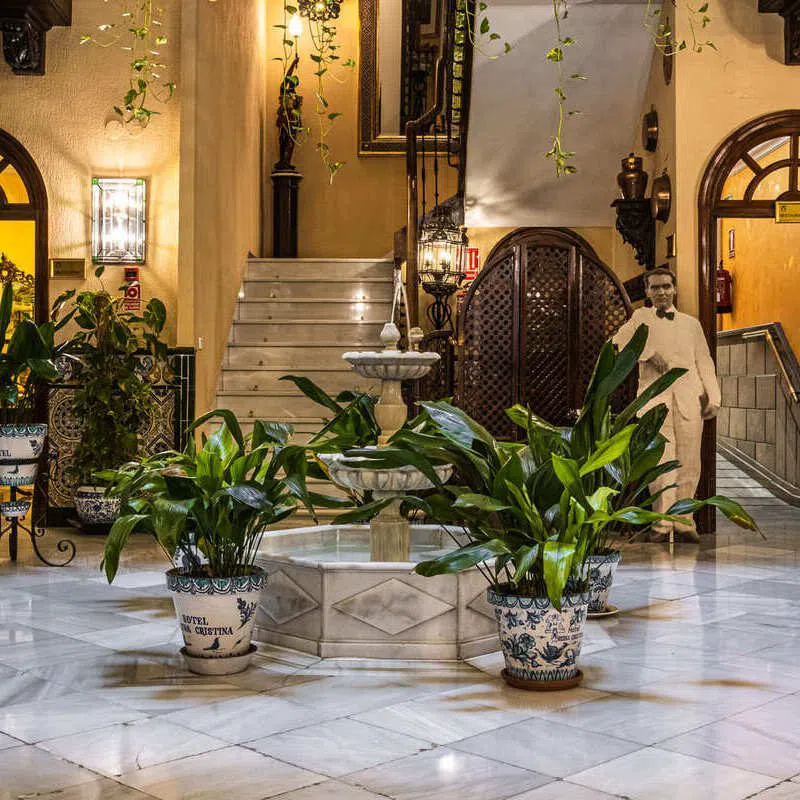
It is 30 seconds from Plaza de la Trinidad at the top of the barrio and has long taken tour groups, so a party of any size books in easily. For a literary pilgrimage the value is unmatched at €€.
Opening days and booking
Reverso closes Sundays, Palacio de las Columnas is dependable only in term-time hours, and the Jarosa courtyards and the Columnas roof terrace both need arranging before you arrive. Book La Bodega de Antonio's patio for six or more, and reach Om-Kalsum and Bohemia Jazz Café early if you want to sit down.
See the Granada guide and the Granada hotel search.
Før du drar
Where is Magdalena in relation to the Cathedral and the Alhambra?
Granada's Cathedral is 8 minutes' walk north-east of Iglesia de Santa María Magdalena on Calle Gracia. Plaza de la Trinidad is the barrio's northern doorway, Plaza de Gracia the south-western one, and Calle San Antón, Calle Gracia and Calle Recogidas run off them. The roof terrace at Palacio de las Columnas looks over the Cathedral to the Alhambra and the Sierra Nevada.
Can you get inside the palaces for free?
Yes, with conditions. Palacio de las Columnas at Puentezuelas 55 is a working faculty, and its courtyard and halls are free during term-time hours; the roof terrace and any organised group have to go through the university's El Edificio del Mes heritage programme or a guide. Palacio de los Condes de la Jarosa holds university offices and takes small groups by prior arrangement, also free.
Where can a group of eight eat in Magdalena?
La Bodega de Antonio at Calle Jardines 4 has the one patio in the barrio that seats a long table comfortably; book ahead for six or more. Lemon Rock on Calle Montalbán 6 is the easiest place to put a large booking, and it has a bar, restaurant, concert room and terrace in one house. Bar Las Rejas holds four or five people, so split a bigger party across it and the bars next door.
Does Magdalena still do free tapas with a drink?
Om-Kalsum at Calle Jardines 17 serves Granada's Moorish kitchen as free tapas: falafel, kefta and shawarma come out over the bar, and the vegetarian choice is unusually good. It opens at 20:00 and is almost always full, and there is no real booking for big parties, so arrive at opening if you want a seat.
Which nights have live music in the barrio?
Lemon Rock has gigs essentially every night through 2026, and Rosalie Cunningham and Belako are on the bill. Bohemia Jazz Café on Plaza de los Lobos 11 opens at 15:00 and runs to 02:00, or 03:00 at weekends; its jazz, Latin and blues sets start at 23:00 on Thursday, Friday and Saturday. La Qarmita on Calle Tejeiro 21 programmes acoustic gigs, readings and workshops.