Granada neighbourhood guide
Albayzín, Granada: the hill that keeps the Alhambra in view
A walk through Granada’s old Moorish quarter, where steep cobbles, cármenes, tea rooms and sunset crowds all lead back to the same red palace across the Darro.
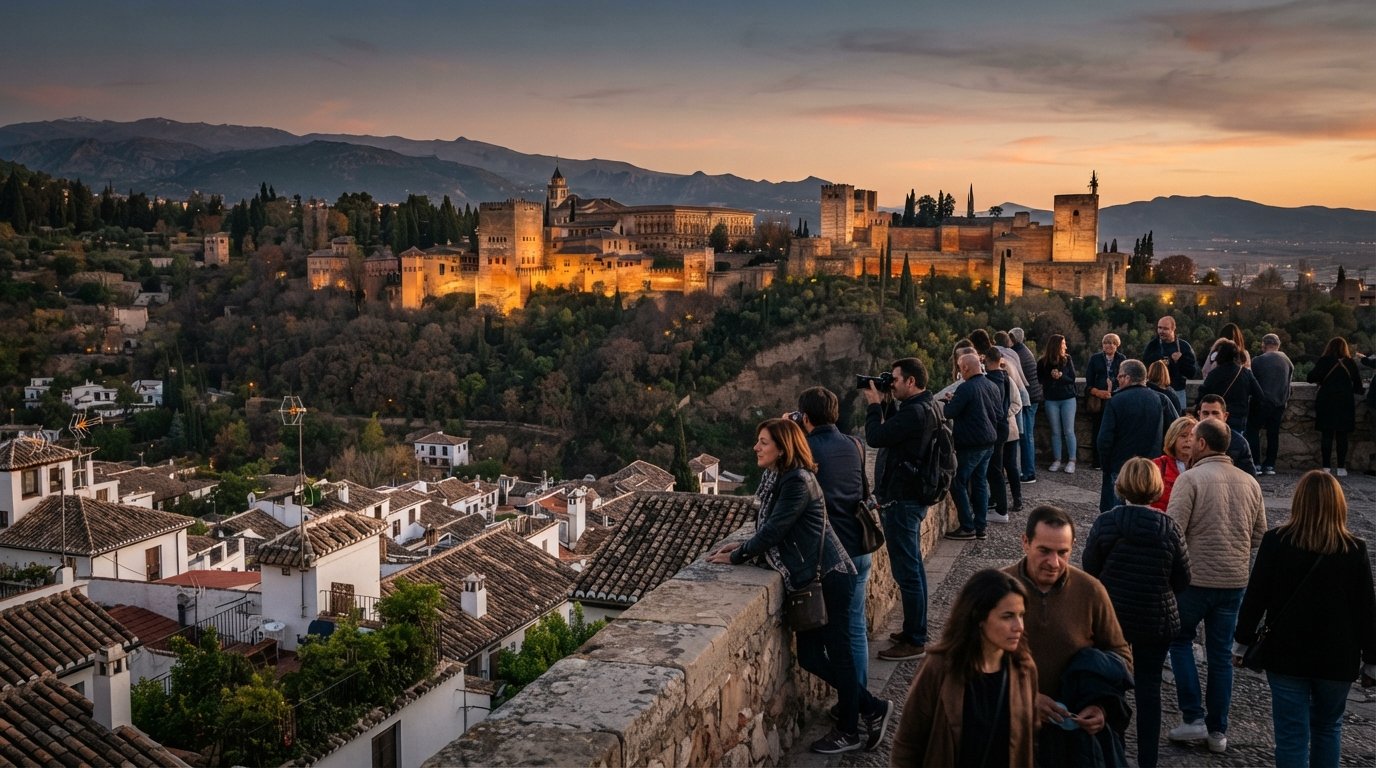
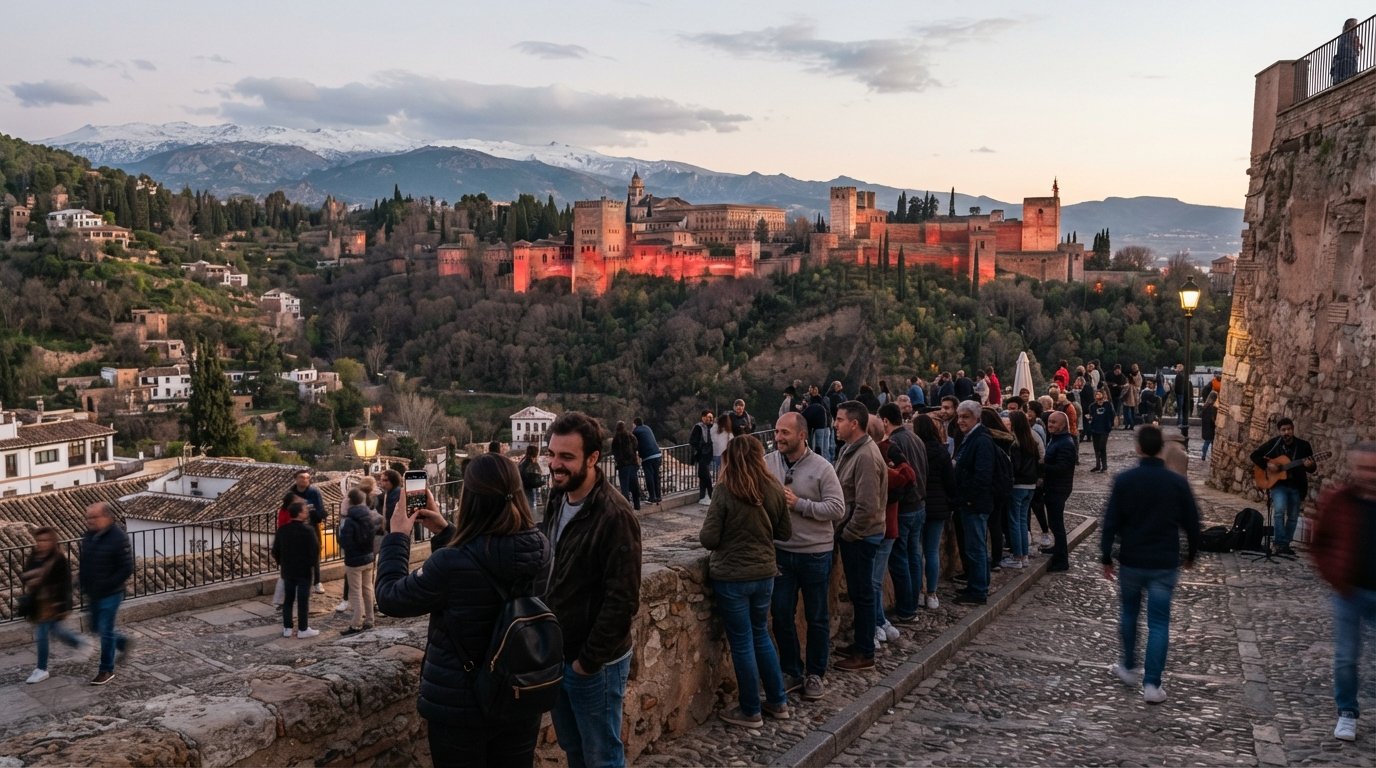
Stand at Mirador de San Nicolás as the sun drops and the whole city performs the trick it was built to do: the Alhambra floats on its ridge across the Darro valley, red walls turning gold, then violet, with the Sierra Nevada sitting pale and stubborn behind it. The crowd goes quiet in that particular tourist way — phones raised, mouths open, someone’s guitar beginning up in the corner — and for once the cliché has the decency to earn itself. This hill is Granada’s old stage set and its living quarter at the same time. UNESCO listed the Albayzín with the Alhambra in 1994, but the place was already ancient in the bones: a medieval Muslim street plan, whitewashed lanes, dead-end callejones, and cármenes hiding gardens behind plain doors. You come up here to look, yes. Then you stay because the streets make you slow down whether you planned to or not.
What the Albayzín is known for
The Albayzín’s first claim to fame is brutally simple: it looks at the Alhambra better than anywhere else in Granada. The Mirador de San Nicolás, on the terrace beside the church of San Nicolás at the top of the hill, is the postcard shot everyone thinks they are hunting and then, when they get there, discovers they are actually in it. It is free, open around the clock, and at sunset it fills with buskers and the sort of crowd that believes flamenco improves every view. Sometimes it does. Sometimes it merely adds atmosphere and a small amount of foot traffic.
But the view is only the headline. The deeper story is that this is the best-preserved Moorish quarter in Spain. The Christian conquest did not erase its street pattern; it mostly left it to keep doing what it had always done. That is why the Albayzín still feels like a place designed by gradients and privacy. The lanes are narrow cuestas, the turns are sharp, and every few steps a dead-end callejón reminds you that the hill was never interested in your convenience. The signature house is the carmen, a walled town-house with a garden, fountain and often an Alhambra view hidden behind an ordinary door. From the street, you get a wall. Inside, if you are lucky, you get shade, water and the kind of quiet that cities usually ration out by the minute.
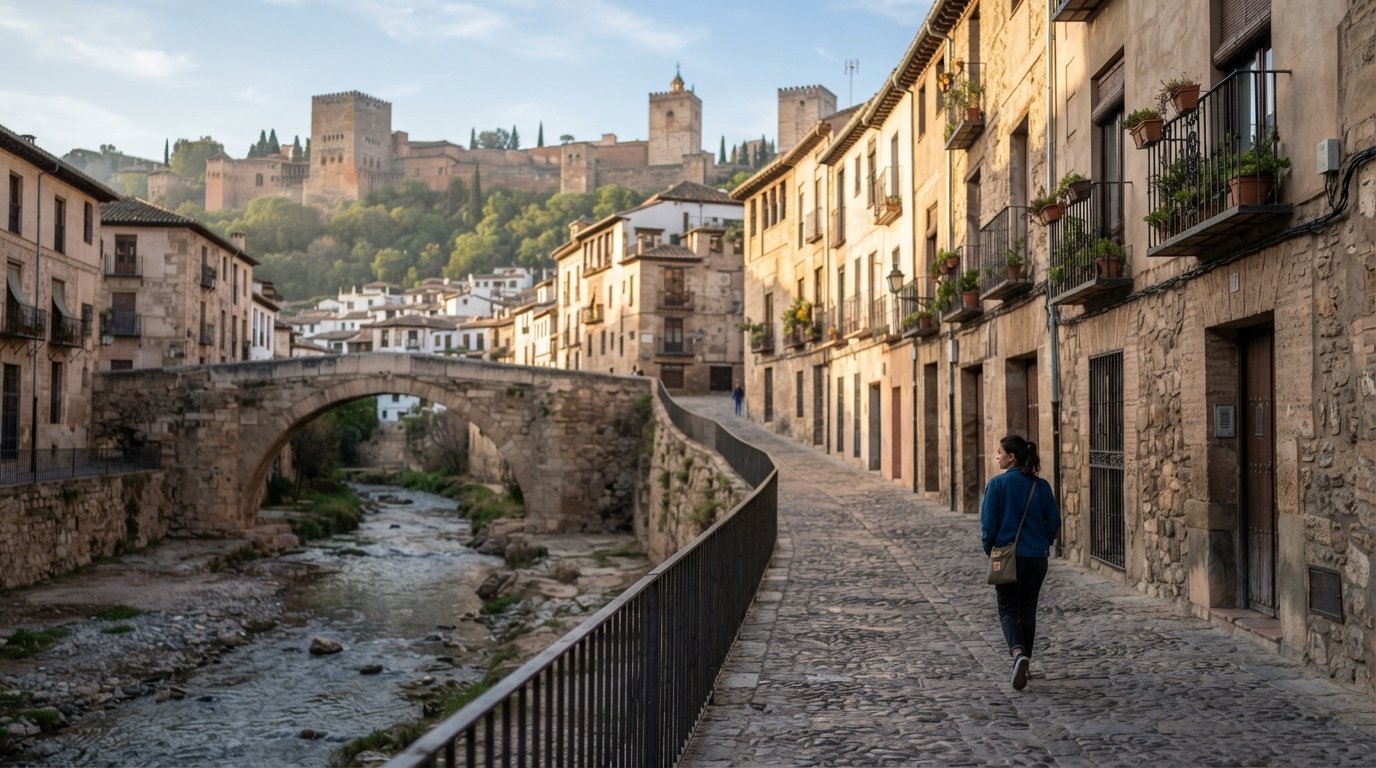
The social life of the quarter gathers in its squares. Plaza Larga is the upper Albayzín’s long, café-lined heart, and on Saturday mornings it still hosts a street market. At one end sits the 11th-century Arco de las Pesas, the old city gate named for the false trading weights once confiscated and hung there. It is a small, stern detail, which feels right for this neighbourhood: even its folklore has rules. Down at the foot of the hill, the Carrera del Darro follows the river past medieval bridges and earns its reputation as the prettiest street in the city, especially in the early morning before the camera straps and tour groups arrive. Walk it then and you can hear the water under the bridges and your own shoes on the stones.
Where to eat & drink
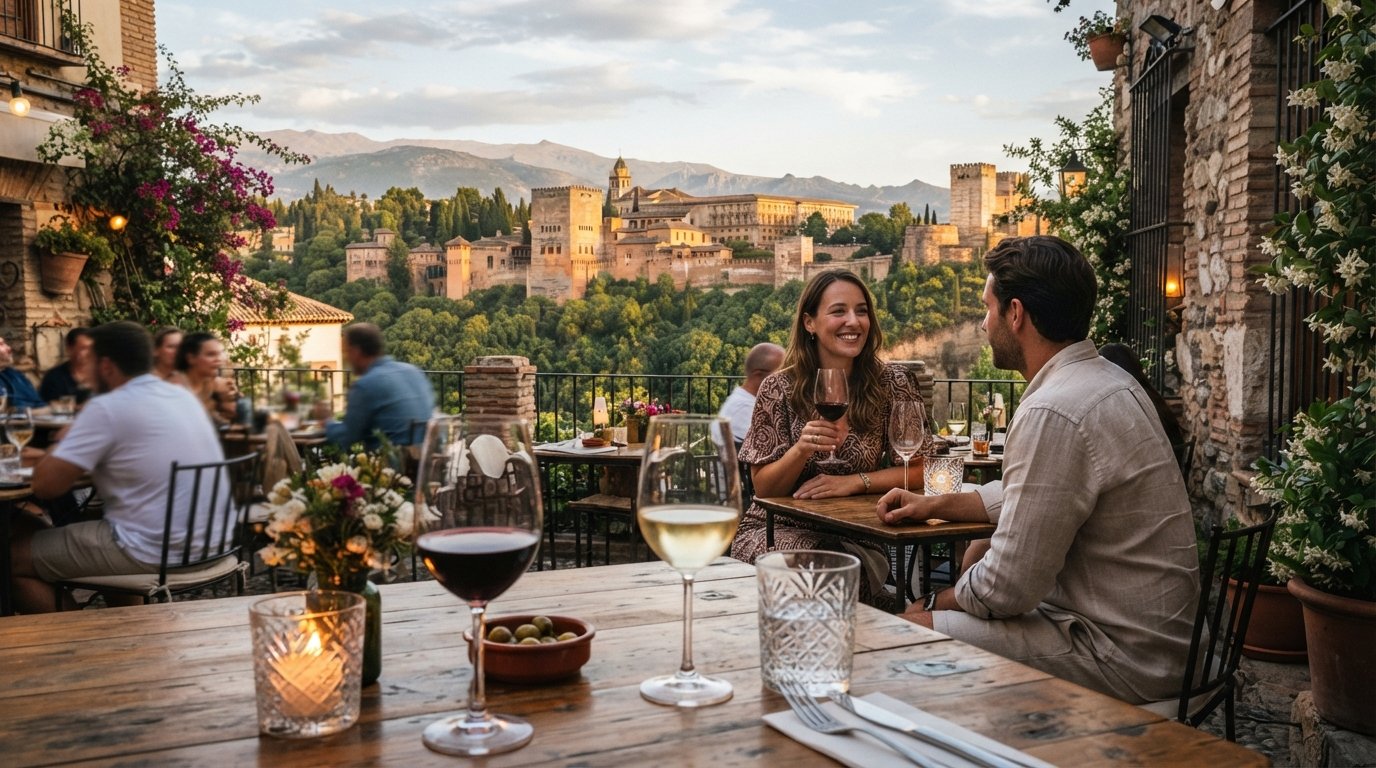
The Albayzín eats like Granada does: with a drink and a tapa arriving as if by natural law. Order a caña or a glass of wine and something lands on the table at no extra cost. The quarter adds one very useful extra ingredient — views — though it also knows when not to overdo the scenery. The eating hub is Plaza San Miguel Bajo, a leafy square below the top of the hill where terraces spread under the trees and nobody is pretending to be in a rush.
Bar Lara, Mesón El Yunque and Bar Ocaña are the square’s dependable trio, each leaning into solid Alpujarras cooking: fried fish, lomo Alpujarreño, berenjenas con miel and patatas a lo pobre. That is the food of a long lunch and a second drink you did not strictly plan. Bar Lara is the one for sitting down and letting the square do its work. Mesón El Yunque has the old-school feel of a place that has seen many afternoons and is still not tired of them. Bar Ocaña keeps the Spanish tapas and raciones straightforward, with grilled meats if you want something more substantial than the usual round of bites. None of these places is trying to impress you. That is exactly why they do.
Up at Plaza Larga, Bar Aixa is the friendly family bar that understands the assignment: every drink comes with a generous tapa, and the result is an honest lunch after a wander through the upper quarter. It is the sort of place that makes you feel you have earned the hill without having to suffer for it too theatrically.
On Plaza Aliatar, Bar Aliatar — also known as Los Caracoles — is the local classic for caracoles in season, plus standard tapas. Snails in broth are not a gimmick here; they are a rhythm of the year. If the season is right, order them and stop acting surprised that a neighbourhood still tastes like itself.
For the full view-with-a-meal experience, El Huerto de Juan Ranas is the name to know. It is a restored carmen directly below the Mirador de San Nicolás, with a terrace facing the palace. The bar-terrace, La Terraza, is roughly half the price of the full restaurant and takes online reservations only. That matters, because the view is not the kind of thing you simply wander into at prime time. Bar Kiki, a few steps from the mirador at Placeta de San Nicolás, is the casual counterpoint: tuna tartare, grilled meats and the standard free tapa, with the added instruction to arrive early for lunch because it fills fast.
Going out
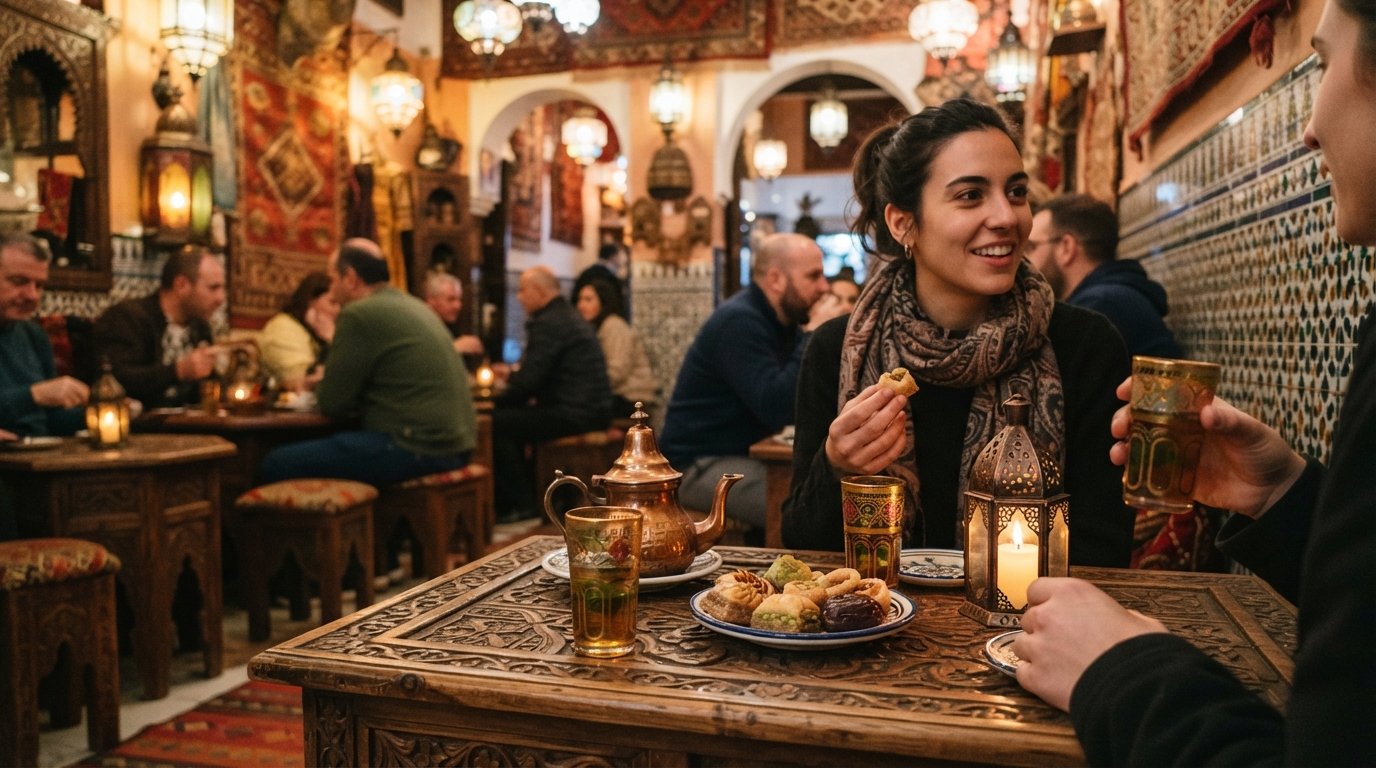
Nightlife in the Albayzín is not trying to be a nightclub district, and thank heaven for that. If you want clubby noise and late bars, you walk downhill to Realejo or the streets off Plaza Nueva. Up here, evenings are slower, more fragrant, more inclined to tea than tequila. The teterías on Calle Calderería Nueva are the neighbourhood’s little pocket of lanterns and mint steam — the narrow, lantern-strung lane people call little Morocco. It is touristy, yes, but not every tourist street is a lie. Sometimes it is just a street with a strong theme and a lot of tea.
Kasbah, at Calderería Nueva, 4, is the roomy standard: long tea list, Arabic sweets and weekend belly-dancing, with enough atmosphere to keep the room warm even when the night cools down. Dar Ziryab is one of the oldest and calmest teterías on the street, which is exactly what some evenings need. La Tetería del Bañuelo, on Calle Bañuelo, 5, is smaller and more intimate, with a charming Alhambra-facing terrace that rewards booking ahead. The formula here is simple: mint tea, hookah, pastries, and a room that asks you to lower your voice.
The other classic evening move is even simpler: a terrace drink with the palace lit up in front of you. Estrellas de San Nicolás sits right at the viewpoint. El Huerto de Juan Ranas does it too, from its bar-terrace below the mirador. Around the wall and the café terraces, beer, wine and cocktails hover at around €5 a glass, and that is the whole show once the floodlights come on. It is not a scene built for excess. It is built for the long exhale after sunset.
Things to do / what to see
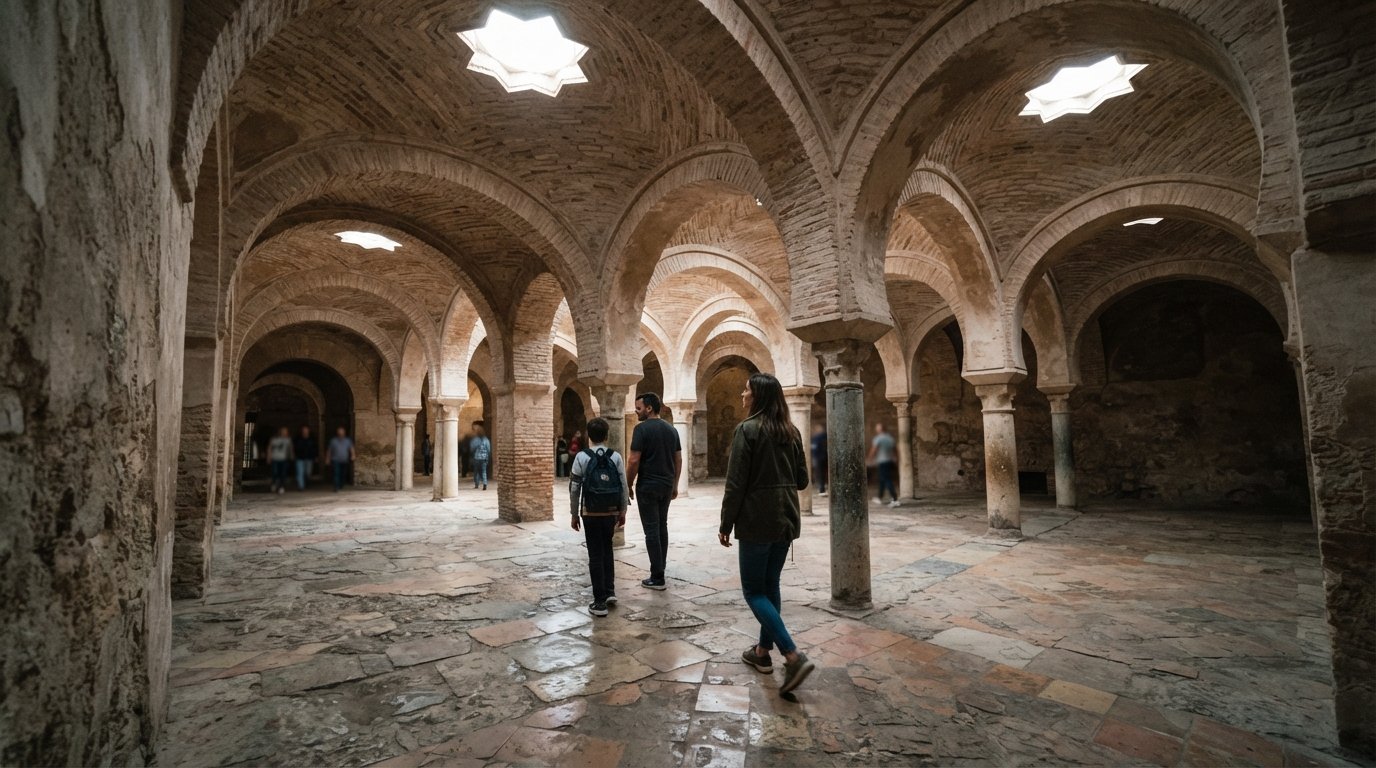
The Albayzín rewards walking more than ticking boxes, though there are enough monuments woven through it to keep the history-minded happy. Start with El Bañuelo on the Carrera del Darro. It is the oldest and best-preserved Arab bathhouse in Andalusia, built in the 11th century, with brick-vaulted rooms and star-shaped skylights. It is also one of the city’s cheapest historic visits, which is a pleasant change from the modern habit of charging you for every brick with a story.
A short climb up sits Casa de Zafra, a 14th-century Nasrid house that now serves as the Albaicín interpretation centre. It is free on Sundays, and otherwise around €3, which is a very reasonable price for the best single primer on how this quarter worked. Go if you want the place explained before you start reading its walls with your feet.
Higher still, near Plaza San Miguel Bajo, the Palacio de Dar al-Horra gives a quieter taste of Nasrid palace life. This 15th-century residence of Boabdil’s mother, Aixa, has plaster-worked rooms and a rooftop, and it is included in the Dobla de Oro combined ticket. It is less crowded than the headline sights, which means you can hear the building rather than the crowd.
The real headline, though, is the walk itself. Do the classic loop: start on the Carrera del Darro by the river, wind up through the lanes to the Mirador de San Nicolás for the view, cut across to Plaza Larga and the Arco de las Pesas, then drop back down. Along the way you pass the church of San Miguel Bajo, built over a former mosque and still holding a 13th-century aljibe below it, and countless carmen doors that refuse to give away what is behind them. Time the mirador for late afternoon and you get the walk and the sunset in one go. That is the trick here: the quarter pays you back in sequence, not in a rush.
Don’t miss in Albayzín
Mirador de San Nicolás for the classic sunset view of the Alhambra.
El Bañuelo, the preserved 11th-century Arab baths.
Calle Calderería Nueva, lined with traditional tea houses and spice shops.
Shopping & markets
Shopping in the Albayzín is really two different moods. The first is the sensory clutter of Calle Calderería Nueva and Calderería Vieja, the pedestrian lanes climbing from near Plaza Nueva, lined with Moroccan-style bazaars selling lanterns, leather, painted ceramics, silk scarves, spices and loose tea. It is touristy and the prices are soft, so haggle a little. Buy the things that travel well and age politely: teas, spices, small lamps, maybe a ceramic piece if your suitcase is feeling brave. The teterías are woven through the same streets, which means you can browse, stop for mint tea and continue pretending you are not being lured into buying another lamp.
The second mood is Plaza Larga on a Saturday morning, when the weekly market shows up around 10am and keeps going until roughly 3pm. This one is for the residents of the upper Albayzín: clothes, flowers, fruit, odds and ends, the practical noise of a neighbourhood that still behaves like one. It is not a polished artisan fair and it is better for it. If you want department stores and Spanish high-street brands, go down to Centro around Gran Vía and Puerta Real. Up here, the pleasures are more modest and more charming: a bag of Alpujarras honey, an artisan ceramic, a scarf you will actually wear.
Where to stay in the Albayzín
The Albayzín is the most atmospheric place to sleep in Granada, and the signature stay is the carmen hotel: a restored walled town-house, often with a garden courtyard and an Alhambra view. Hotel Casa Morisca, in a late-15th-century morisco house on the Cuesta de la Victoria near the river, and Hotel Santa Isabel la Real, a 16th-century Moorish manor a few minutes from the Mirador de San Nicolás, are the best-known boutique options. Both trade convenience for character and sit firmly in the upper-mid to premium end. That is the deal. You are paying for the hill, the quiet and the feeling that you have been let into a private version of the city.
Where you land matters. The lower edge along the Carrera del Darro and Paseo de los Tristes is the easiest base: level with Plaza Nueva, a flat walk to the centre and close to the minibus stops. That is the sensible choice if you are carrying luggage or want quick access to the tapas streets. Higher up, around Plaza San Miguel Bajo, Plaza Larga and San Nicolás, you get the quiet, the views and the real village feel, but every arrival and departure is a steep cobbled climb. Pack light. Wear proper shoes. The beauty and the inconvenience are the same thing here.
Where to stay here
Hotels in Albayzín
Our best-rated stays in this neighbourhood. Prices are approximate “from” rates — confirmed at the provider when you continue. We may earn a commission if you book through our partners, at no extra cost to you.
 In this area
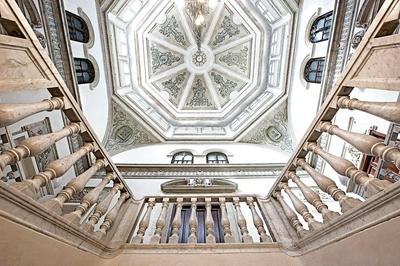 In this area
Hospes Palacio de los Patos, a Member of Design Hotels
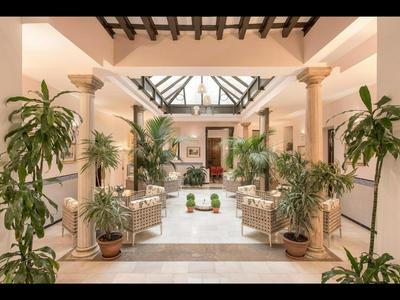 In this area
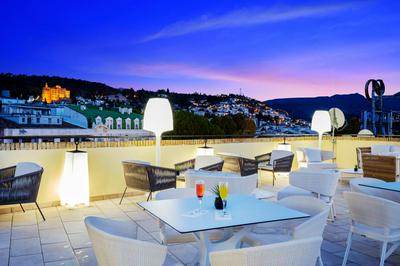 In this area
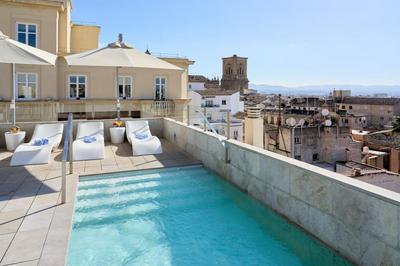 In this area
Hotel Maciá Granada Five Senses Rooms & Suites
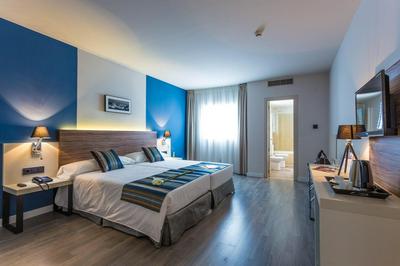 In this area
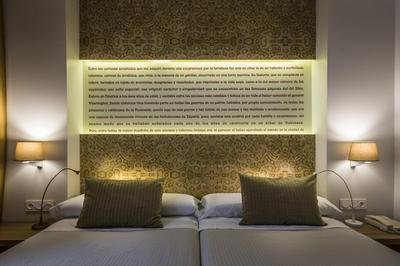 In this area
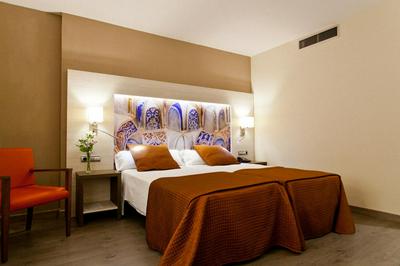 In this area
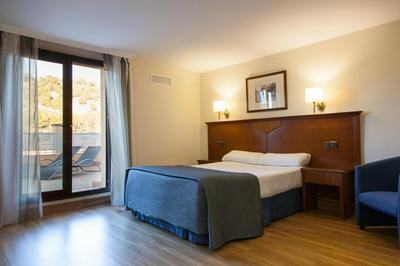 In this area
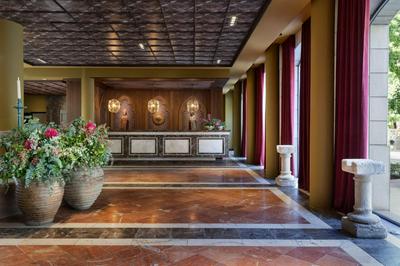 In this area
Hotel Palacio de Santa Paula, Autograph Collection
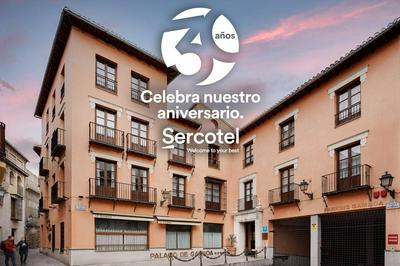 In this area
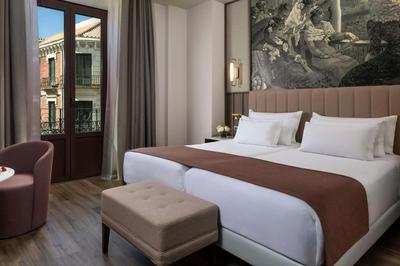 In this area
Getting around
The Albayzín is a walking neighbourhood by necessity. Its lanes are too narrow, too steep and too cobbled for most cars, and much of it is effectively car-free. From Plaza Nueva you can walk up in 20 to 30 minutes, though “up” is the operative word and the hill has no interest in flattering your calves. The cuestas are demanding and slippery when wet, so grippy shoes beat anything with a heel. Once you accept that, the quarter becomes legible: everything is a short, if vertical, walk from everything else.
When your legs give out, the little red Alhambra minibuses are the answer. The C31 loops the Albaicín from Plaza Nueva and the Carrera del Darro up through the quarter, and the C32 links the Alhambra, the Albaicín and the centre, both running roughly every 10 to 12 minutes. They are the easy way to reach the top of the hill or spare yourself the climb home. The C34 from Plaza Nueva serves neighbouring Sacromonte. From the foot of the Albayzín it is a flat five to ten-minute walk to central Granada and the Cathedral, and about ten minutes to the Alhambra ticket area by the same minibuses. For the airport, allow around 45 minutes: the airport shuttle bus leaves from near Gran Vía in the centre, a short walk or minibus ride down from the quarter.
The practical truth of the Albayzín is this: it is safe, heavily visited and a little unforgiving underfoot. Keep an eye on your belongings in the packed sunset crowd at the mirador, and take a bit more care on the darker upper lanes late at night. Then stop worrying and keep walking. This is a neighbourhood that only really gives itself up on foot, one steep turn at a time.
Good to know
Albayzín — your questions
Is the Albayzín a good area to stay in Granada?
Yes. It is the city’s most atmospheric base: Moorish lanes, carmen hotels and constant Alhambra views, all wrapped in a UNESCO World Heritage quarter. The trade-off is practical, not romantic — the streets are steep and cobbled, most are car-free, and you will be walking or using the C31/C32 with your bags. It suits couples and first-timers who want character over convenience; if you want to step straight into the downtown tapas crawl, central Granada is easier.
Is the Albayzín safe?
Yes, it is safe and heavily visited. Use normal big-city sense: keep an eye on your belongings in the crowded sunset pack at Mirador de San Nicolás, and be a little more careful on the darker, quieter upper lanes late at night. The bigger hazard is the terrain — the cobbles are steep and can be slippery, so proper shoes matter.
How do I get to the Mirador de San Nicolás for sunset?
Walk up through the Albayzín from Plaza Nueva in about 20 to 30 minutes, or take the C31 or C32 minibus, which run roughly every 10 to 12 minutes and stop near the viewpoint. It is free and open all hours. Arrive about 45 minutes before sunset to claim a spot on the wall, and stay after dark for the moment the Alhambra floodlights come on.
What is the best part of the Albayzín to explore on foot?
The classic loop is the best introduction: start on the Carrera del Darro, climb to Mirador de San Nicolás, cut across to Plaza Larga and the Arco de las Pesas, then drop back down. It gives you the river street, the top-of-hill views and the lived-in upper quarter in one walk.
Gallery