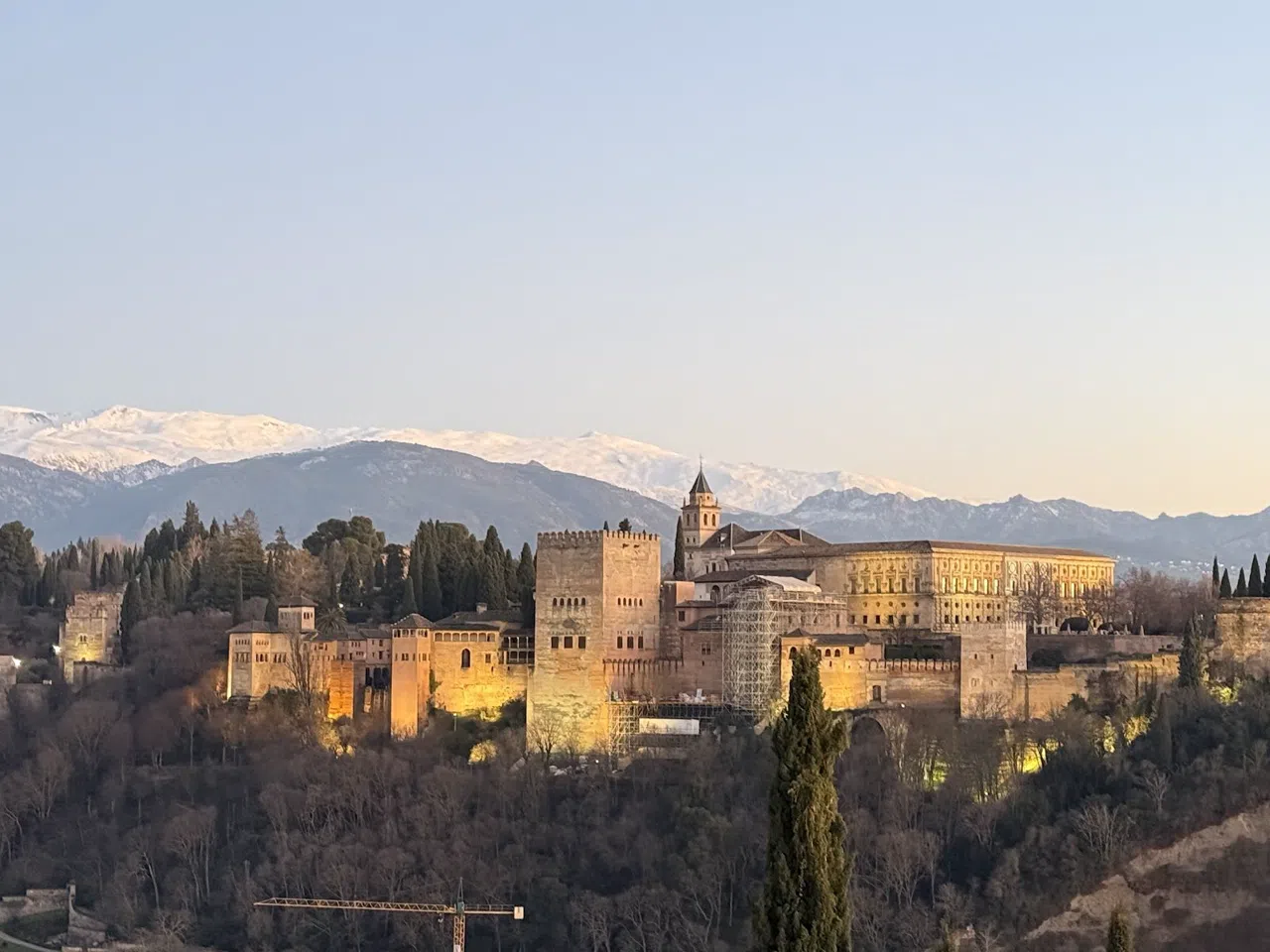

From almost any square in the Albaicín, turn away from the Alhambra's red walls and lift your eyes past the rooftops: you meet the other reason people fall for Granada, a jagged white line stitched along the southern sky. The Sierra Nevada is not something you have to go looking for here — it is already inside the city, framing every terrace, every alley that opens onto a view, every winter photograph anyone has ever taken of this place. For where to sleep and how to plan the wider trip, the Granada guide covers the basics; this piece stays with the range itself, from the balconies where it shares a frame with the Alhambra to the gondola that carries you into its snowfields.
Where the City and the Mountains Share a Frame
The miradores of the Albaicín and Sacromonte exist because someone, centuries ago, worked out exactly where to stand to see both the Alhambra and the Sierra Nevada in the same glance. That sightline is still the single best free thing in Granada, and it comes with real trade-offs depending on which square you climb to.
Mirador de San Nicolás (Albaicín) is the shot everyone already knows, even before they arrive — the Alhambra laid out below, the peaks rising behind it, buskers and tourists and the occasional flamenco singer filling the square at sunset. It is free and always open, which is exactly the problem: by golden hour in summer it is shoulder to shoulder, and pickpocket warnings here are not exaggerated. If you're bringing a group, get there at least 45 minutes before sunset and post someone to hold the rail. It's a fine square for a crowd — there's room for everyone, just not room to move once the light turns.
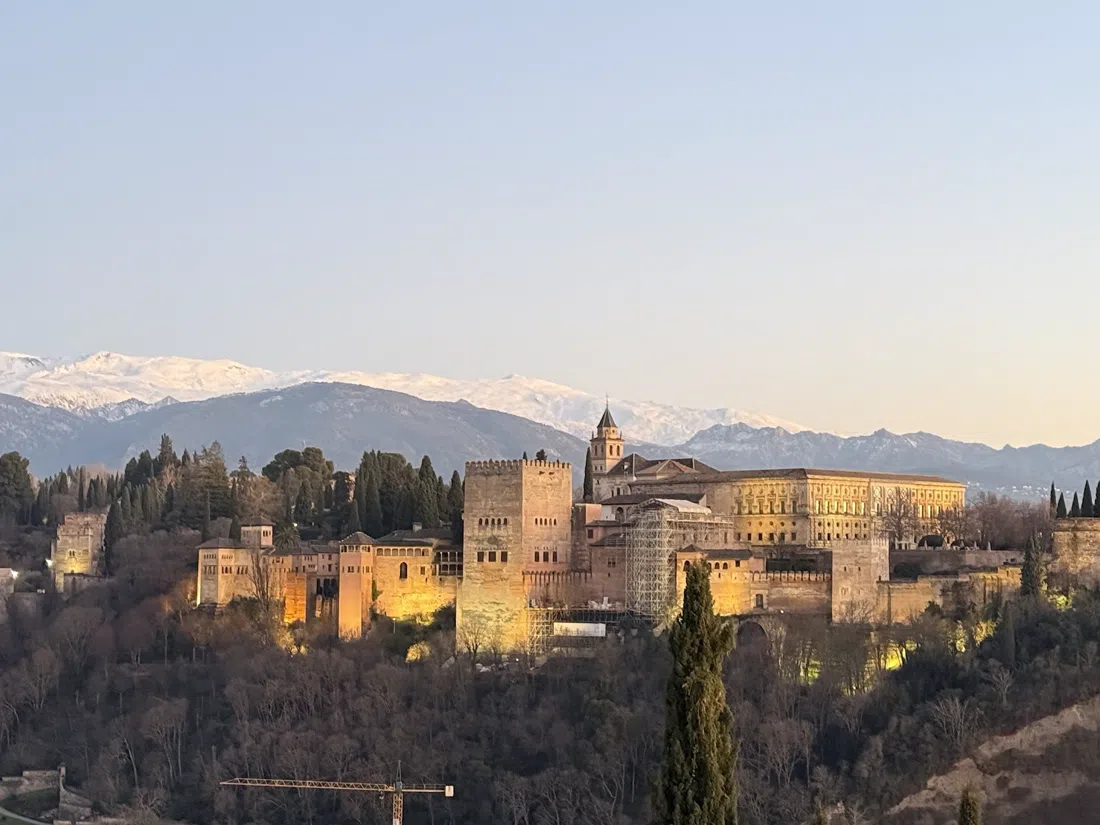
Mirador de San Miguel Alto (upper Albaicín) is the same idea taken fifteen minutes further uphill, and the climb does the crowd control for you. It's a 30-40 minute walk from the centre, steep enough that coach groups skip it, which leaves you with the widest unbroken sweep of the range in the city and a fraction of the company. It suits couples, photographers, and smaller groups who don't mind the legwork more than it suits anyone shepherding a coach party. Also free, always open.
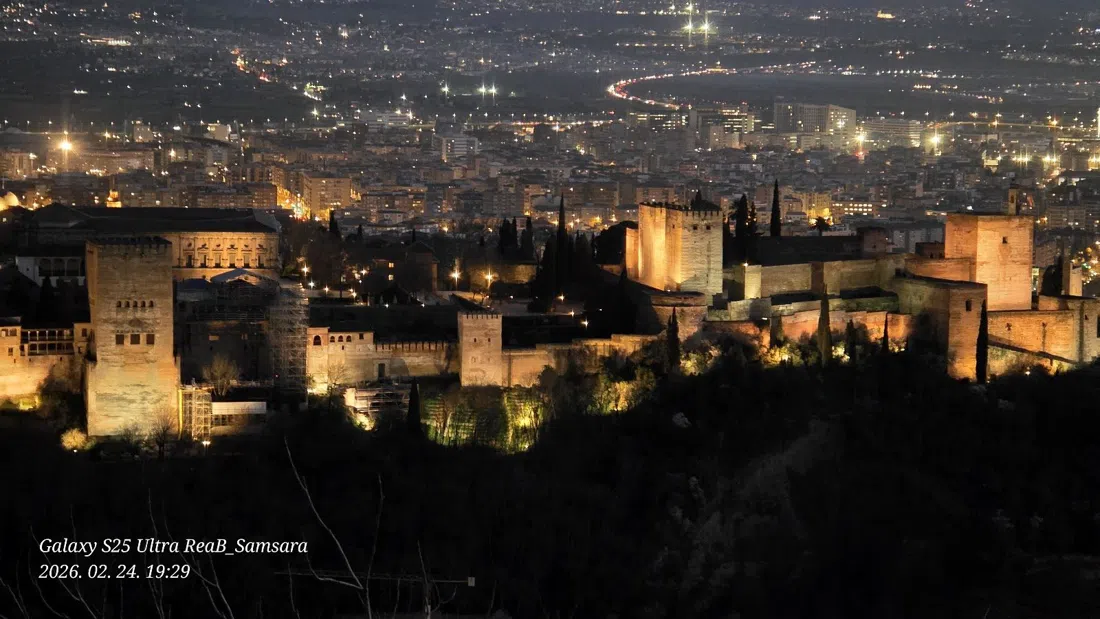
Mirador de San Cristóbal (northern edge of the Albaicín, on the road toward Sacromonte) is the practical compromise: roadside access, a small car park, and the same Alhambra-and-snow angle without the San Nicolás scrum. It's the one to pick if you're moving a group on a schedule and don't have forty minutes to spare on a hillside climb — you pull up, you look, you go.
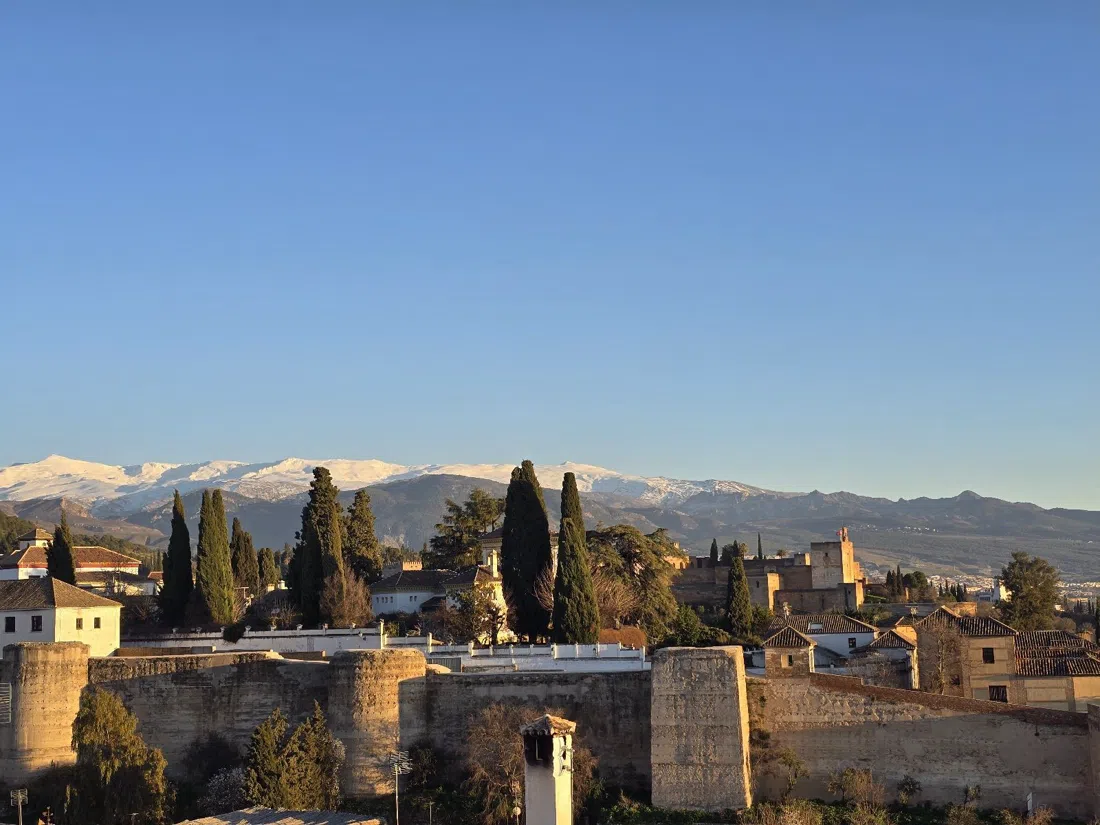
Carmen de los Mártires (Realejo, on the Alhambra hill) is the quiet alternative to all three. It's a city-owned garden rather than a public square, which changes the mood entirely — cypress avenues, ponds, peacocks, and the same distant sightline to the range, minus the performance-square energy of San Nicolás. It's free, takes groups without fuss, and rarely feels crowded even in August. If a group has already done one mirador and wants a second, greener beat rather than another photo scrum, this is it.
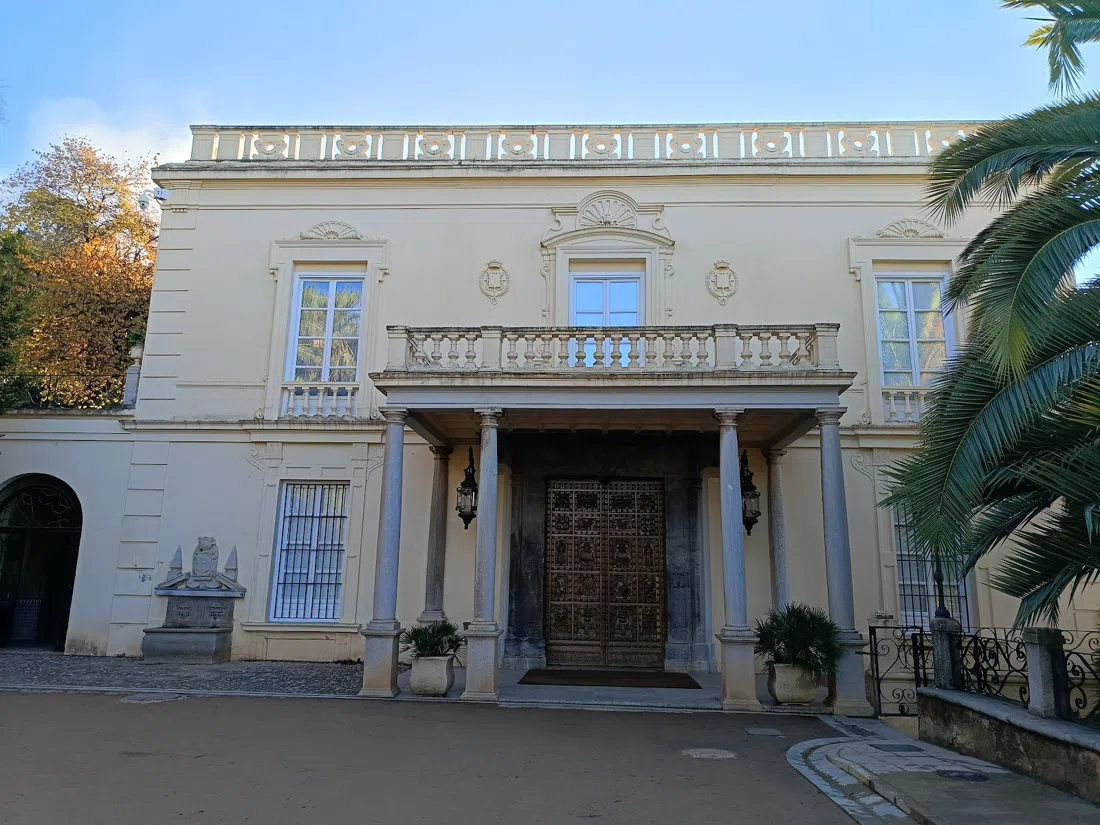
Inside the Monument the View Made Famous
Every mirador looks at the Alhambra with the mountains behind it. The Torre de la Vela, the watchtower of the Alhambra's Alcazaba, is the only spot on this list where you stand inside that monument and look out at the same range instead. It's a genuinely different vantage — the city spread below, the Sierra Nevada as backdrop rather than the subject — and it's the closest this guide comes to a essential, can't-skip stop.
The catch is booking. Alhambra tickets are timed-entry only and the Alcazaba slot sells out days in advance in summer; the general ticket runs around €19 and includes the tower. If you're building a Sierra Nevada-themed day around the miradores, book this well before you land — turning up hoping for a same-day slot is the single most common way visitors miss it.
Riding the Gondola to 3,000 Metres
This is the part of the range you don't just look at. The Sierra Nevada Ski Resort at Pradollano (about 45 minutes from the city centre) runs a summer gondola up to roughly 3,000 metres, and for 2026 the season is confirmed running from 11 July to 23 August — a short window, so check the exact dates are still live before you plan around it, since it closes for the year not long after most guides like this one get read. Tickets run €20-30 per person, sold online or walk-up, and the lift handles groups without difficulty; this is the one entry on this list built for volume, not intimacy.
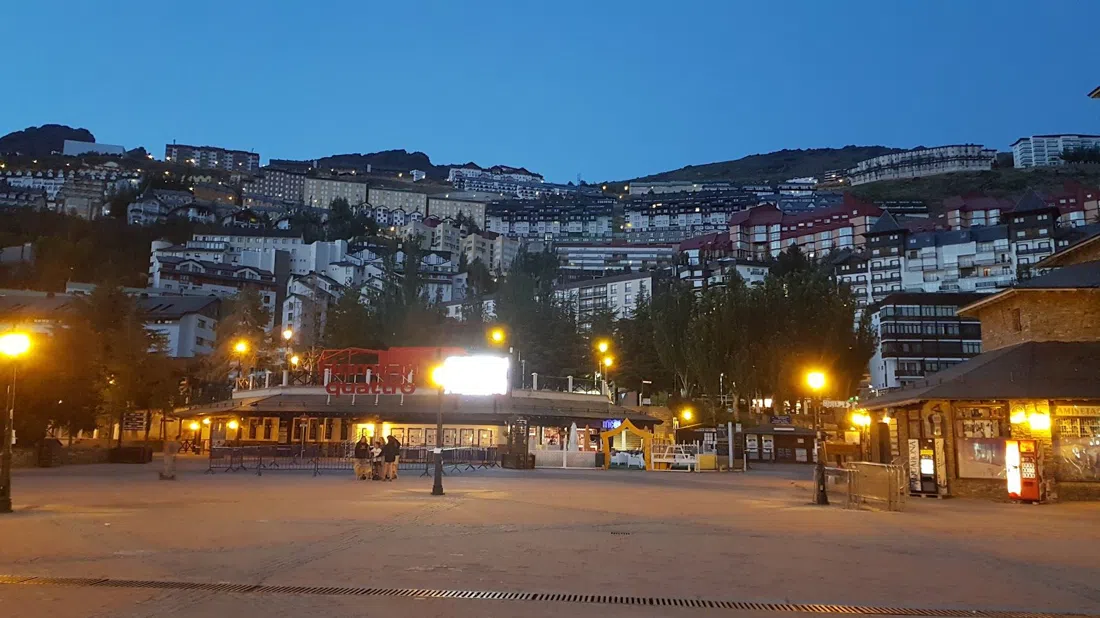
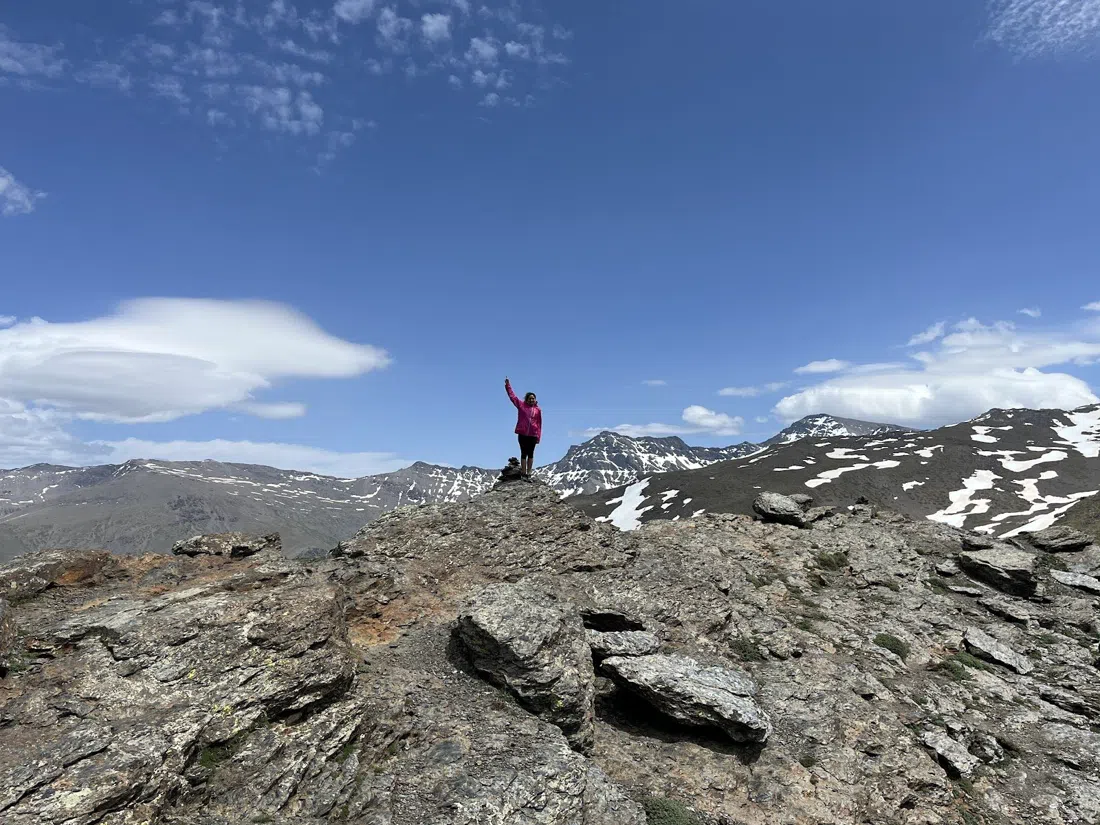
What you get at the top is genuinely alpine: bare rock, patches of snow even in August most years, and a 360-degree view that includes the Mediterranean on a clear day. It's the closest Granada comes to a proper cable-car-to-the-peaks experience, and it's worth planning the whole day around rather than squeezing in as an afterthought — the drive up alone takes the best part of an hour each way.
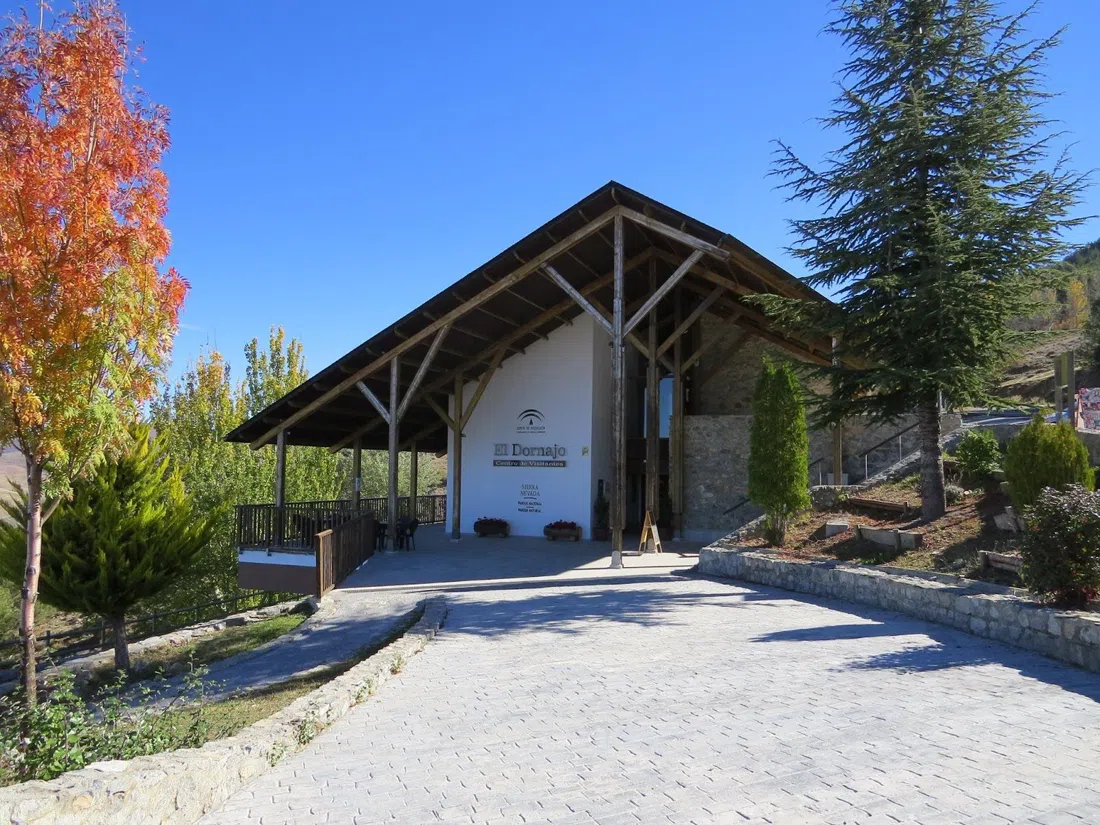
If you're driving yourselves rather than joining a tour, stop at the Centro de Visitantes El Dornajo on the way. It's the national park's official visitor centre, free to enter, with coach parking on site, and it's where organised park tours start for a reason: the staff and displays explain what you're about to drive into, and it breaks up a long ascent for anyone travelling with kids or older relatives.
Into the Mountains on Foot
For a closer, wilder encounter with the range without committing to a summit hike, Los Cahorros de Monachil is the move. It's a gorge trail twenty minutes from the city, threading through narrow limestone walls on a mix of paths and hanging bridges, with the Sierra Nevada rising behind the whole route. You can walk it self-guided for free, or book a small-group guided version through local operators for roughly €25-35 per person if you'd rather not navigate the trailhead and bridges alone.
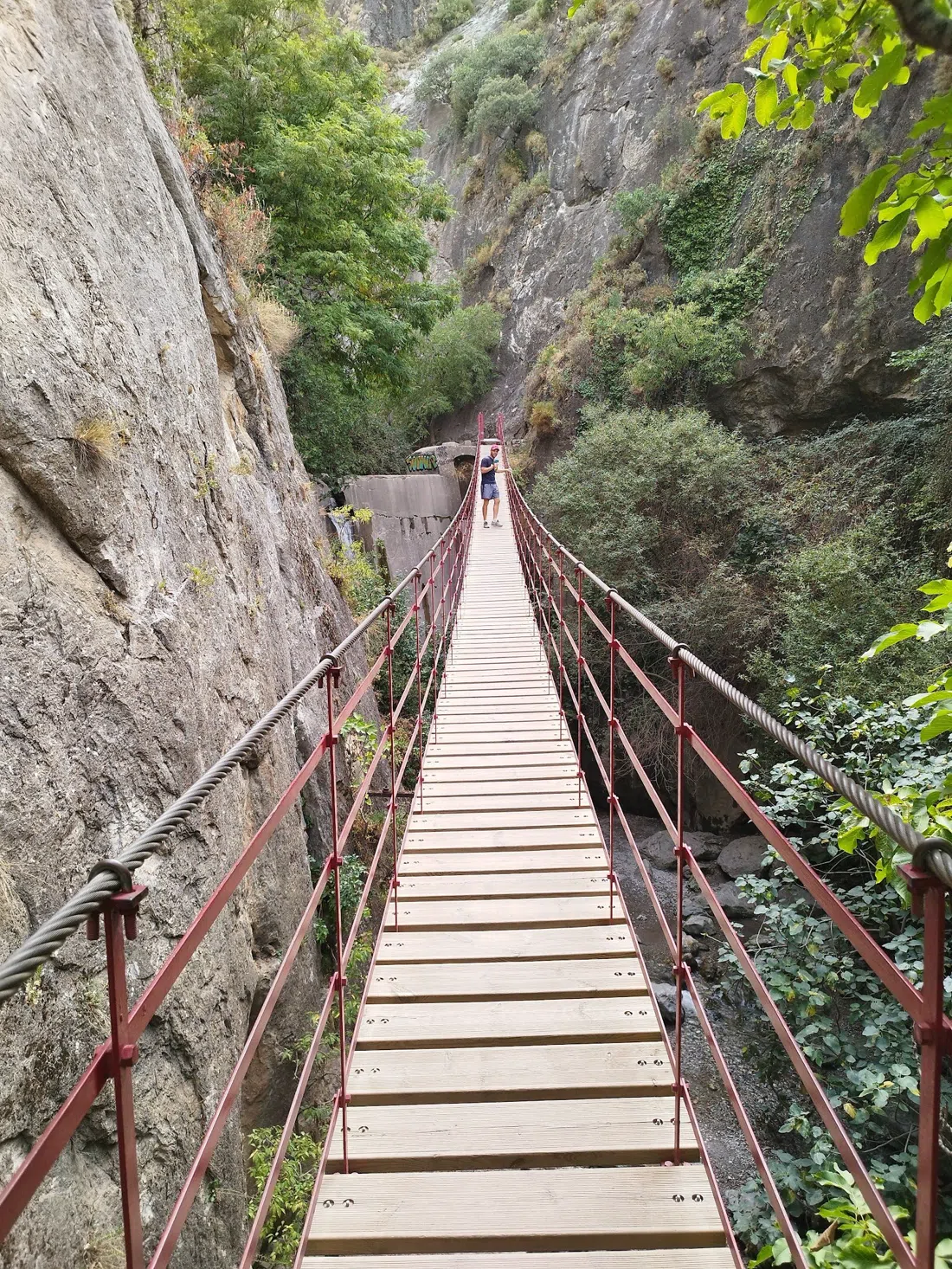
Be honest with your group about who this suits: the exposed sections and swaying bridges are a genuine problem for anyone with vertigo or limited mobility, and there's no way to route around them. For everyone else, it's the best half-day in the article for scenery-per-minute — closer to the mountains than any mirador, and far less strenuous than an actual Sierra Nevada summit attempt.
Nights Under Clear Mountain Skies
The range's altitude and low light pollution have made it a serious astronomy site, and the Observatorio de Sierra Nevada, run by the IAA-CSIC, opens to small guided groups on a handful of dates each year. Visits are capped at 40 people, booked well ahead, with a minimum age of 10. A day visit runs around €40; a two-day overnight with night observing is about €65.
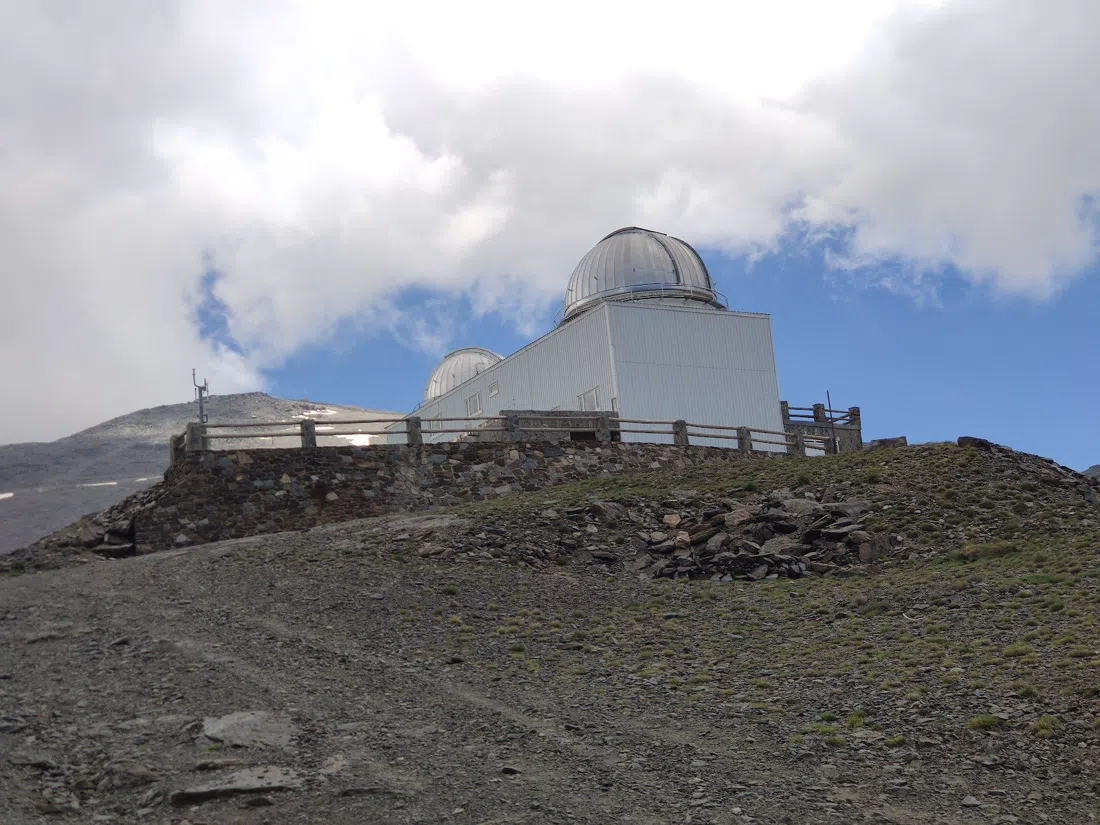
The 2026 summer window is nearly closed by the time most readers reach this piece — the remaining dates are 27 August, alongside earlier July and August slots already past — so if this is the reason you're reading, check availability and book immediately rather than treating it as something to decide on the day. It's a niche addition to a Granada itinerary, but for anyone who has already done the miradores and the gondola, it's the one experience here that shows the range after dark rather than under it.
Villages Below the Snow Line
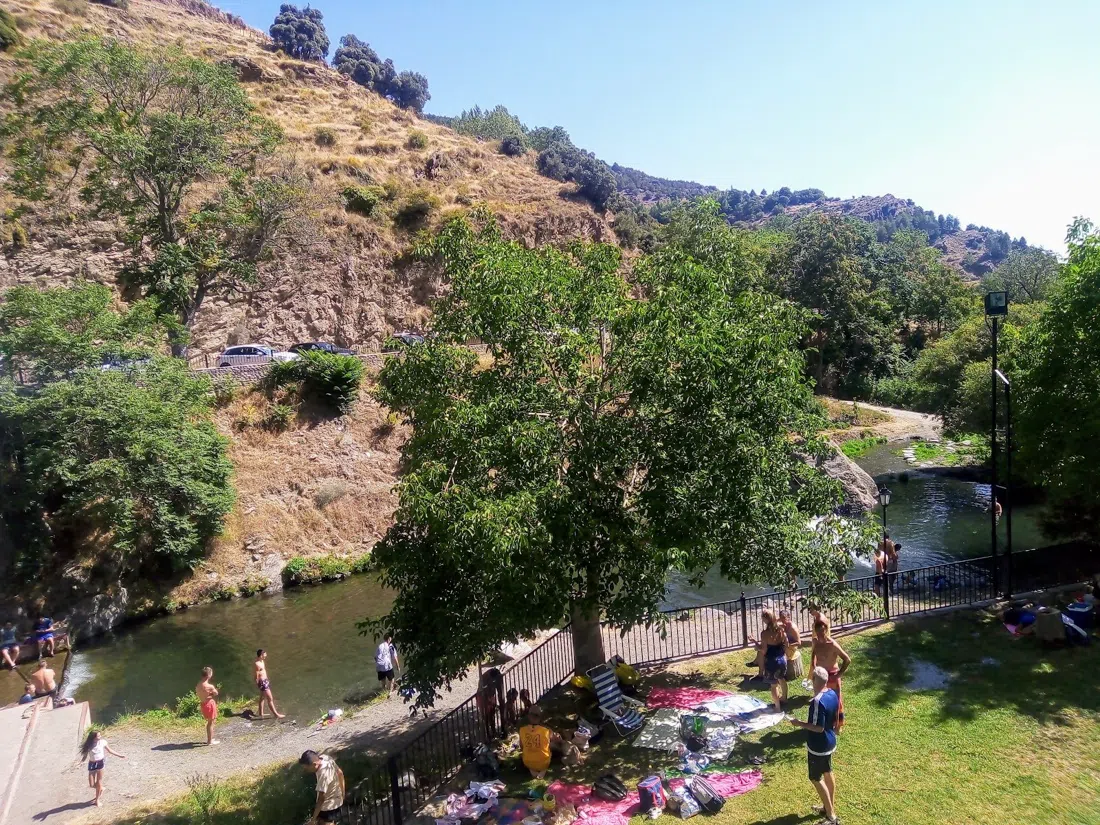
The Sierra Nevada isn't only a backdrop to Granada — people have farmed and lived on its southern slopes for centuries, and the Alpujarras villages are where that becomes visible. Capileira and the Poqueira Valley, alongside its neighbours Bubión and Pampaneira, form the classic day trip: whitewashed houses stacked up the hillside, working artisan shops, and views back across the valley to peaks that are often still carrying snow into early summer. All three villages are easily reached by car, public bus, or an organised minibus tour, and they take groups of any size comfortably — this is a well-trodden route, not a fragile one.
Trevélez, further along and higher up, is worth the extra distance for two reasons: it's one of Spain's highest permanently inhabited villages, and it's the source of a DO-protected cured ham that's sold and served everywhere in its streets. It's a longer drive than Capileira, so pair it with a full day rather than trying to bolt it onto a half-day itinerary — reachable by car or organised day tour, free to visit, with transport cost the only real variable.
Guided Days in the Sierra
For visitors who want the range's history without arranging transport, gorges, or timed tickets themselves, Nevada Guides' 4x4 Sierra Nevada Safari covers ground the self-drive routes above don't: old Roman gold-mining sites and Moorish mountain trails, with a stop at a mountain hut along the way. It runs six to seven hours for around €75 per person, small-group by design, with a private-guide option if you'd rather not share the vehicle. It's the pick for anyone who wants a full mountain day distilled into one booking rather than stitched together from several.
Practicalities
Getting there. Everything in this guide except the city miradores requires a car, tour minibus, or the Alsa bus service toward Sierra Nevada — there's no metro or tram out to Pradollano or the Alpujarras. If you're not driving, book a minibus tour for the gondola or the Alpujarras villages rather than relying on public transport connections, which are infrequent outside peak commuting hours.
Cash and cards. Card payment is standard at the ski resort, the observatory, and tour operators. In the smaller Alpujarras villages, carry some cash — not every artisan shop or village café takes cards, and ATMs thin out the higher you go.
Timing. The gondola window is short — 11 July to 23 August for 2026 — so if that's the centrepiece of your trip, build the itinerary around those dates first and fit everything else around it. Miradores are best at golden hour for the view, but arrive early if you want to actually stand at the rail. The observatory's remaining 2026 dates are nearly gone; book now if you want it.
Budget. A free day is entirely possible — pick two miradores and Carmen de los Mártires and you've seen the range properly without spending a euro. A fuller day (gondola plus Alhambra ticket) runs €40-50 per person before food and transport; a guided 4x4 day or an observatory overnight pushes closer to €65-75.
Where to stay. Anywhere in the Albaicín or Realejo puts you within walking distance of the best free viewpoints; for the gondola and Alpujarras days, a car (rented or via tour) matters more than location. Start your search with the Granada hotel search and work from there depending on which side of this itinerary matters most to you.