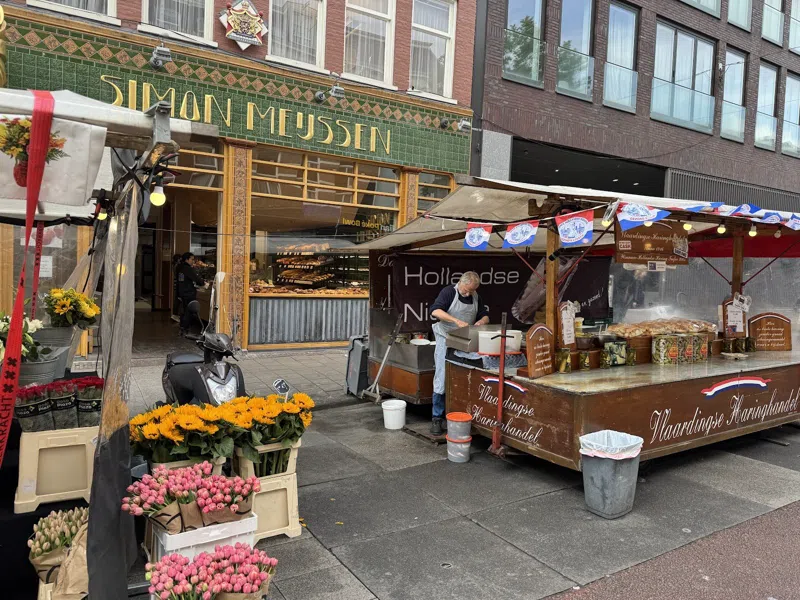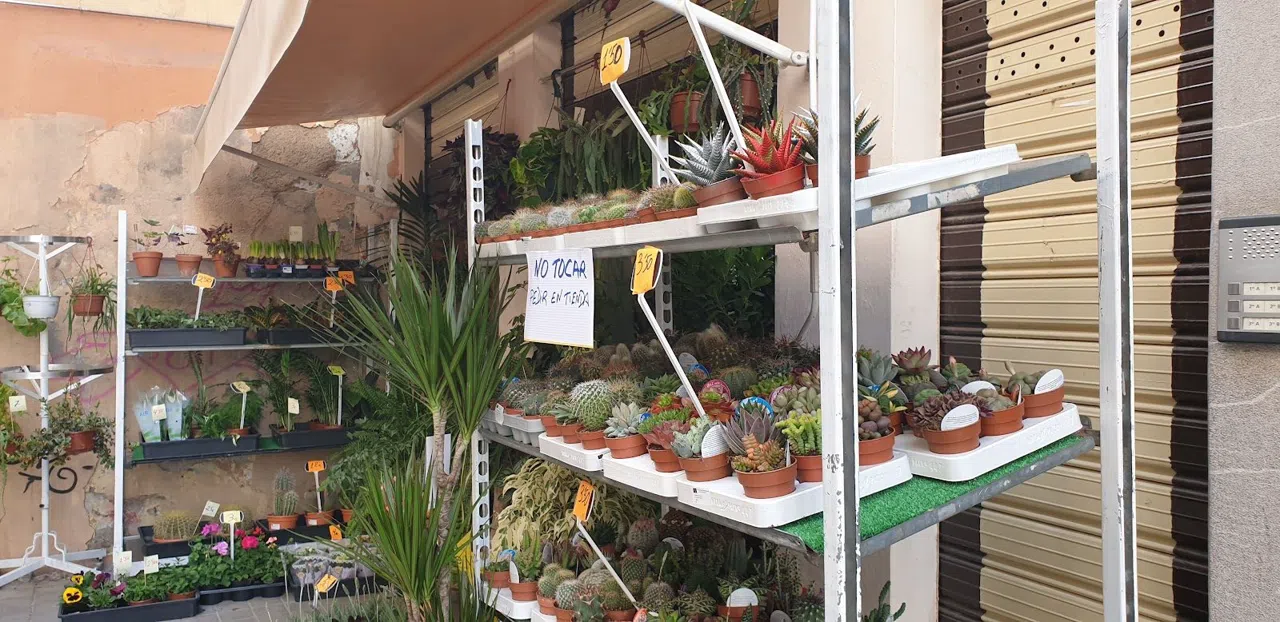

By three in the afternoon the fish counters at Mercado de San Agustín are hosed down and the shutters are coming across. Go in the morning, while the boquerones are still glittering on the ice and the Vega tomatoes smell of the stalk, and you can hand what you just bought to a bar counter twenty paces away and have it fried while you drink. Everything after that is a slow walk downhill with a drink waiting at the end of it.
The morning belongs to San Agustín
Mercado de San Agustín (centre, a minute off Gran Vía behind the Cathedral) is small, covered, and the only fixed point this day really needs. Thirty-odd stalls sell Vega produce, fish brought up from the coast and Iberian pork, and several of the bar counters inside will cook what you have just bought at the stall two metres away. Entry is free and there is nothing to book.
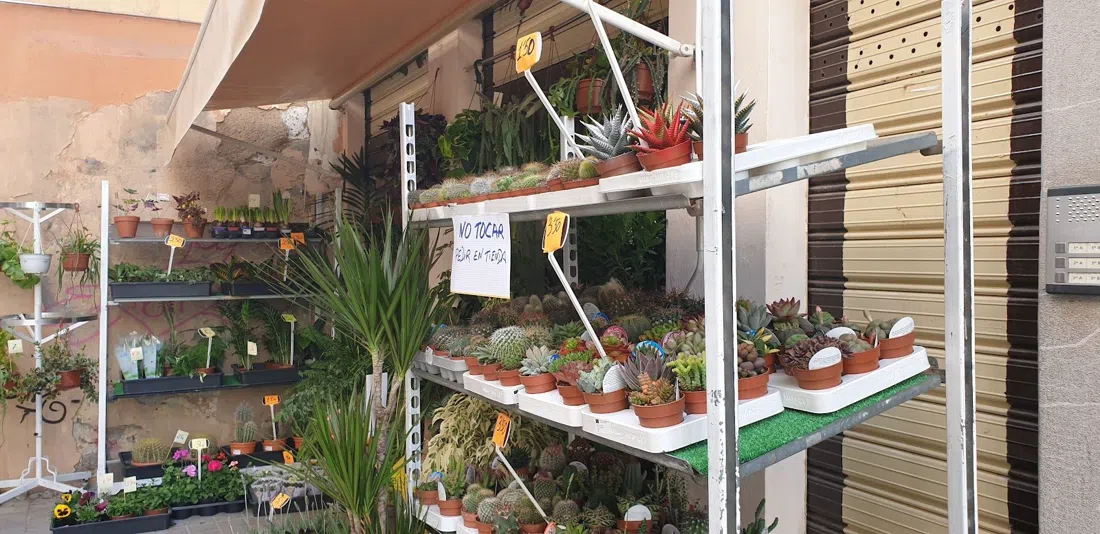
The hours are the catch. Stalls run Monday to Saturday mornings only, roughly 08:00 or 09:00 until 15:00, and the market does not open on Sundays at all. Arrive at 10:00 and the place is working properly: habas still in the pod, alcachofas trimmed while you wait, chirimoya and avocado from the subtropical coast in season, jamón sliced to order. Arrive at 14:30 and you get the sound of crates being stacked.
Produce goes at market rates, noticeably under the shops on the main streets, and the gourmet bar counters run roughly €3–12 a plate depending on whether you are eating a slice of cheese or a proper portion of pescaíto frito. Two people can eat and drink well here for about €25.
Those counters are genuinely small. Anything over six should split across two or three stalls rather than occupy one bar: you will see more of the market, and you will not be the party that shut down a working counter at eleven in the morning.
Down through the Alcaicería without buying a fridge magnet
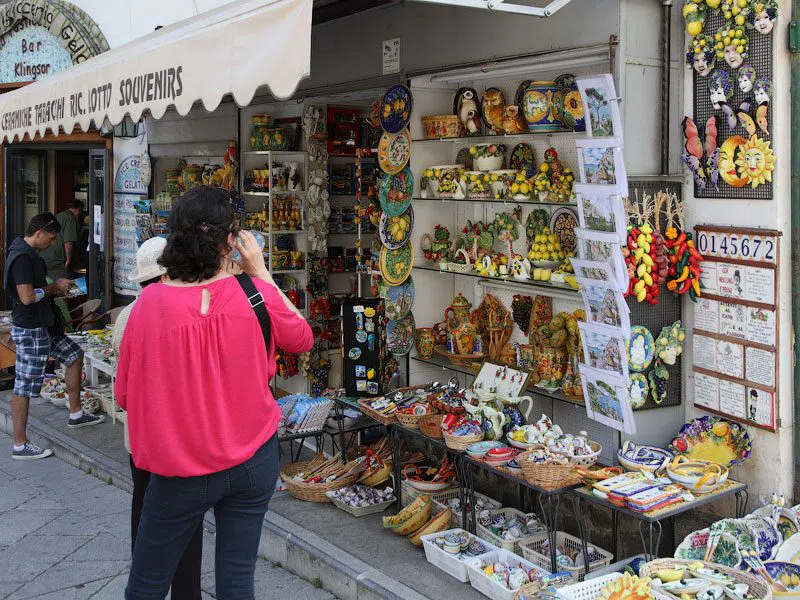
From the market it is five minutes downhill to the Alcaicería (the lanes beside the Cathedral, between Calle Zacatín and Plaza Bib-Rambla), and it is worth walking as long as you know what it is. This was the silk exchange; it is a souvenir bazaar now, and much of what hangs in the doorways repeats from lane to lane. What still justifies the detour is the taracea, the inlaid marquetry boxes and tables, geometric in bone and wood, and the fajalauza ceramics with their blue-green glaze. Both have real workshops behind them. Small pieces start at a few euros; a good taracea box runs past €100.
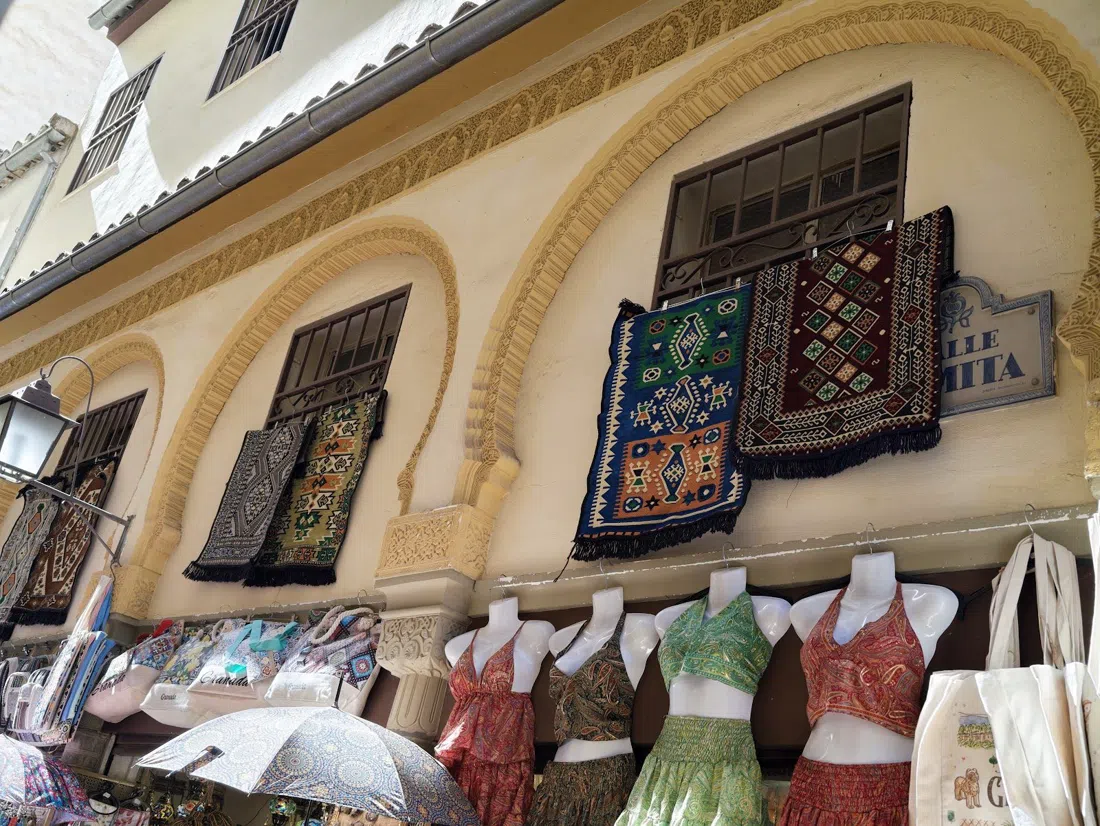
Prices are quoted expecting you to push back, so push back politely and expect to land lower. The alleys are single-file by midday, so if you are more than four, agree on Calle Zacatín or Plaza Bib-Rambla as the meeting point before you go in.
Saturday in Plaza Larga, Sunday out at Almanjáyar
Two markets are day-specific, and both are worth arranging your week around.
Mercadillo de la Plaza Larga (Albaicín) runs Saturday mornings only, roughly 09:00 to 14:00, in the square at the top of the climb. There are about five stalls (seasonal Vega fruit, herbs, vegetables at neighbourhood prices), so treat it as a fifteen-minute stop rather than an hour, and time the walk up so you arrive hungry: the bars on the same square open straight afterwards. Open square, no restrictions, any group size works.
Mercadillo de Almanjáyar (Recinto Ferial, well north of the centre) is the answer to the Sunday problem, because San Agustín is shut and the food day collapses without it. Sundays, 09:00 to 14:00, it is the city's second-hand and vintage fix: clothing from €1, bric-à-brac, food stalls for a few euros. It is cash only, and it sits out in a residential district, so take the metro or a taxi rather than attempting it on foot. Go early; by late morning it is shoulder-to-shoulder and a group that has not agreed a meeting point spends the rest of the morning on the phone.
The first drink and the ham you take home
Bodegas Castañeda (Calle Almireceros, thirty seconds off Plaza Nueva) is the most reliable place to start the evening, largely because it can physically hold you: table seating as well as bar standing, and it takes reservations, which almost nothing else on this walk does. Book for six or more. Order the vermut de barril, vermouth drawn from the barrel, bitter and orange-sweet, and put a tabla of charcuterie on the table. A drink with tapa lands around €3; sharing boards and raciones run €8–16. Be honest about what it is, squarely on the tourist trail after eight, so come early in the evening if you want to hear as much Spanish as English.
A few doors along the same short street, Jamones Castellano (Calle Almireceros) is a counter shop, not a bar: no seating, no stools, just ham on the bone, wheels of queso curado and the slicer. It is the natural next move when you have just tasted something you liked. Buy 100g of jamón ibérico and a wedge of cheese and they will vacuum-pack it for the flight home. A decent picnic for two comes to €15–20. Send one or two people in while the rest wait outside; four in that doorway is a crowd.

Where the free tapa is still free
The rule in this city is simple, and I will not recommend a place that breaks it. You order a drink, a plate of food arrives, and you do not pay for the plate. If a bar hands you a list of tapas with prices beside them and no drink included, you are in a restaurant that has learned what visitors will tolerate. Walk out.
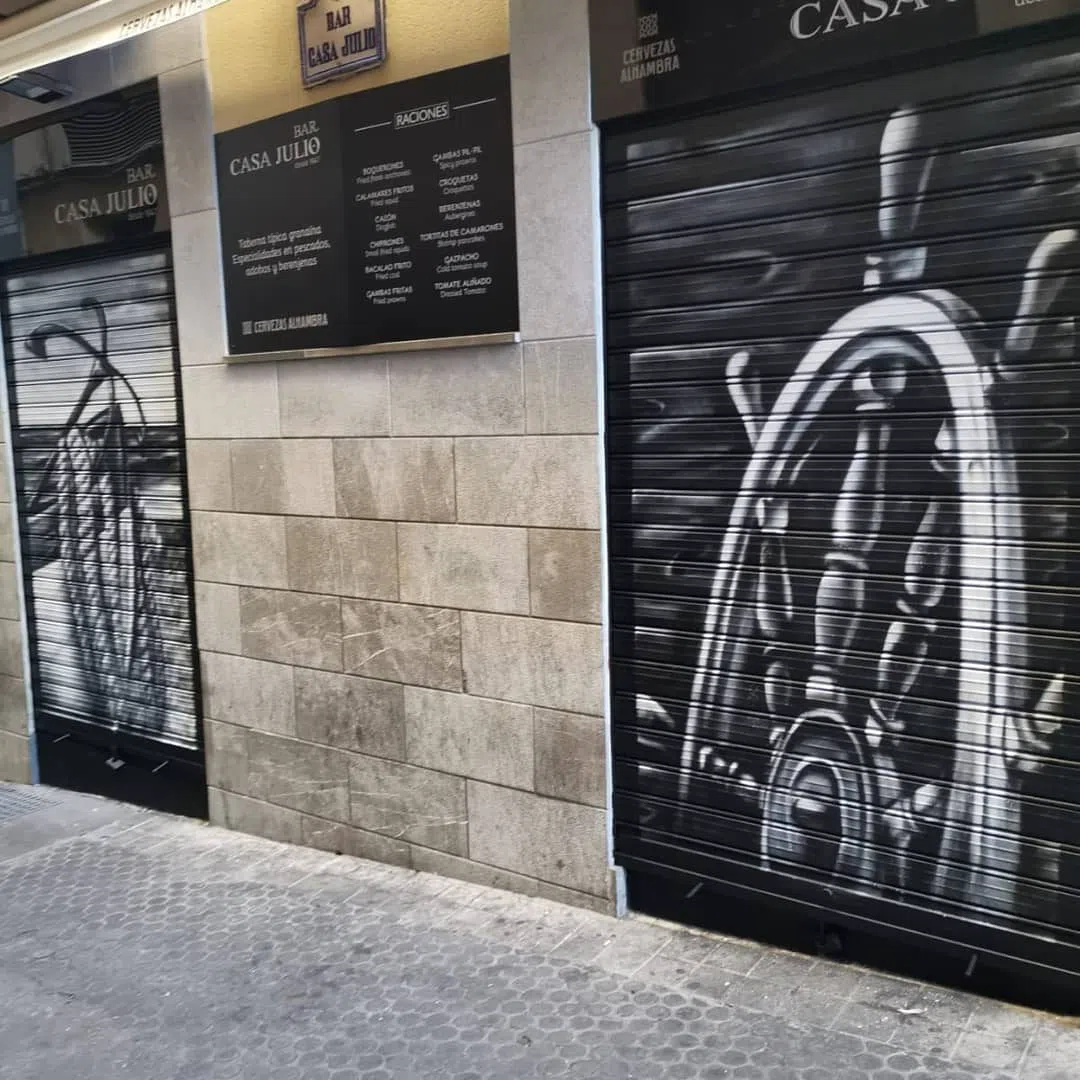
Bar Casa Julio (off Calle Elvira) has been frying since 1947 and is the purest version of the ritual left in the centre. Standing only, genuinely tiny, no bookings, no choosing: you get whatever is coming out of the kitchen, usually fried fish, and not choosing is why you go. A drink with tapa runs €2.50–3.50. Two to four people is the workable limit. If you have a dietary restriction, say so at the bar immediately or go somewhere that hands you a list.
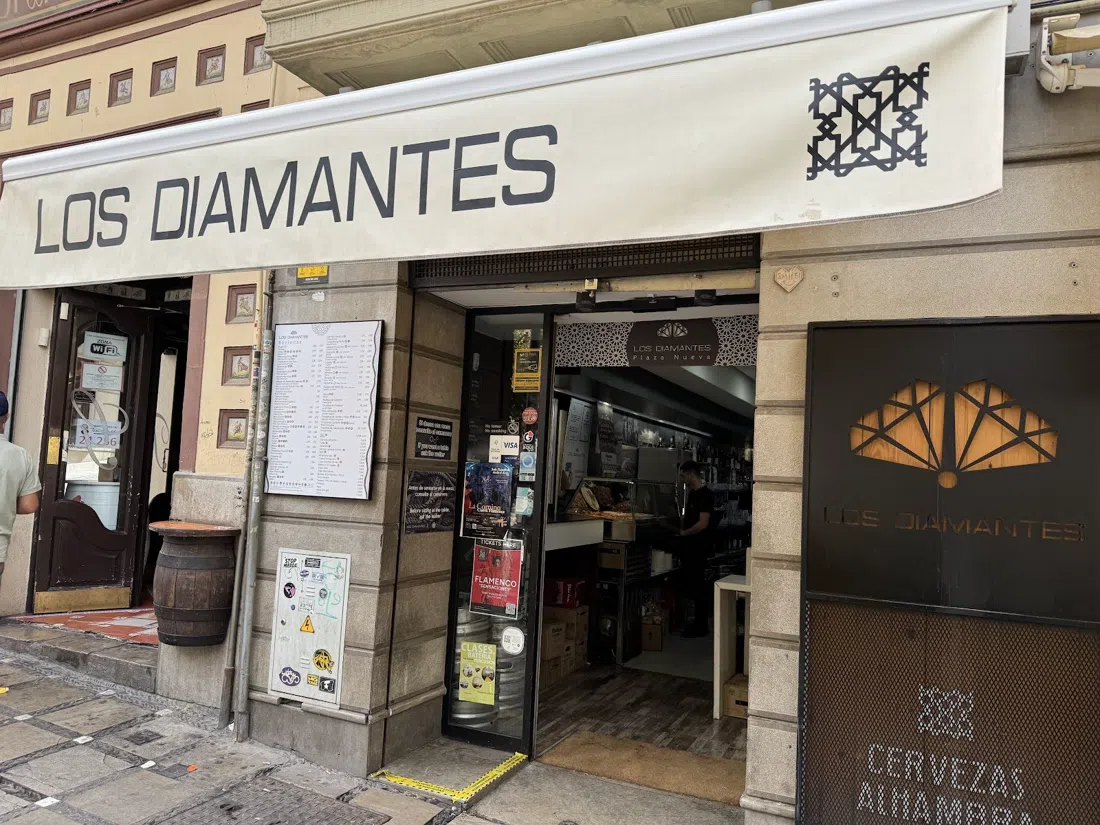
Los Diamantes (Calle Navas, plus several branches) is the name every local says first. The Navas original is small, loud and reservation-less, and there is no realistic hope of a table: you stand, you shout your order, you eat fried fish off paper. Perfect for two to four. A larger party should use one of the bigger branches; the Plaza Nueva site has more space and actual seating, trading some of the chaos for the ability to sit. Beer or wine with the free tapa is around €3, raciones €10–16.
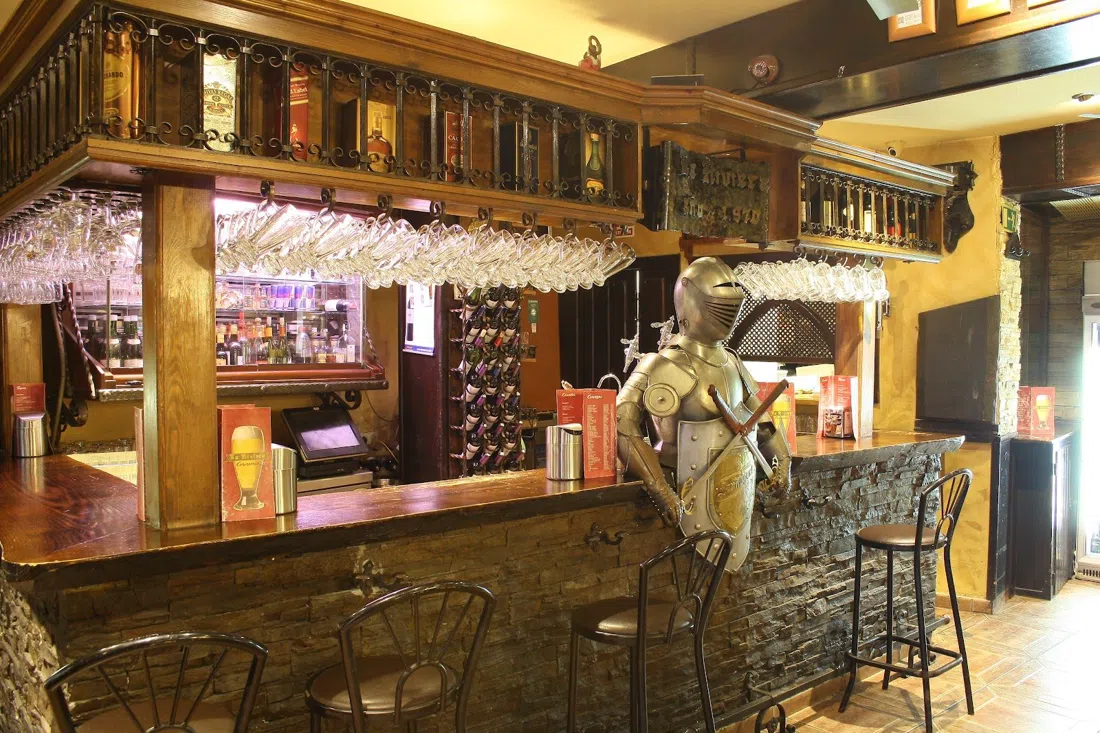
Bar La Riviera (Calle Cetti Meriem, just off Elvira) earns its place for one reason: you choose your free tapa from a list instead of taking what arrives. That solves the vegetarian and gluten-free problem in a single move, which makes it the safe stop for a mixed group, and it is one of the easier central rooms for several people. Around €3 for a drink with your chosen tapa. The decor is knowingly theatrical, and it fills from about 20:00, after which you stand.
Two bars that break the fried-fish rhythm
Four bars into an evening of fried fish, the palate wants an argument.
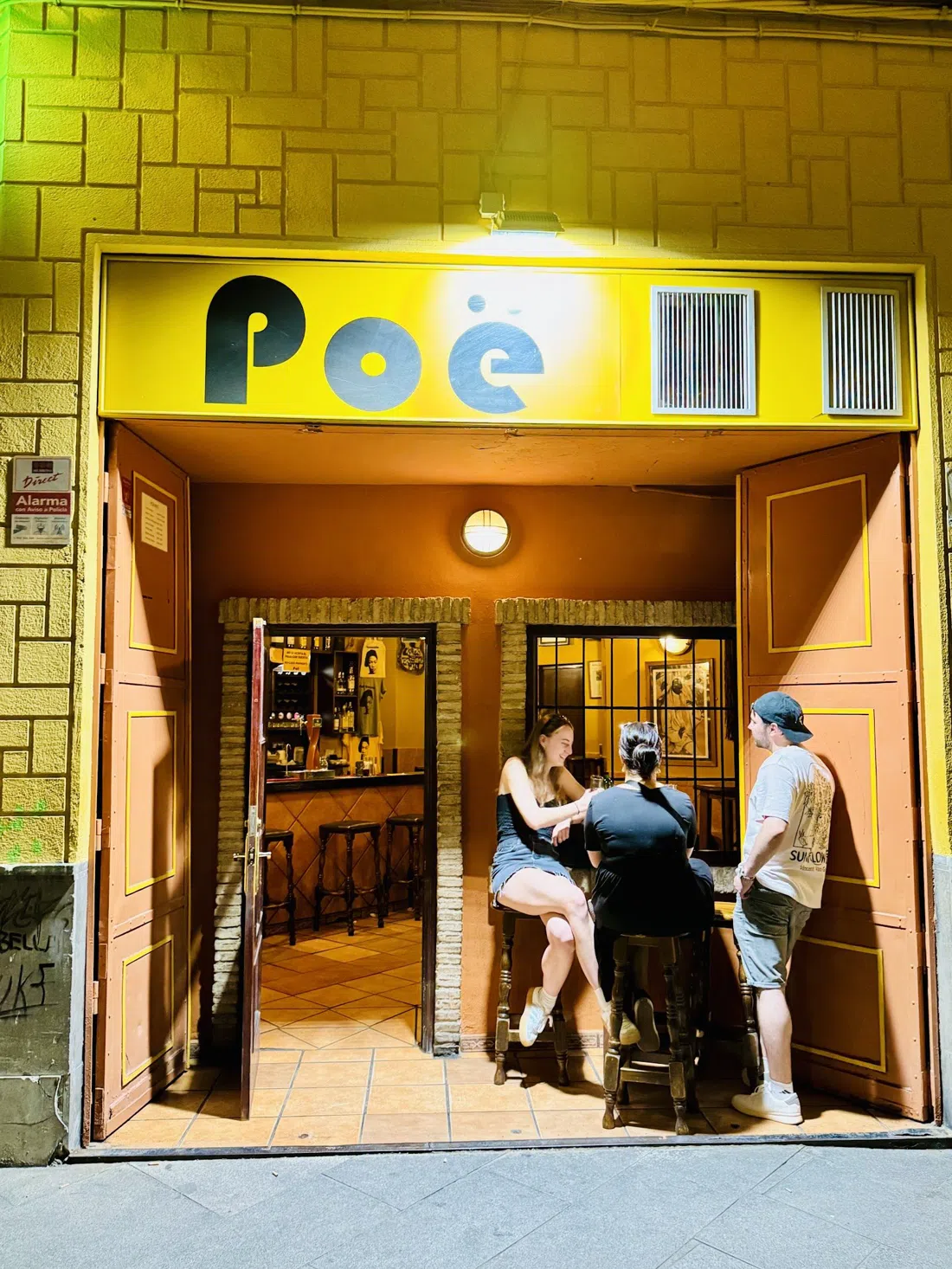
Bar Poë (in the streets below Plaza de Gracia) serves Angolan and Brazilian stews as the free tapa, properly spiced, slow-cooked things in small bowls, and is still trading in 2026 after years of people predicting otherwise. The room is small and takes no bookings, so four at most; in warm weather the crowd stands out on the pavement, which is half the pleasure. A drink with tapa is around €3, extra tapas about €2.50.
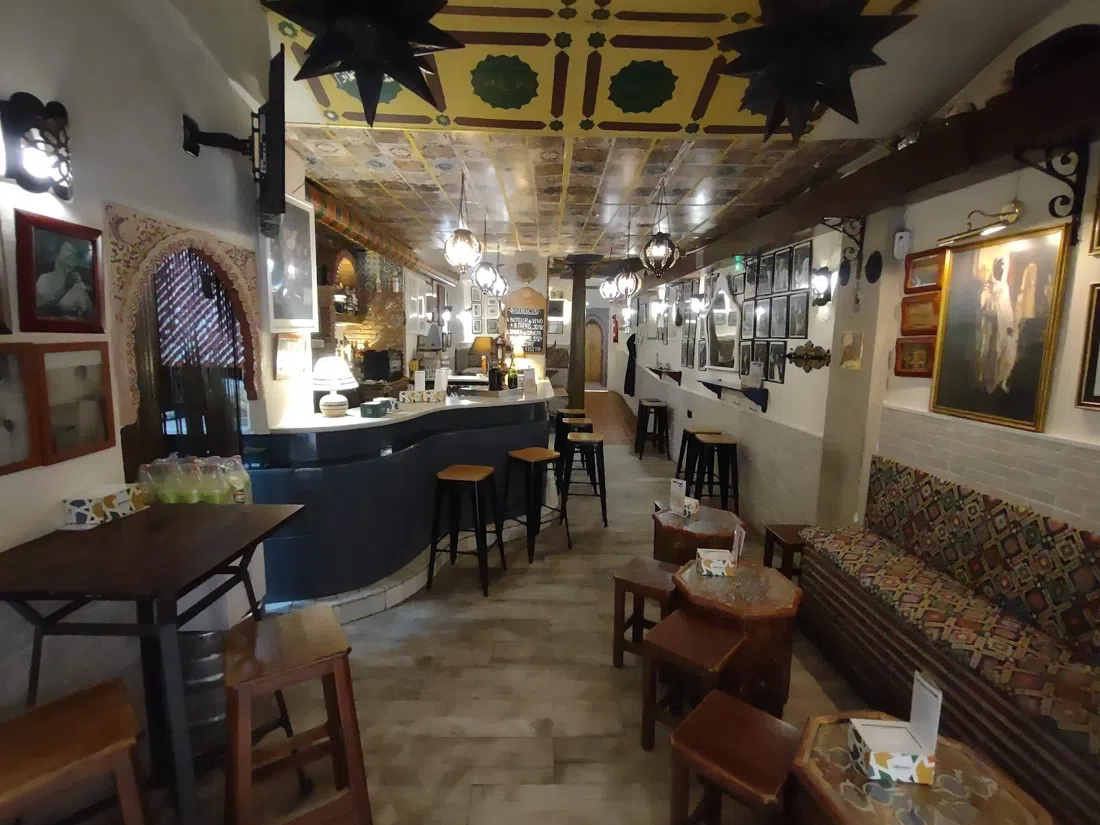
Om-Kalsum (Calle Jardines) is the strongest vegetarian and vegan stop of the whole day and a nod to the city's Moroccan side: small plates €4–8, free tapa around €3 with a drink. It opens at 20:00 and there is a queue from the moment it does. Arrive at opening and you are in; arrive at 21:30 and you wait. Groups over four should send someone ahead to stand in line.
Which wine bar depends on the day you are on
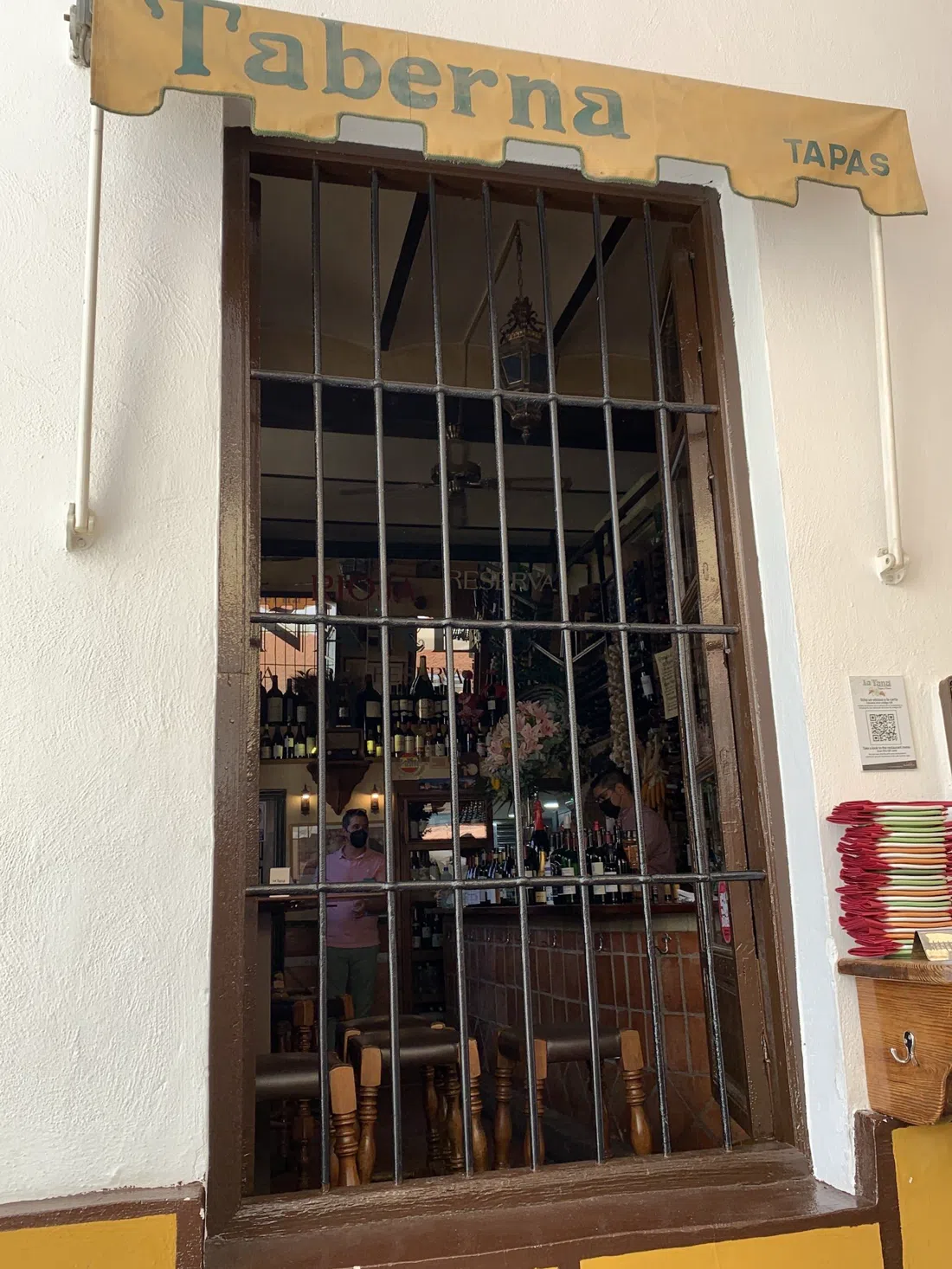
Taberna La Tana (Realejo) is the serious wine stop: family-run since 1993, a cellar of several hundred labels, and a top national wine-bar ranking in 2026 that has not made the room any larger. Two to four people, and worth phoning ahead. Glasses run roughly €3–6, tapas and raciones €4–14, and the staff will ask what you liked last rather than pointing at a board. Check the day before you walk over, because it trades Tuesday to Friday and closes at weekends.
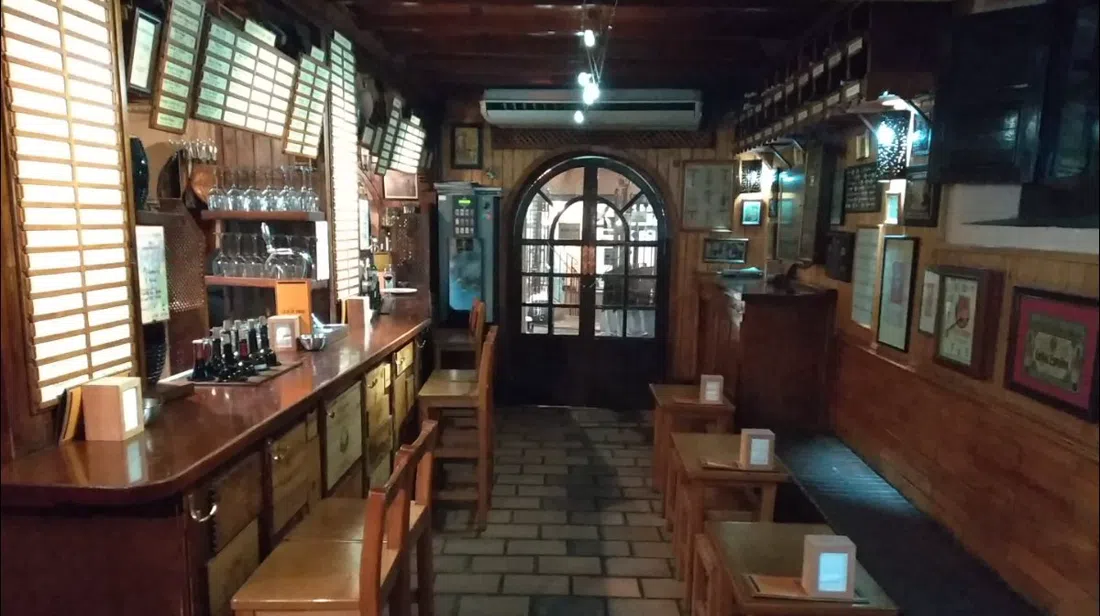
Which is exactly why Casa de Vinos La Brujidera (off Plaza Isabel la Católica) is here. It is the weekend and Sunday answer, two minutes from the square, with over a hundred wines by the glass at €3–5 and plates €6–14. It has tables and takes reservations by phone, so six to eight is manageable if you book; without a booking it is full by 21:00. The kitchen runs a split service and shuts mid-afternoon before reopening at 20:30, so do not turn up at seven.
When a standing crawl will not work
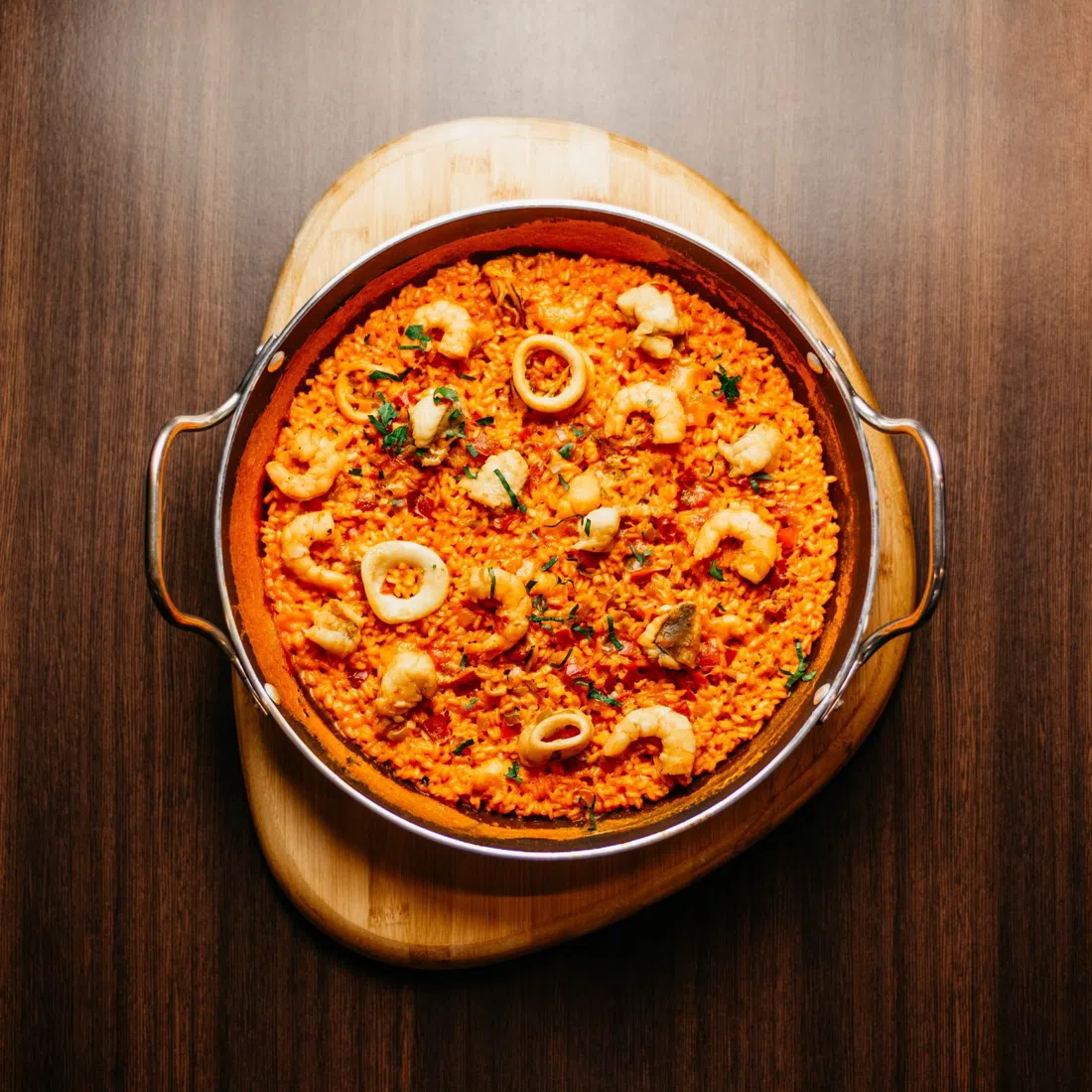
Some nights the crawl is simply wrong: a birthday, grandparents, small children, eight people who want one table. Los Manueles (several central sites a short walk apart) is the most group-friendly name on this route. It takes bookings, runs set group menus and has real table capacity. A century-old kitchen doing croquetas, berenjenas con miel de caña, the fried aubergine ribbons under cane honey that this city argues about most, and Alpujarra mountain plates. Around €25–35 a head for a full sit-down meal, with a continuous kitchen from noon to midnight, which makes a 16:30 lunch entirely possible when the market morning has run long.
If you would rather someone else ordered on the first day, Spain Food Sherpas runs a 3.5-hour small-group walk at around €71 a head, minimum two people, with private departures and free cancellation up to 24 hours ahead. The late-morning departure pairs naturally with the market; the evening one covers the bar circuit. Worth the money if you want a local doing the ordering and the explaining, and unnecessary if you are happy walking this route yourself.
One pionono, eaten standing at the counter
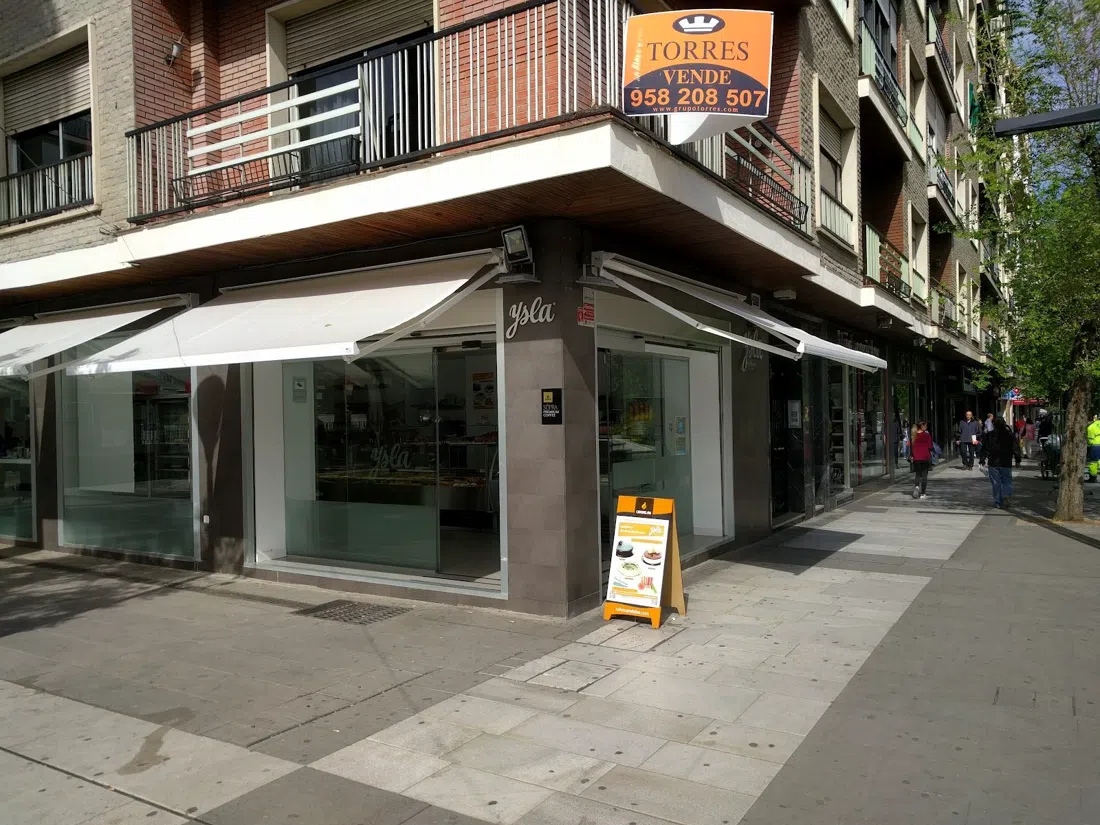
Casa Ysla (Acera del Darro) is the original maker of the pionono, a thumb-sized roll of syrup-soaked sponge under a scorched cap of cream, invented by the family at their bakery out on the Vega in 1897. It is a counter shop with a small café: about €2 each, boxed sets €10–20. One is a single mouthful, so everybody underestimates and then wants three. Buy a box for the group rather than one each, and eat them later.
Practical notes
Market to tapas streets is walkable and mostly downhill, fifteen minutes end to end. Two exceptions: the Albaicín climb to Plaza Larga is steep and cobbled, so take one of the small minibuses from Plaza Nueva if knees are a factor, and Almanjáyar needs the metro or a taxi.
Cards work in the market, the wine bars and the restaurants. Almanjáyar is cash only, several of the small standing bars prefer coins, and the Alcaicería haggle goes better with notes in hand. Carry €40 in small denominations.
Market mornings Monday to Saturday, gone by 15:00, shut Sunday. Plaza Larga Saturday only. Almanjáyar Sunday only. La Tana Tuesday to Friday. La Brujidera back at 20:30 after the split service. Om-Kalsum opens at 20:00. The tapas streets fill between 20:30 and 21:30, so an hour earlier buys you a seat and an unhurried bartender.
Reckon on €35–45 a head for a market morning plus an evening of bars, where three or four drinks carry three or four plates of food with them, and €60–75 if you add a sit-down meal and decent wine.
A bed between Plaza Nueva and the Cathedral puts every venue here inside a ten-minute walk and lets you drop the shopping before the evening starts. Begin with Granada hotel search, and the wider Granada guide covers what to do with the hours in between.