
The 211 kilometres between Seville and Granada run through olive country and beneath the white limestone ridge above Antequera, and on the fast train they pass in about two and a half hours. The distance has never been the problem. What eats the day is the thin timetable at one end, three kilometres of unlovely northern suburb at the other, and the one appointment in Granada that nobody will move for you: a thirty-minute window at the door of the Nasrid Palaces that no operator, and no amount of charm at the gate, will shift.
Build the whole day backwards from the Nasrid half hour
Granada's great monument does not queue, it schedules. Admission to the Alhambra and Generalife (Sabika hill, above the Realejo) is capped at 6,600 visitors a day, and only 300 people are admitted to the Nasrid Palaces in any half-hour slot. General admission is €22.27 booked online with the fee included. Children under twelve go free but still need a ticket issued in their own name, with a document number attached to it, like everyone else. Every ticket is named and timed, so it cannot be swapped, resold, or handed to a friend who woke up earlier.
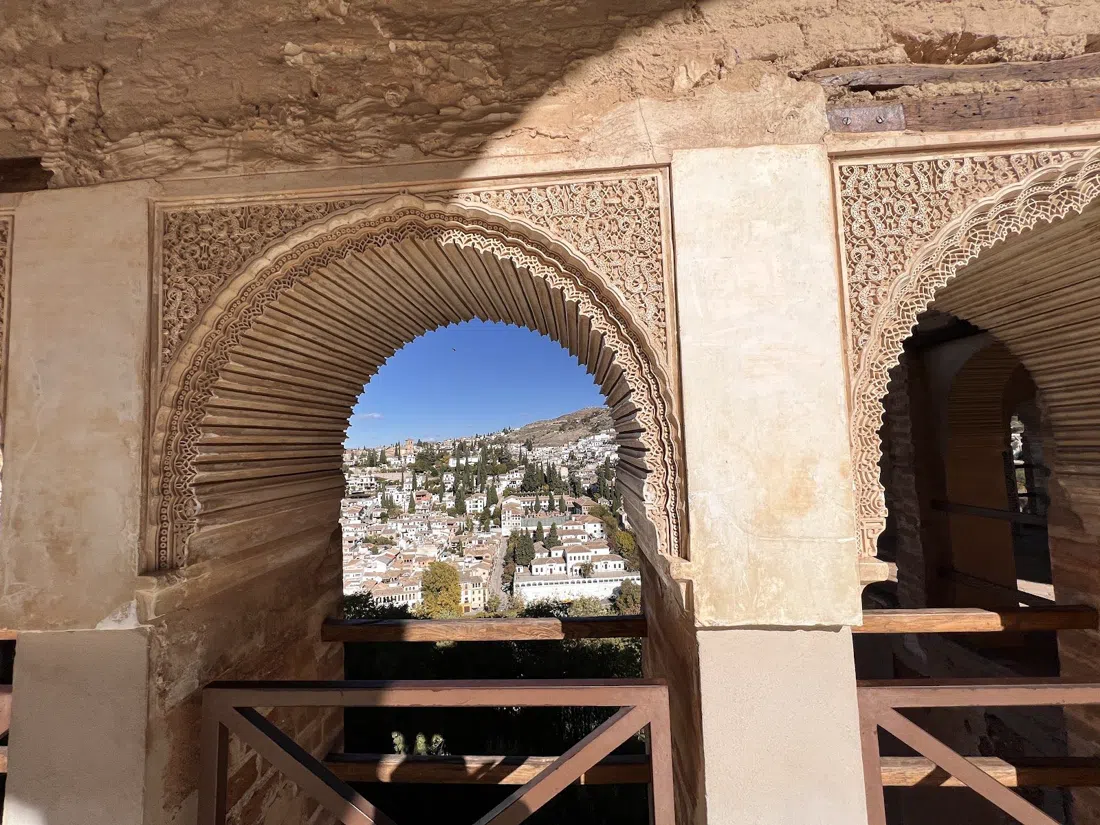
Read that as a departure constraint rather than a sightseeing one. If your Nasrid slot is 14:30, the question stops being which journey is nicest and becomes which departure delivers you to the Puerta de la Justicia by about 14:00 with a margin you can defend when something runs late. Agencies hold a substantial share of the daily allocation, which is why a tour can conjure a ticket on a morning when the official calendar shows nothing. That is useful to know, and it also explains why the official calendar empties far earlier than first-time visitors expect. Book the palace slot first, then the seat. Doing it the other way round is how people end up with a lovely three-hour journey and a ticket that only covers the gardens.
The fast train is genuinely fast and it barely runs
Renfe Avant (Sevilla-Santa Justa to Granada) is the quick option, roughly 2h30 to 2h50 for the 211 km, threading Córdoba, Puente Genil-Herrera, Antequera-Santa Ana and Loja, with the reservoirs and the folded grey hills doing most of the work on the second half. Fares sit around €30 to €45 one-way and fall the earlier you book. Seats are reserved and numbered, which matters more than it sounds: buy in separate transactions and your party will be scattered down the carriage, so put everyone in one booking. Renfe runs a group desk for parties of ten or more.
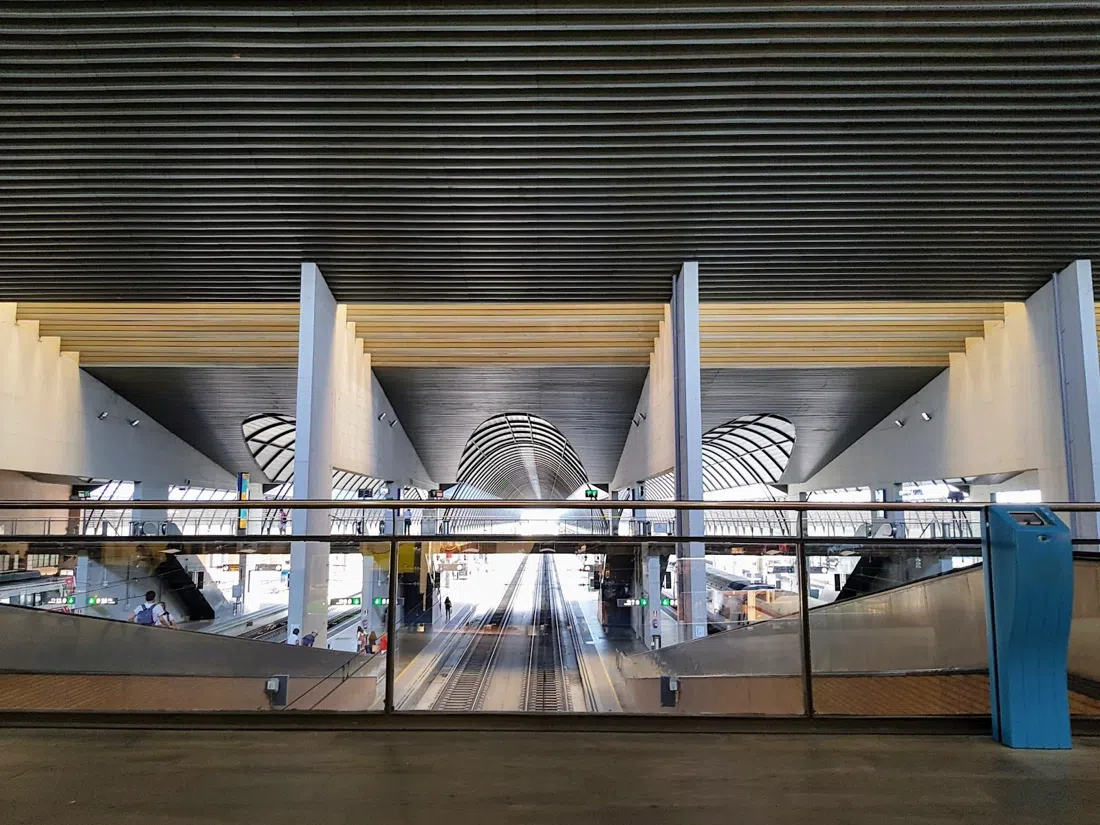
The catch is the frequency rather than the train. There are only about three or four direct departures a day. Miss one, or find that none of them lands near your palace slot, and it is the timetable rather than the journey that has cost you the afternoon.
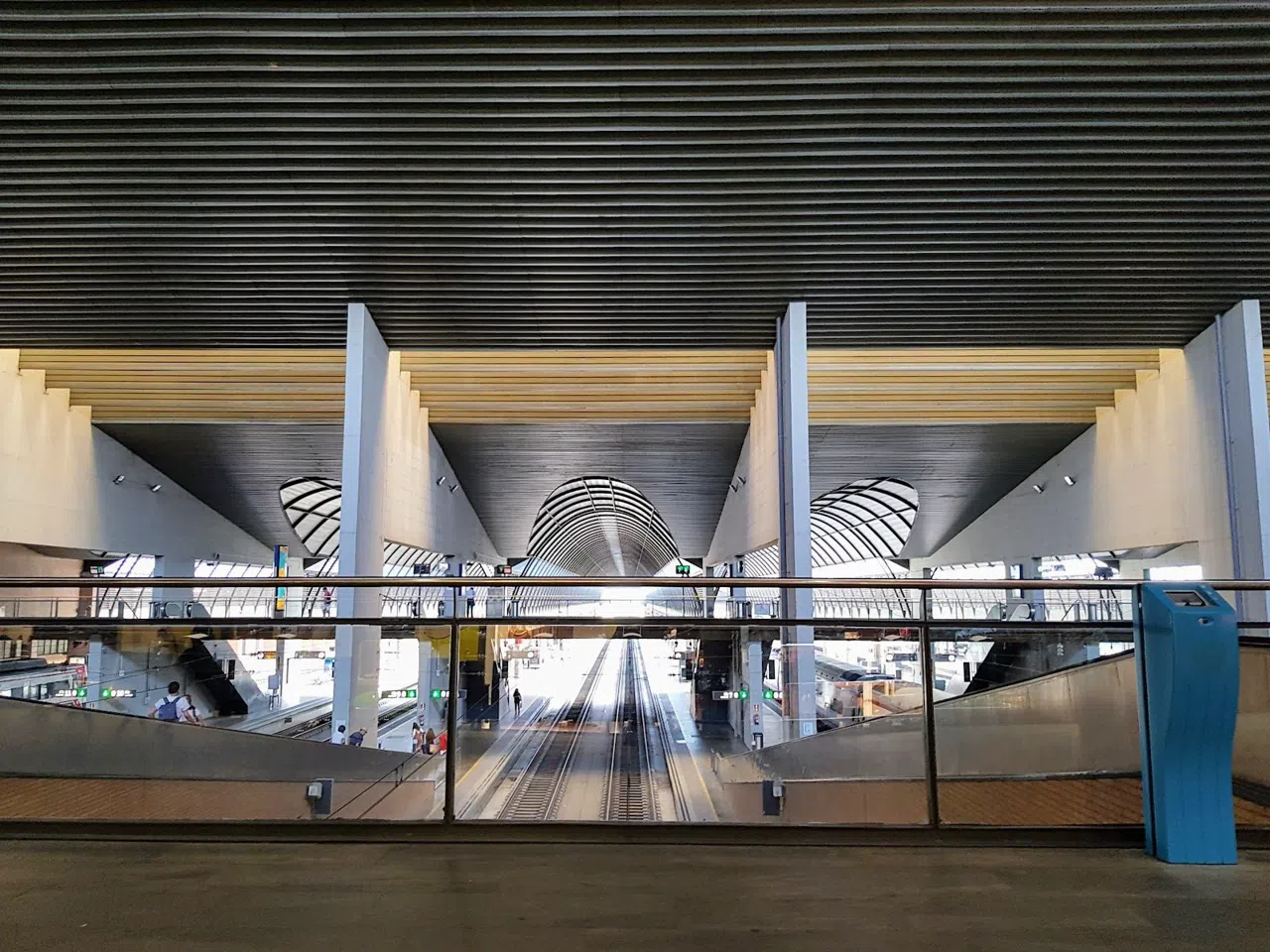
Sevilla-Santa Justa railway station (twenty minutes' walk northeast of the old town, or a short taxi) is free to enter, with a wide concourse and plenty of seating, but security scans every bag before the platforms and the queue is real at peak. Arrive earlier than you would for a suburban service. There is no official left-luggage office inside any more; the storage outfits are all a few minutes' walk away and charge something like €4 to €6 per bag per day. Budget the walk as well as the money if you are travelling the same day you check out.
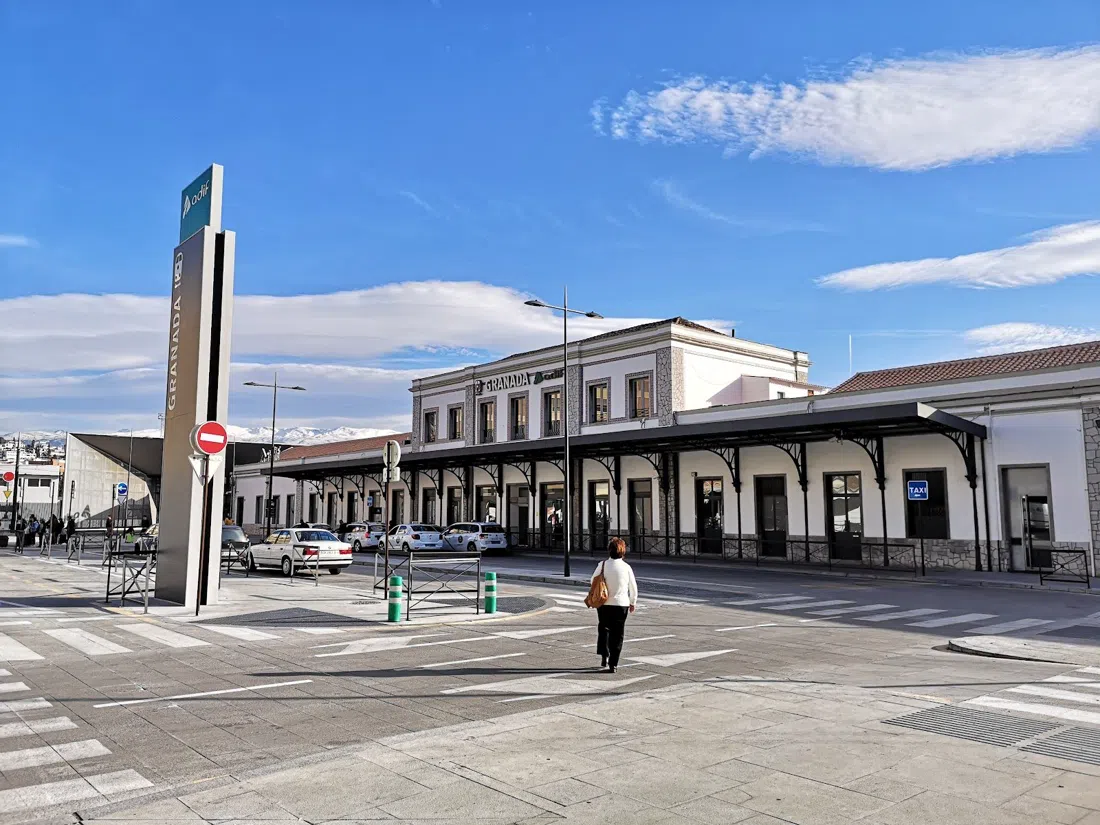
Granada railway station (Avenida de Andaluces, northwest of the cathedral) is small enough to clear in two minutes, which is precisely its virtue. There is little shelter and not much seating, so do not plan a long wait here. The metro stop is directly outside and the cathedral is a twenty-minute walk, so a train arrival puts you in the centre faster than a coach arrival does.
The coach leaves every hour and that is the entire argument
ALSA (Sevilla Plaza de Armas to Granada) runs more than thirty services a day, roughly hourly from 08:00 to 21:00. The direct runs take three hours, thirty minutes more than the train, and you can almost always travel within an hour of when you want to. Advance fares start around €12 and walk-up sits at €25 to €35; the Supra class costs a few euros more for a wider seat. Seats are sold individually with seat selection, and large parties are routine, which makes this the best group option on the route by some distance.
One warning, and it costs people two hours. Not every service is direct. The stopping runs stretch to five hours for the same money, and the fare display will not shout about it. Check the duration before you pay, every time.
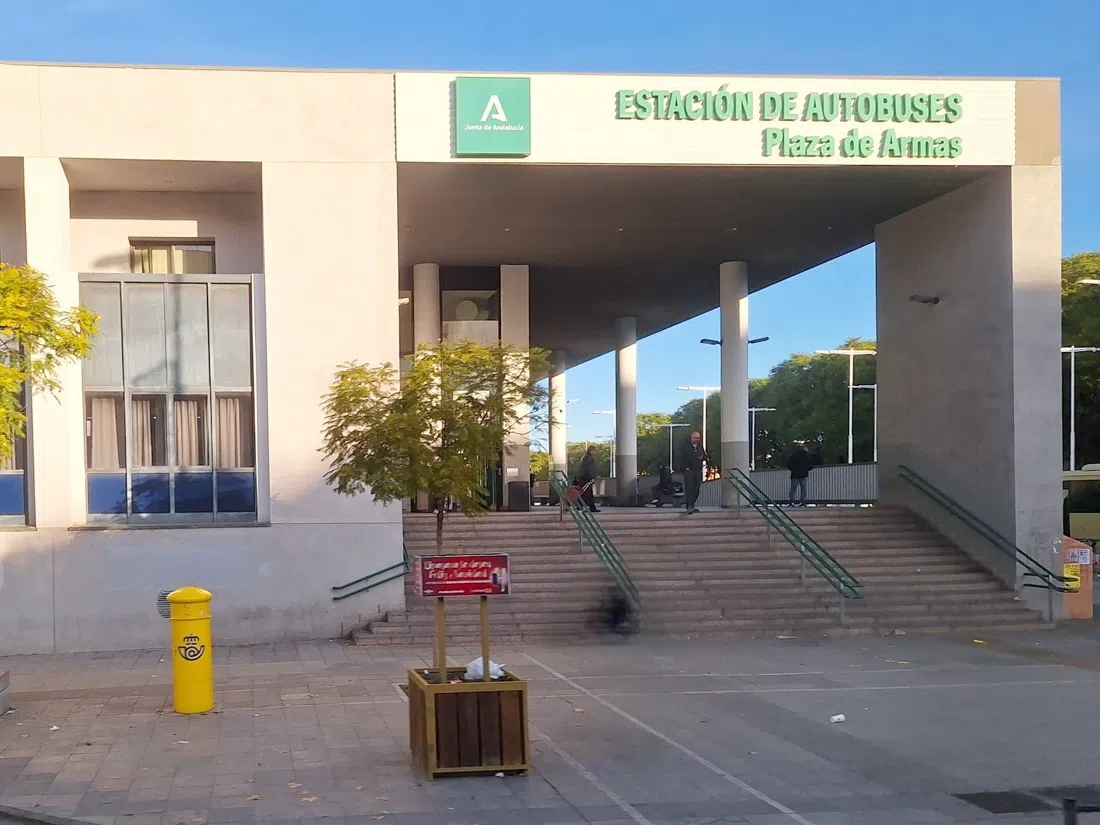
Estación de Autobuses Plaza de Armas (beside the river at the northwest edge of Seville's old town) is the detail that catches returning visitors out. Granada coaches leave from Plaza de Armas, not from Prado de San Sebastián, and the two stations sit on opposite sides of the old town about twenty-five minutes' walk apart. The hall is large, there are multiple bays, and coaches board from numbered dársenas, so a group has room to gather without blocking anyone.
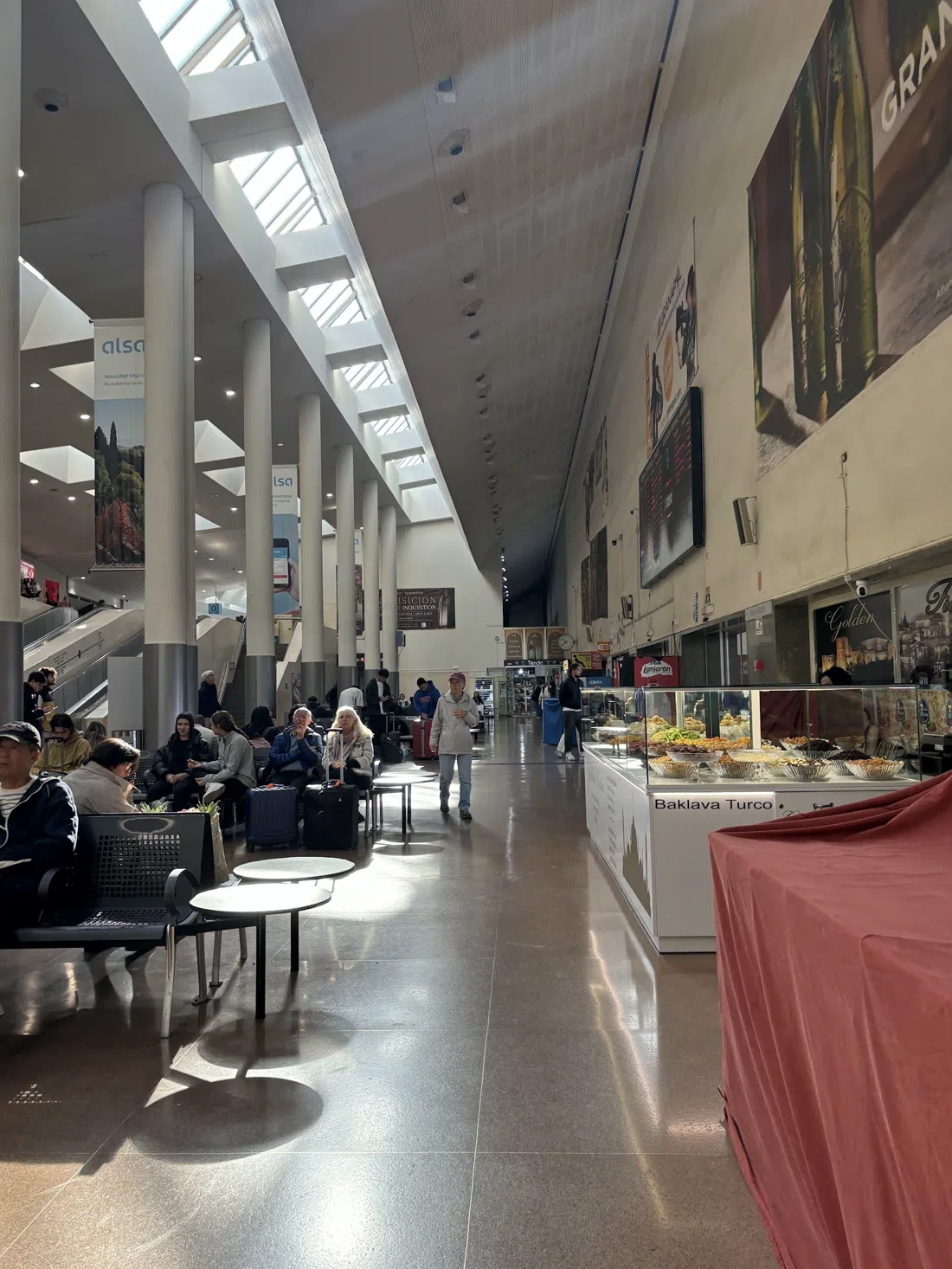
Estación de Autobuses de Granada (about 3 km north of the centre) is better equipped than most: a 24-hour building, staffed from 07:00 to 21:00, automatic luggage lockers for a few euros a day, a cafeteria and a taxi rank at the door that never closes. Those three kilometres still have to be crossed, though. Factor in the metro or a taxi at the far end before you call the coach the quicker option overall.
The tram that cancels the coach's one flaw
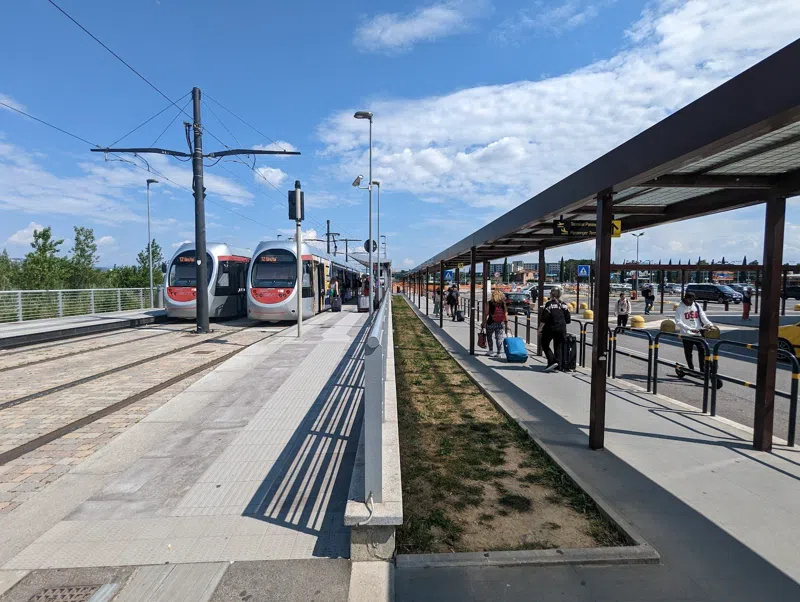
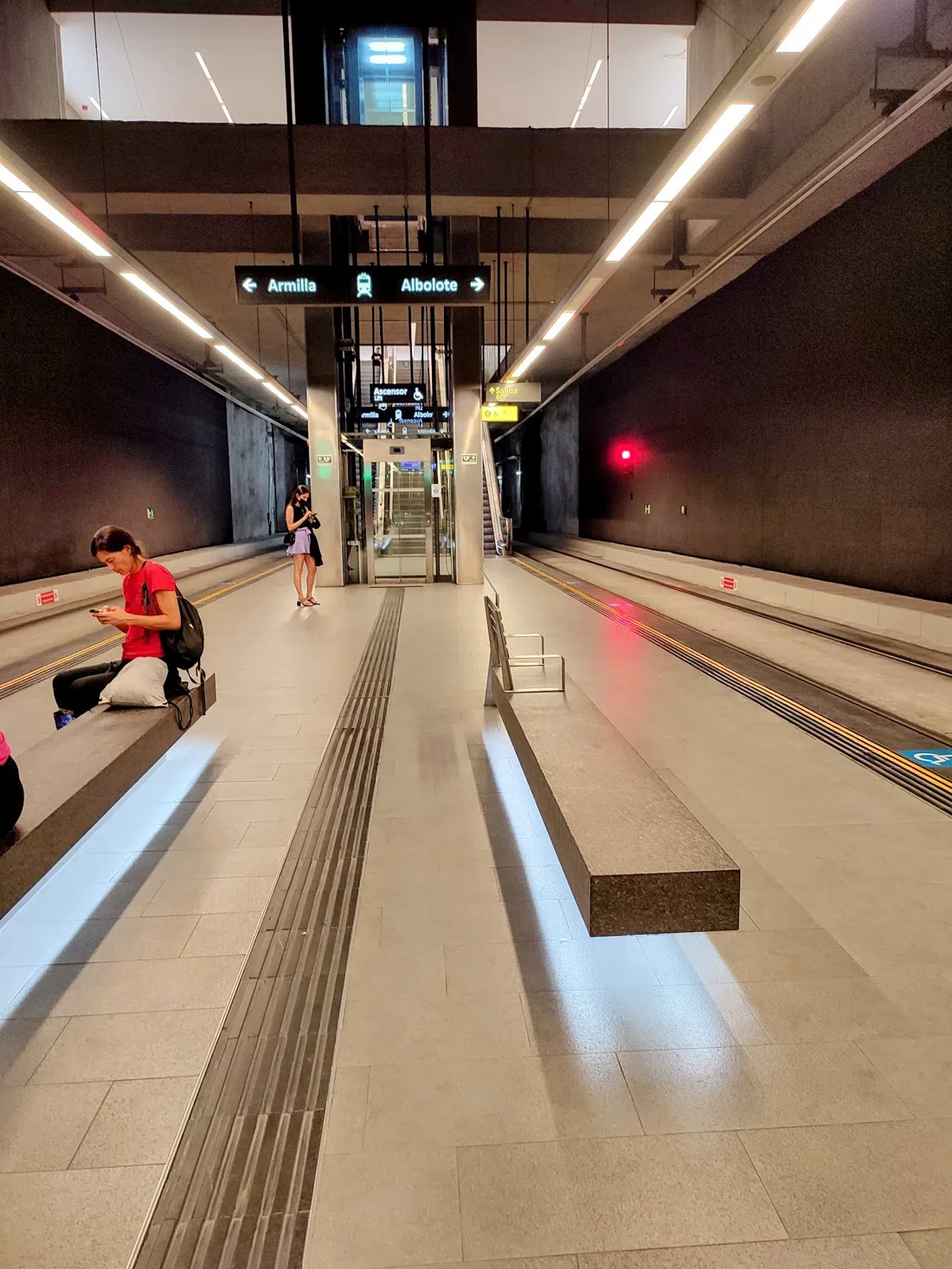
Metropolitano de Granada (Line 1) (a single line running the length of the city) is what makes arriving by coach painless. It joins the bus station, the train station and Recogidas in the centre, running every eight to fifteen minutes from 06:30 until midnight or later. A single is €1.35, or about €0.49 a ride with the rechargeable card, and under-15s travel free. Trams get tight at rush hour, and a big suitcase in a crowded car makes you an obstacle rather than a passenger, so a group should spread across two doors rather than pile through one.
Somewhere to leave the bags before check-in
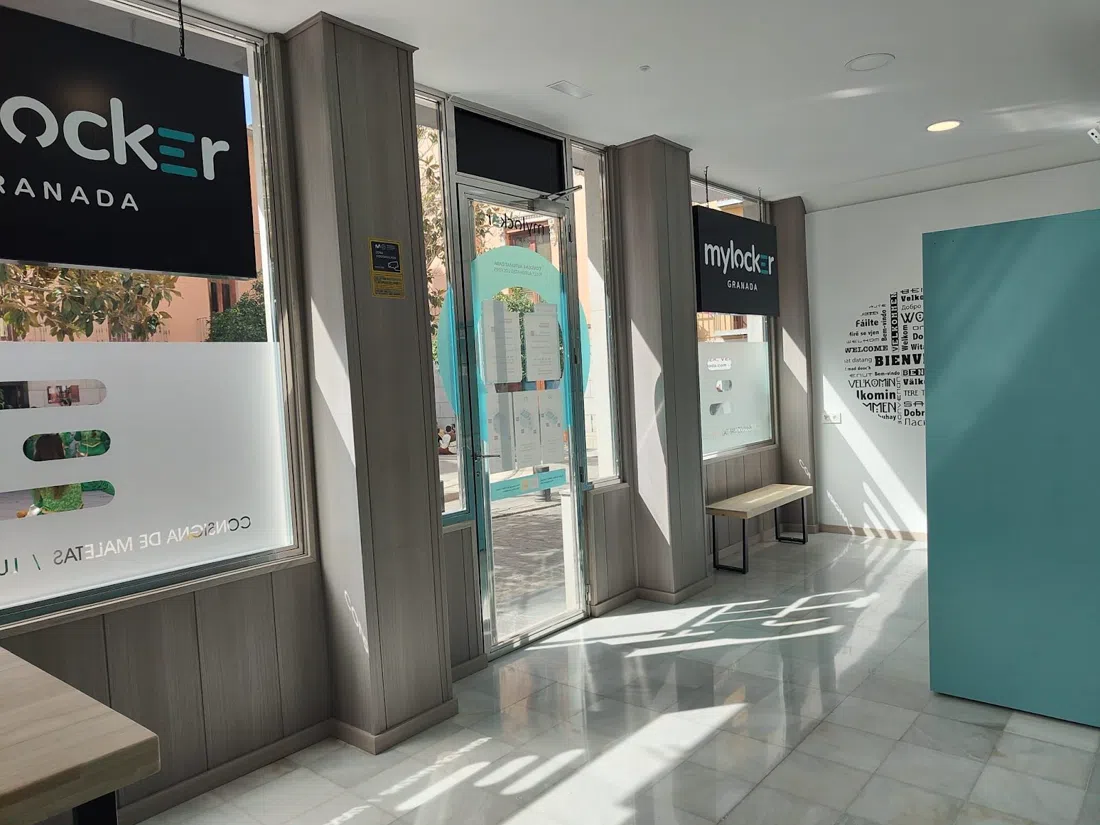
My Locker Granada (a minute from Gran Vía, three from the cathedral) is open around the clock, opens by personal code with no staff queue, and costs from roughly €5 to €6 per bag per day. Several lockers can be booked online in one transaction, which suits a party arriving together. This is the difference between an arrival that starts sightseeing at 11:00 and one that sits on a suitcase until a 15:00 check-in. Most hotels will hold luggage too, and if you have not chosen one yet, running a Granada hotel search filtered for parking solves the driving problem below before it starts.
Up to the Alhambra without the hill
Transportes Rober C30 Alhambra microbus (departs Plaza Isabel la Católica, at the Gran Vía end of the centre) climbs to the monument roughly every twelve minutes for about €1.70 a single, less with a rechargeable Credibus. It is what lets a lunchtime arrival make an afternoon palace slot without walking up the Cuesta de Gomérez in full Andalusian heat. The buses are genuinely tiny, though. A party of eight fills a third of one, and at busy times you will be kinder to everyone, and faster, splitting across two departures rather than trying to board as a block.
A deliberate four hours in Córdoba instead of a short one on a platform
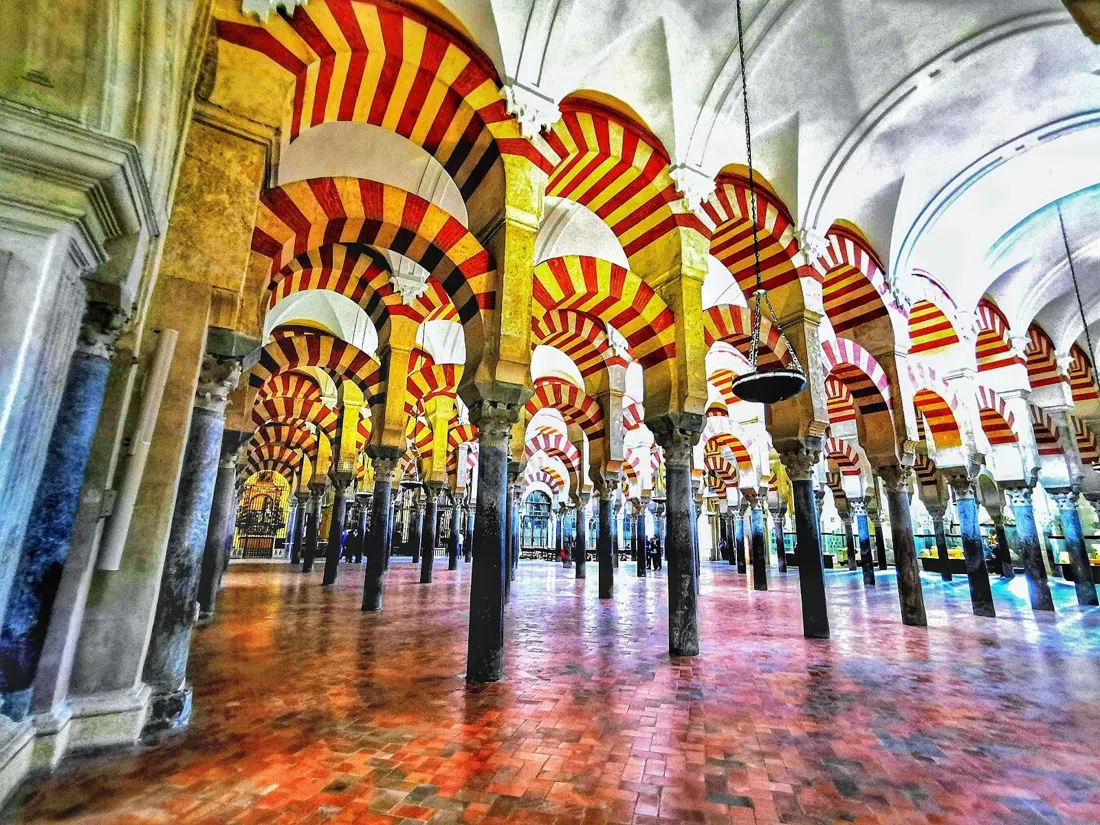
Every non-direct train between the two cities changes at Córdoba, which turns a connection into an opportunity if you stop pretending you are in a hurry. Break the journey on purpose and the mileage costs you nothing. The Mezquita-Catedral de Córdoba (old town, fifteen minutes' walk from the station) charges €15 for adults, €12 concession, €8 for ages ten to fourteen, with under-tens free, and opens free of charge Monday to Saturday from 08:30 to 09:30: early, brief, and worth setting an alarm for. Entry is timed, guided parties use headsets, and silence is properly enforced inside, which is the correct instinct for a forest of double arches. Private lockers near the monument will take your bags while you go. Four hours is comfortable; two is a march.
Driving turns the middle of the day into the point of it
Enterprise Rent-A-Car, Sevilla-Santa Justa (in the station complex) is the version of this journey with the most freedom in it. Expect roughly €40 to €80 a day for a small car plus a one-way fee, and about €25 of fuel for the run; there are no tolls. The drive is around 250 km and under three hours on the A-92. One car covers four or five people, vans are available, and the branch at Granada's train station makes the one-way drop straightforward. The one non-negotiable is the far end: Granada's centre is a restricted-traffic zone with camera enforcement, so book a hotel with parking rather than trusting your luck on a narrow street.

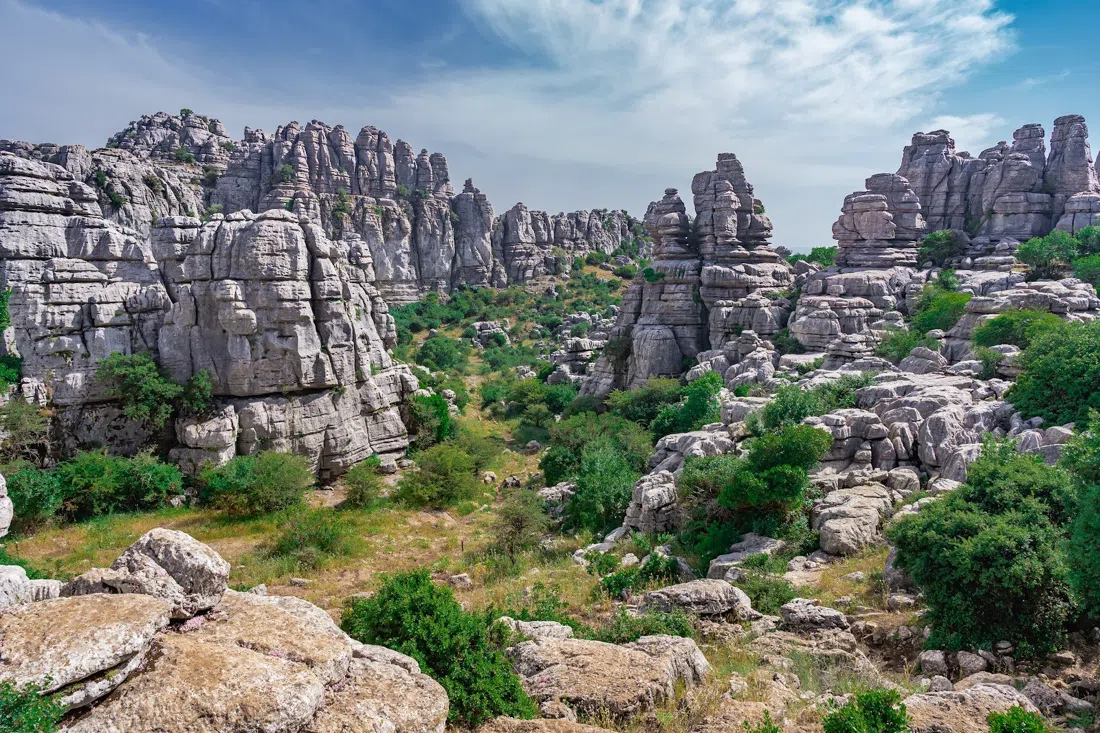
El Torcal de Antequera (twenty minutes off the A-92) is the single best reason to drive rather than ride. Entry and parking are free, the Torcal Alto visitor centre opens 10:00 to 19:00 from April to October and 10:00 to 17:00 from November to March, and the short waymarked loop through the stacked limestone takes about an hour. On busy days cars are held at the lower car park and a shuttle runs up for €1.50 to €2, so a coach party should arrange access in advance rather than arriving hopefully.
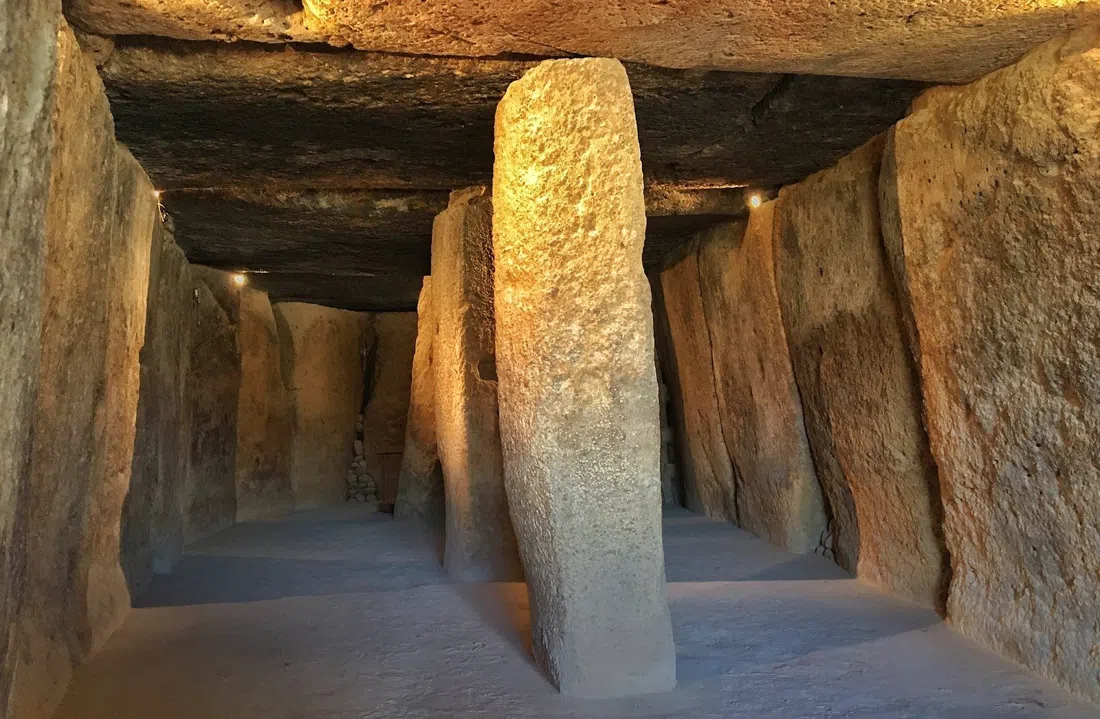
Antequera Dolmens Site (Menga, Viera and El Romeral) sits almost exactly halfway and asks for about forty-five minutes. All three monuments are free, groups are welcome, and standing inside a chamber roofed with 180-tonne slabs cut nearly six thousand years ago recalibrates the rest of the day. The chambers are narrow, so a large party goes through in waves. The catch is the long midday closure, so aim for late morning rather than mid-afternoon. 2026 marks ten years since the UNESCO inscription, with extra programming through the year.
A car with a driver and somebody else's route planning
Daytrip (door to door, hotel to hotel) suits parties who want the drive without the driving. Sedans take up to three, vans up to seven, with one suitcase and one carry-on each included. Prices start around €76 per person, and a sedan for up to three runs roughly €352, so the per-head cost falls as the party grows. The transfer takes about 2h40 direct, with optional stops at Antequera, Archidona, Montefrío or Córdoba, which converts the journey from dead time between two hotels into the sightseeing itself. For three adults with luggage and an early afternoon palace slot, it is less extravagant than the headline figure suggests.
Which version suits whom
A couple with a fixed Nasrid slot should take the Avant if one of the three or four departures lands cleanly, and a direct ALSA coach if none does: the coach's half-hour penalty is nothing next to a four-hour wait for the right train. A family of four or five with a spare morning should hire the car and stop at the dolmens. A group of eight or more should stop deliberating and book the coach, because thirty-plus daily departures with individually selected seats is the only option that absorbs a party that size without drama; ten or more on the train should go through Renfe's group desk rather than the website. Anyone arriving before check-in should book lockers the night before instead of dragging cases up to a monument that will not let them in with luggage.
Practical notes
For getting about once you land, the tram and city buses both take a rechargeable card that cuts the fare by more than half, and it pays for itself within a day if the Alhambra microbus is in your plans. Cards work everywhere that matters, but keep €20 to €30 in coins and small notes for lockers, shuttle buses and the smaller bars. Timing is the whole discipline of this route: fix the Nasrid slot first, then work backwards, allowing an hour of slack at the Seville end for bag security and the walk to whichever station you actually need. On budget, the cheapest honest version (advance coach, tram, locker, general admission) comes in around €40 per person all in; the hire-car day with both Antequera stops lands nearer €70 to €90 a head for a full car, and buys you the best two hours of the journey. When you get there, the Granada guide picks up where the road ends.